
 Jan, 19 2026
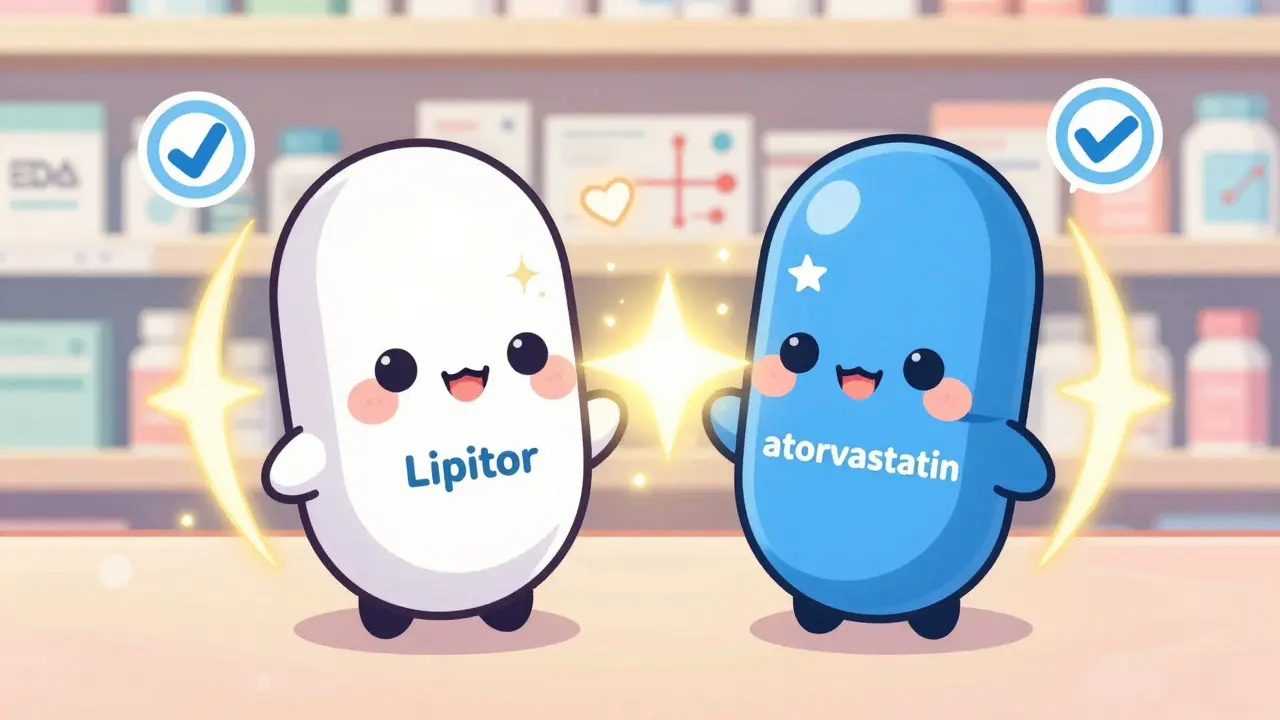
When you pick up a prescription, you might see two pills that look completely different-one white and oval, the other blue and capsule-shaped. One says "Lipitor," the other says "atorvastatin." You might wonder: Are generic drugs really the same? The answer isn’t just yes-it’s backed by science, regulation, and real-world data from millions of patients.
They Have the Same Active Ingredient-And That’s All That Matters
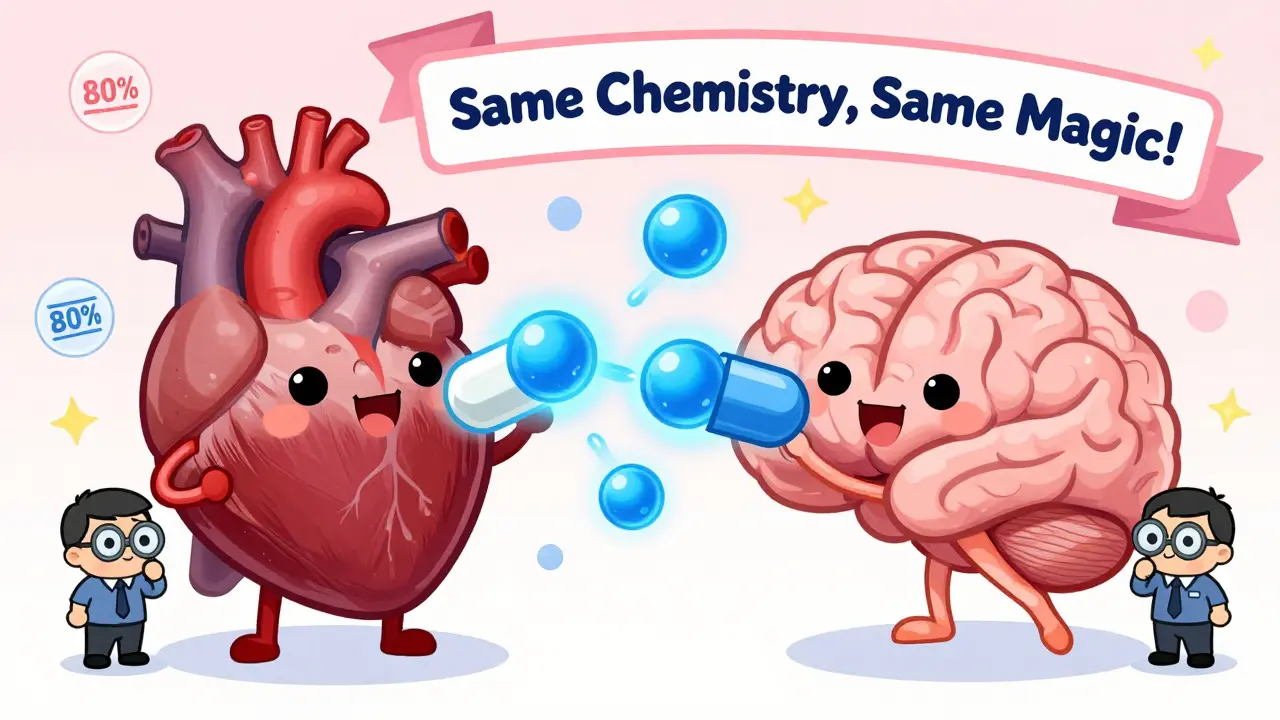
The core of every drug is its active ingredient. That’s the part that actually does the work in your body. For a generic drug to be approved by the FDA, it must contain the exact same active ingredient, in the exact same strength, and delivered the exact same way as the brand-name version. If your brand-name drug is 10 mg of amlodipine, the generic is also 10 mg of amlodipine. No more, no less.The FDA doesn’t just take the manufacturer’s word for it. They require proof that the generic delivers the same amount of that active ingredient into your bloodstream at the same rate. This is called bioequivalence. The standard? The generic’s absorption must fall within 80% to 125% of the brand-name drug’s levels. That’s not a guess-it’s a strict, measurable bar. If a generic fails this test, it doesn’t get approved.
Think of it like two identical engines-one built by Ford, one by a third-party supplier. They use the same parts, same torque, same fuel efficiency. The only difference? The paint job and the logo. That’s what generics are.
Why Do They Look and Taste Different?
You’ve probably noticed that generic pills don’t look like the brand-name ones. That’s not an accident. U.S. trademark law says generic manufacturers can’t copy the shape, color, or logo of a brand-name drug. So a blue pill becomes a white one. A capsule becomes a tablet. The reason? To prevent confusion and protect intellectual property.But here’s what most people don’t realize: those differences are almost always in the inactive ingredients. These include fillers, dyes, binders, and flavorings. They make the pill hold together, look nice, or taste better. But they don’t affect how the drug works. In fact, inactive ingredients can make up 90% of the pill’s weight.
For most people, this doesn’t matter. But for a small number-about 0.05% of cases-the inactive ingredients can cause mild reactions. Someone might get a stomachache from a new filler, or a rash from a dye. That’s rare. And if it happens, your pharmacist can switch you to a different generic brand. There are often multiple generic versions of the same drug, each with different inactive ingredients.
The Cost Difference Is Staggering
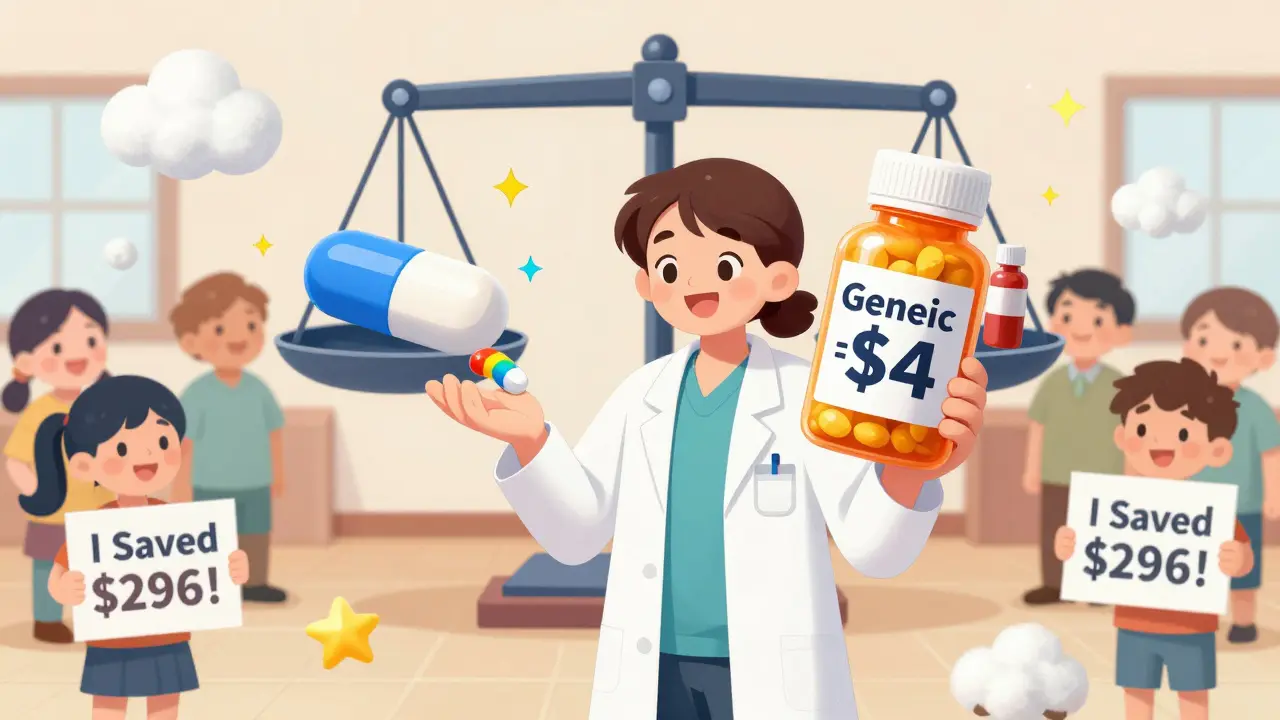
This is where generics change lives. A 30-day supply of brand-name Glucophage (metformin) used to cost over $300. Today, the generic version costs $4. Norvasc (amlodipine) was $400. The generic? $2. These aren’t outliers. They’re the rule.According to the Generic Pharmaceutical Association, generics saved the U.S. healthcare system $313 billion in 2022 alone. On average, generics cost 85% less than brand-name drugs. That’s not a small discount-it’s life-changing for people on fixed incomes, seniors, and families without good insurance.
Insurance companies know this. Most plans require you to try the generic first. If your doctor insists on the brand, they often need to file paperwork justifying why. That’s because generics aren’t just cheaper-they’re smarter policy.
Do They Work the Same? Real Data Says Yes
A 2019 study in JAMA Internal Medicine looked at over 3.5 million patients across multiple conditions: diabetes, high blood pressure, depression, and osteoporosis. The results? No meaningful difference in outcomes. People taking generic glipizide controlled their blood sugar just as well as those on brand-name Glucophage. Those on generic amlodipine had the same drop in blood pressure as those on Norvasc. Same for sertraline and escitalopram-no difference in depression scores.Kaiser Permanente’s 2023 report confirmed it: generics perform identically in real-world settings. Even more telling? Patients who switched to generics were 28% more likely to keep taking their medication. Why? Because they could afford it. Better adherence means fewer hospital visits, fewer complications, and better long-term health.
What About ‘Narrow Therapeutic Index’ Drugs?
Some drugs, like warfarin (a blood thinner), levothyroxine (for thyroid), and certain epilepsy meds, have a narrow therapeutic index. That means the difference between an effective dose and a dangerous one is small. Because of this, some doctors and patients worry about switching.The FDA says even these drugs are safe as generics. All approved generics, including for NTI drugs, must meet the same 80%-125% bioequivalence standard. But here’s the practical advice: if you’re on one of these drugs and you switch to a generic, stick with the same generic brand. Don’t keep switching between different generic manufacturers. Why? Because while each one meets FDA standards, tiny variations in how the body absorbs the drug can add up over time.
It’s not about one generic being better than another. It’s about consistency. Once you find a generic that works, stay with it. Your pharmacist can help you track which version you’re on.
Who Makes These Drugs? And Are They Safe?
Many people assume generics are made in low-quality overseas factories. That’s a myth. The FDA inspects all drug manufacturing sites-whether they make brand-name or generic drugs-with the same strict standards. In 2022, they inspected over 3,500 facilities worldwide. About 80% of generic drugs sold in the U.S. are made overseas, but so are 40% of brand-name drugs.Major generic makers like Teva, Mylan, and Sandoz operate in the same facilities as big pharma. They follow the same Current Good Manufacturing Practices (cGMP). If a plant fails inspection, the FDA shuts it down-regardless of whether it’s making Lipitor or atorvastatin.
There have been problems-like the 2022 import alerts on 12 plants in India and China. But those affected less than 0.5% of total generic production. And the FDA acted fast, pulling those batches. Transparency and enforcement are built into the system.
How to Use Generics Without Risk
Switching to a generic is simple. Here’s how to do it right:- Ask your doctor: "Is there a generic version of this drug?" Most of the time, the answer is yes.
- When you get your prescription, check the label. The generic name will be printed clearly.
- If you’re unsure, ask your pharmacist. They can tell you the brand name, the generic name, and which company made it.
- If you notice a change in how you feel-especially after switching-tell your doctor. It’s rare, but it happens.
- Stick with the same generic brand once you find one that works. Don’t switch back and forth unless advised.
Most patients understand this after a two-minute conversation with their pharmacist. In fact, 95% of people get it after a simple explanation.
What’s Next for Generics?
More brand-name drugs are losing patent protection every year. In 2025 alone, drugs like Eliquis and Stelara-each worth billions-will go generic. That means prices will drop even further. The FDA is also speeding up approvals, aiming to cut review times from 18 months to under 10 months.That’s good news. It means more people will get access to life-saving meds at prices they can afford. The future of medicine isn’t about fancy new brands. It’s about making proven, effective treatments available to everyone.
Final Thought: It’s Not About Brand. It’s About Biology.
Your body doesn’t care if the pill says "Zoloft" or "sertraline." It only responds to the chemical in your bloodstream. And that chemical is identical. The FDA, doctors, pharmacists, and millions of patients have confirmed it: generics work the same. They’re not second-rate. They’re the same drug, without the marketing cost.If you’re hesitant, ask for the FDA’s official stance: "Generic drugs work the same as brand-name drugs and are just as effective." That’s not a slogan. It’s a regulatory fact.
Are generic drugs as effective as brand-name drugs?
Yes. The FDA requires generic drugs to contain the same active ingredient, strength, dosage form, and route of administration as the brand-name drug. They must also prove bioequivalence-meaning they deliver the same amount of the drug into your bloodstream at the same rate. Large studies involving millions of patients have confirmed that generics perform just as well in treating conditions like high blood pressure, diabetes, depression, and more.
Why are generic drugs so much cheaper?
Generic manufacturers don’t have to repeat expensive clinical trials because the safety and effectiveness of the active ingredient were already proven by the brand-name company. They also spend far less on marketing and advertising. The savings are passed directly to consumers. On average, generics cost 80%-85% less than brand-name drugs, saving patients and the healthcare system billions each year.
Can inactive ingredients in generics cause side effects?
Yes, but it’s rare. Inactive ingredients like fillers, dyes, or preservatives don’t affect how the drug works, but they can cause mild reactions in some people-like stomach upset or a rash. These occur in about 0.05% of cases. If you notice a new side effect after switching to a generic, talk to your pharmacist. They can often switch you to a different generic brand with different inactive ingredients.
Should I avoid generics for heart or thyroid medications?
No. Even for drugs with a narrow therapeutic index-like warfarin or levothyroxine-the FDA requires the same strict bioequivalence standards. However, once you find a generic version that works well for you, stick with it. Switching between different generic brands can cause small variations in absorption that may affect your condition over time. Consistency matters more than the brand name.
Are generic drugs made in unsafe facilities?
No. The FDA inspects all drug manufacturing facilities-whether they make brand-name or generic drugs-with the same strict standards. About 80% of generics are made overseas, but so are many brand-name drugs. The FDA conducts over 3,500 inspections annually and pulls any product from facilities that fail compliance. Less than 0.5% of generics have ever been affected by import alerts.
Can my pharmacist switch my brand-name drug to a generic without asking?
In 49 U.S. states, pharmacists are allowed to substitute a generic for a brand-name drug unless the doctor specifically writes "Dispense as Written" or "Do Not Substitute." This is standard practice and designed to save money. If you prefer the brand, you can always ask your pharmacist not to substitute it.
How do I know if a generic is FDA-approved?
All FDA-approved generics are listed in the agency’s Orange Book, which rates them for therapeutic equivalence. Look for an "A" rating, which means the generic is considered interchangeable with the brand-name drug. You can also check Drugs.com or the FDA’s Drugs@FDA database. If it’s sold in a U.S. pharmacy, it’s been approved.
Jerry Rodrigues
January 21, 2026 AT 04:05Been taking generics for years. My blood pressure is stable, my wallet’s happy, and I haven’t died yet. Guess the science works.
Stephen Rock
January 22, 2026 AT 01:36Oh great another FDA shill post. You really believe the same regulatory body that let Purdue Pharma run wild also gives a damn about your thyroid meds? Wake up. The system’s rigged.
Glenda Marínez Granados
January 22, 2026 AT 17:08So we’re supposed to trust a pill that looks like it was designed by a 7-year-old with crayons… but somehow it’s just as good as the $400 one? 😏
MARILYN ONEILL
January 24, 2026 AT 12:41My cousin took a generic for her anxiety and started crying in Target for no reason. So yeah. Not the same. And don’t tell me it’s the inactive ingredients-she’s sensitive. You wouldn’t understand.
Alex Carletti Gouvea
January 24, 2026 AT 21:39Generics? That’s just socialism in pill form. If you can’t afford the real medicine, maybe you shouldn’t be taking it. America doesn’t hand out free health care. Get a better job.
lokesh prasanth
January 25, 2026 AT 05:57India makes most generics so they must be trash right? I mean look at the roads there lol
Barbara Mahone
January 26, 2026 AT 04:00I switched to generic metformin after my insurance dropped the brand. Lost 15 pounds in 3 months. My A1C is better than ever. I don’t need a fancy logo to feel healthy.
Samuel Mendoza
January 26, 2026 AT 08:46Everyone says generics work. But have you ever checked the FDA’s inspection logs? Half those plants get flagged. You’re just lucky you haven’t been poisoned yet.
Andrew Rinaldi
January 27, 2026 AT 02:21It’s funny how we treat medicine like it’s a luxury brand. The body doesn’t care who made it. It only cares if the molecule fits. The rest is marketing noise.
Amber Lane
January 27, 2026 AT 19:09My grandma takes 7 generics. She’s 84 and still walks her dog every morning. She doesn’t know the difference. And she doesn’t need to.
shubham rathee
January 28, 2026 AT 10:07you think the big pharma companies are really okay with generics? they own the FDA. they let generics in so they can charge more for the next patent. it’s all a game. they win either way
MARILYN ONEILL
January 28, 2026 AT 12:33Oh so now you’re saying the same chemical = same effect? What about placebo? Maybe the brand works because you believe in it. That’s not science, that’s faith.