
 Mar, 12 2026
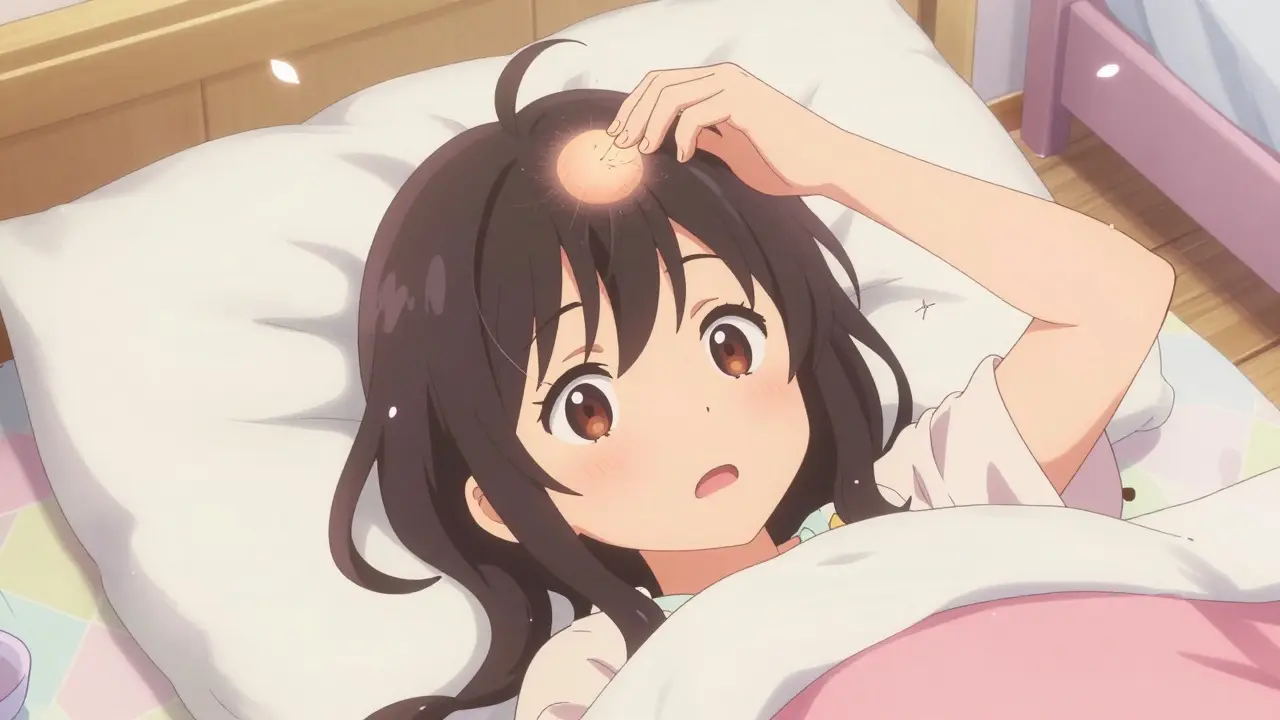
Imagine waking up one morning and finding a quarter-sized patch of baldness on your scalp. No injury. No burn. No cancer. Just... hair gone. That’s alopecia areata - an autoimmune condition where your body’s own immune system attacks hair follicles, leaving smooth, round bald patches behind. It doesn’t hurt. It’s not contagious. But for many, it changes everything.
What Exactly Is Alopecia Areata?
Alopecia areata isn’t just "hair falling out." It’s an autoimmune disorder. That means your immune system, which normally fights off viruses and bacteria, mistakenly targets your hair follicles. This happens because the follicles lose their natural "immune privilege" - a biological shield that usually keeps them safe from immune attacks. Once that shield drops, immune cells swarm around the base of the hair, forcing the follicle into resting mode. The result? Hair stops growing, then falls out.
Unlike male or female pattern baldness, which slowly shrinks follicles over years, alopecia areata hits fast. Patches appear suddenly, often within weeks. The skin looks normal - no redness, no scaling, no scarring. That’s a key sign. If the follicle isn’t destroyed, hair can come back. About 80% of people with small patches regain full hair within a year, even without treatment.
More Than Just Patches: The Different Forms
Alopecia areata doesn’t always stay mild. It can progress in several ways:
- Alopecia areata (patchy): One or more coin-sized bald spots on the scalp or beard.
- Alopecia totalis: Complete loss of scalp hair.
- Alopecia universalis: Total body hair loss - eyebrows, eyelashes, arms, legs, even pubic hair.
- Diffuse alopecia areata: Sudden thinning all over the scalp, mimicking stress-related shedding.
- Ophiasis: Hair loss in a band around the sides and back of the head - often the hardest to treat.
Some people have just one patch. Others lose everything. And it’s unpredictable. One person might lose hair once and never again. Another might cycle through regrowth and relapse for years.
Nails, Tingling, and Other Clues
It’s not just the head. About 1 in 3 people with alopecia areata notice changes in their nails. Tiny pits - like a pinprick pattern - are common. Nails might become rough, ridged, or lose their shine. Sometimes, the half-moon area at the base of the nail (the lunula) turns red.
Before hair falls out, some people feel tingling, itching, or burning on the skin. It’s not everyone, but it’s common enough to be a warning sign. These symptoms often appear hours or days before a patch becomes visible.
Why It’s Not Just a Cosmetic Issue
Here’s the truth: alopecia areata doesn’t kill. It doesn’t cause pain. But it’s the dermatological condition with the highest emotional toll in the U.S. - worse than psoriasis or eczema, according to the NIH.
Studies show 30% of patients have moderate to severe anxiety. 28% meet the clinical criteria for depression. One survey of over 1,200 people found 68% avoided social situations because of their hair loss. Many stopped swimming, going to the beach, or even getting haircuts. A Reddit user wrote: "I used to wear a hat everywhere. Now I don’t leave the house without three layers of wigs, sunscreen, and sunglasses. It’s exhausting."
How It Differs From Other Hair Loss
Not all hair loss is the same. Here’s how alopecia areata stacks up:
- Androgenetic alopecia (pattern baldness): Gradual thinning, genetic, hormone-driven. Follicles shrink over time. Hair doesn’t come back on its own.
- telogen effluvium: Shedding after stress, illness, or childbirth. Hair falls out evenly, but regrows within months.
- Scarring alopecia (like lichen planopilaris): Permanent damage. Follicles are destroyed. No regrowth possible.
Alopecia areata is unique because it’s autoimmune, patchy, and reversible. That’s why it’s the second most common hair loss condition globally - after pattern baldness.
Treatment Options: What Actually Works
There’s no cure. But there are treatments that help. The key is matching the treatment to the severity.
1. Intralesional Corticosteroid Injections
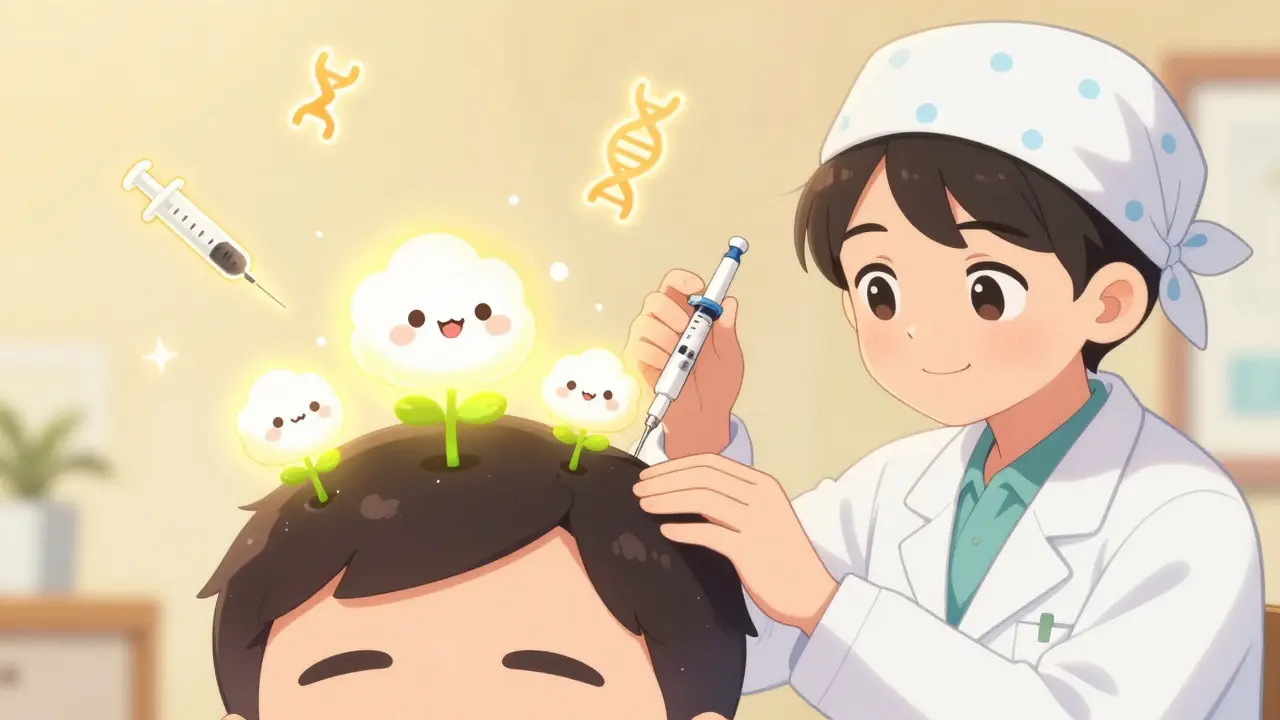
This is the most common first-line treatment for patchy alopecia. A dermatologist injects a diluted steroid (triamcinolone acetonide) directly into the bald patches every 4 to 6 weeks. It reduces inflammation and tells the immune system to back off.
Success rate? 60-67% of people see regrowth within 4-8 weeks. But it only works for small patches. If you have totalis or universalis, it won’t help. And yes - it stings. But most patients say the relief is worth it.
2. Topical Corticosteroids
Strong creams or lotions (like 0.1% betamethasone valerate) applied daily. They’re less effective than injections - only 25-30% see results. But they’re good for people who can’t get injections or have widespread patches.
Downside? It takes 6-12 months to see anything. And long-term use can thin the skin.
3. Contact Immunotherapy (DPCP)
This one sounds wild. A dermatologist applies a chemical called diphenylcyclopropenone (DPCP) to the scalp. It causes a mild allergic reaction - redness, itching, peeling. That reaction tricks the immune system into ignoring the hair follicles.
Works for 30-60% of patients. But it’s slow. Takes 6-12 months. And you have to tolerate daily itching. Not for everyone.
4. JAK Inhibitors: The Game-Changers
This is where things got exciting. In 2022, the FDA approved baricitinib (Olumiant) for severe alopecia areata. It’s an oral pill that blocks the immune signals attacking hair follicles.
In clinical trials, 35.6% of patients regained 80% of their scalp hair in 36 weeks. A newer drug, ritlecitinib, approved in June 2023, showed similar results in 24 weeks.
But there’s a catch. These drugs cost $10,000-$15,000 a month. Insurance often denies coverage. And they don’t fix the root cause - they just suppress the attack. Stop taking them, and hair loss often returns within a year. Still, for many, it’s the first real hope.
What Doesn’t Work (And Why)
There’s a lot of noise out there. Minoxidil (Rogaine)? It helps with pattern baldness. For alopecia areata? Studies show 0-15% efficacy in extensive cases. Many patients report no change.
Essential oils, onion juice, acupuncture, supplements? No solid evidence. Some people swear by them. But they don’t alter the autoimmune process. Relying on them can delay real treatment.

The Emotional Weight and What Helps
Treatment is hard. But emotional support matters just as much. Joining a community - like the National Alopecia Areata Foundation or r/alopecia on Reddit - changes lives. Talking to others who get it reduces isolation.
Wigs, scalp micropigmentation, and hats aren’t "giving up." They’re tools. Many patients use them while waiting for treatments to work. One woman told me: "I started wearing a wig to work. Then I got my first injection. Three months later, I stopped wearing it. I didn’t need it anymore. But having it gave me space to heal."
The Future: What’s Coming
Researchers are now looking beyond symptom control. The goal? Predict who will respond to which treatment.
At Columbia University, labs are testing genetic markers - especially genes like ULBP3/6 - that may signal higher risk or better response to JAK inhibitors. By 2025, doctors may use blood tests to choose the right drug before starting treatment.
Combination therapies are also being tested: JAK inhibitors + corticosteroids + light therapy. Early results show faster regrowth and lower relapse rates.
And funding is rising. The NIH spent $12.7 million on alopecia areata research in 2023 - up 23% since 2020. That’s a sign this isn’t going away.
Final Thoughts
Alopecia areata is not a choice. It’s not vanity. It’s an autoimmune disease with real consequences - emotional, social, and psychological. But it’s not hopeless.
Regrowth is possible. Even after losing everything. I’ve seen it. A man in Austin, who lost his beard and eyebrows, got 90% of his hair back on baricitinib. His hair grew back gray first - then slowly turned dark again. He called it "magical."
There’s no one-size-fits-all fix. But now, more than ever, there’s real science behind the hope. And that’s something.
rakesh sabharwal
March 13, 2026 AT 23:43Let’s be clear: this is a textbook case of immune dysregulation mediated by Th1/Th17 polarization, with ULBP3/6 ligand upregulation triggering NK cell-mediated follicular cytotoxicity. The so-called "immune privilege" collapse isn’t just a buzzword-it’s a failure of FAS/FASL and CTLA-4 signaling pathways. We’ve known this since 2018 in *Nature Immunology*. Yet here we are, still treating it like a cosmetic issue with steroid injections. Pathetic.
And don’t get me started on JAK inhibitors. JAK1/2 blockade is a band-aid on a hemorrhage. You’re suppressing downstream cytokines while ignoring upstream epigenetic drivers. We need gene-editing approaches. CRISPR-Cas9 targeting IL-15Rα in Tregs could be transformative. But nope-FDA approves a $15k/month pill instead. Capitalism wins again.
Also, "onion juice"? Really? That’s the alternative you’re clinging to? At least have the decency to cite a double-blind RCT before you peddle folk remedies. This post reads like a Reddit FAQ written by a med student who hasn’t touched a peer-reviewed journal since 2020.
Aaron Leib
March 15, 2026 AT 15:57Hugh Breen
March 16, 2026 AT 03:58Jimmy V
March 17, 2026 AT 06:43tynece roberts
March 18, 2026 AT 08:26Rex Regum
March 20, 2026 AT 01:17Byron Boror
March 21, 2026 AT 14:06Lorna Brown
March 22, 2026 AT 13:11Kelsey Vonk
March 24, 2026 AT 04:57Emma Nicolls
March 25, 2026 AT 11:21