
 Feb, 16 2026
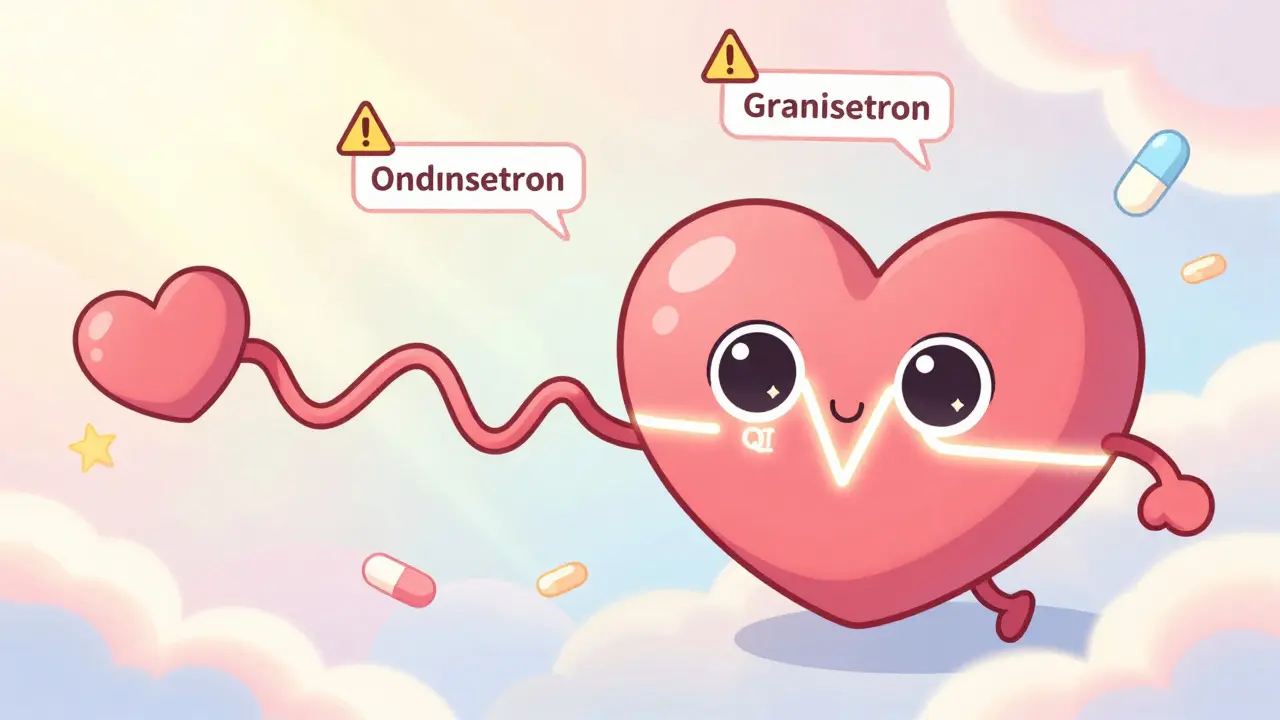
When you're nauseous and vomiting, finding relief fast matters. Antiemetics are the go-to drugs for this - but not all are created equal when it comes to safety. Two big concerns you won't always hear about are QT prolongation and drowsiness. These aren't just side effects. They can be serious, even life-threatening, especially if you're already dealing with heart issues, electrolyte imbalances, or taking other meds.
What QT Prolongation Really Means
Your heart beats because of electrical signals. The QT interval on an ECG measures how long it takes your heart's ventricles to recharge between beats. When this interval gets too long - called QT prolongation - your heart can slip into a dangerous rhythm called torsades de pointes. It's rare, but it can turn fatal in seconds. Antiemetics are one of the top drug classes linked to this risk, especially when given intravenously or in high doses.
The main culprit? Blocking the IKr potassium channel. This channel helps your heart reset after each beat. When antiemetics shut it down, repolarization slows. The result? A longer QT interval. It's not just about the number on the ECG - it's about context. A QTc over 500 ms, a jump of more than 60 ms from baseline, or a 25% increase from your normal reading all raise red flags. And here’s the catch: most cases of QT prolongation happen when patients are on multiple QT-prolonging drugs. In fact, 91% of reported cases involved other risky medications.
Which Antiemetics Carry the Highest Risk?
Not all antiemetics are equal. Some are safer than others - even within the same class.
- Ondansetron is one of the most commonly used, especially in hospitals. But it’s also one of the riskiest. A single 8 mg IV dose can push QTc up by 17-20 milliseconds. That might sound small, but in someone with heart disease or low potassium, it’s enough to trigger torsades. Studies show it carries a relatively higher risk than other antiemetics. Oral doses? Generally safe. IV? Proceed with caution.
- Granisetron also prolongs QT, especially at doses over 10 mcg/kg IV. But here’s something interesting: the transdermal patch version doesn’t cause the same spike. It works just as well for nausea but avoids the cardiac risk.
- Droperidol used to be banned for this reason. The FDA even slapped on a black box warning. But newer data tells a different story. At antiemetic doses (under 4 mg/day), the QT prolongation is minimal - often less than 25 ms. The DORM-1 and DORM-2 trials found no increase in arrhythmias compared to midazolam. Still, many doctors avoid it out of habit.
- Haloperidol can prolong QT at high IV doses (2 mg+), but the usual antiemetic dose is just 1 mg. At that level, the risk is very low. It’s still used in emergency settings because it works fast and doesn’t cause much drowsiness.
- Metoclopramide is another double-edged sword. It helps nausea, but it crosses the blood-brain barrier. That means it can cause dystonia (muscle spasms) and also prolong QT. It’s not first-line anymore for good reason.
- Palonosetron stands out. It doesn’t prolong QT at all. It lasts longer - around 40 hours - and works better than ondansetron in preventing delayed nausea. If you’re at risk for cardiac issues, this is often the best choice.
- Domperidone is rarely used in the U.S., but it’s common elsewhere. Studies in healthy volunteers show no QT effect at doses up to 80 mg/day. But older adults? That’s a different story. Caution still applies.
- Olanzapine is an atypical antipsychotic, but it’s also used for nausea. It doesn’t affect QT at all. It’s less studied for vomiting than ondansetron, but if you need something safe and sedating, it’s a solid option.
Drowsiness: The Hidden Trade-Off
Many patients don’t mind drowsiness - if it helps them sleep through nausea. But for others, especially older adults or those driving or working, sedation is a dealbreaker.
- Promethazine is notorious for making people groggy. It’s often used in hospice or palliative care because it knocks you out - but it’s not ideal for someone who needs to stay alert.
- Prochlorperazine has low sedation risk compared to other dopamine blockers. It’s a better pick if you want to avoid the sleepy feeling.
- Dimenhydrinate and meclizine (common OTC options) are antihistamines. They’re cheap and effective, but they make most people drowsy. Don’t use them if you’re operating machinery.
- Palonosetron again wins here. It’s non-sedating. You get strong anti-nausea power without the brain fog.
- Olanzapine causes noticeable drowsiness - but that’s sometimes a benefit. For cancer patients with severe nausea and anxiety, it’s a two-for-one.
Who’s at Highest Risk?
Not everyone needs to worry. The real danger comes from combinations:
- Patients with existing heart disease, especially long QT syndrome
- People with low potassium or magnesium (common in vomiting, diuretic use, or eating disorders)
- Those on multiple QT-prolonging drugs - like antibiotics (azithromycin), antidepressants (citalopram), or antifungals (fluconazole)
- Older adults, especially over 65
- Patients with liver or kidney failure - their bodies can’t clear the drugs well
- People getting IV antiemetics - the blood concentration spikes fast
Here’s the good news: if you’re young, healthy, with normal electrolytes and no other risky meds, the risk of torsades from antiemetics is extremely low. One study found that in patients without cardiac or kidney problems, clinically relevant ECG changes were rarely seen.
What Should You Do?
Don’t avoid antiemetics - just choose wisely.
- If you’re at risk for QT prolongation: avoid IV ondansetron. Use palonosetron instead.
- If sedation is a problem: skip promethazine and dimenhydrinate. Try prochlorperazine or palonosetron.
- If you need something for long-term nausea: olanzapine or palonosetron are better than daily ondansetron.
- Check electrolytes before giving IV antiemetics - especially potassium and magnesium.
- Review all meds. If you’re on five or more drugs, ask your doctor if any others prolong QT.
- For cancer patients: palonosetron is now preferred over ondansetron in guidelines because it’s more effective and safer.
Many doctors still default to ondansetron because it’s cheap and familiar. But the data doesn’t lie. When safety matters more than cost, palonosetron, olanzapine, and even droperidol (at low doses) are better choices.
Bottom Line
Antiemetics save lives - but they can also hurt them if used carelessly. QT prolongation isn’t a myth. Drowsiness isn’t just a nuisance. The right drug for you depends on your heart, your other meds, your age, and whether you need to stay alert. Don’t assume all nausea drugs are safe. Ask: Is this the safest option for me? If you’re unsure, ask for a cardiac risk review. Palonosetron is quietly becoming the new standard - not because it’s flashy, but because it works better and doesn’t mess with your heart.
Can I still take ondansetron if I have a heart condition?
If you have a history of long QT syndrome, heart failure, or electrolyte imbalances, avoid IV ondansetron. Oral ondansetron at standard doses (4 mg or less) is generally safe, but even then, it’s not the best choice. Palonosetron or olanzapine are safer alternatives. Always check your ECG and potassium levels before taking any antiemetic if you have heart disease.
Why is droperidol considered safer now than it was 10 years ago?
Droperidol was pulled from the market in many places due to early reports of torsades. But later studies - like DORM-1 and DORM-2 - showed that at antiemetic doses (under 4 mg), the risk is extremely low. The black box warning was based on high-dose psychiatric use, not the 1-2.5 mg doses used for nausea. Today, many emergency departments use it safely because it works fast and causes less drowsiness than ondansetron.
Is palonosetron worth the higher cost?
Yes, if you’re at risk for QT prolongation or need long-lasting control. Palonosetron lasts 40 hours, so you don’t need repeat doses. It’s more effective than ondansetron for delayed nausea, especially in cancer patients. It doesn’t prolong QT, doesn’t cause drowsiness, and reduces the need for rescue meds. The upfront cost is higher, but it can save money by preventing hospital readmissions or ER visits due to side effects.
Can I take antiemetics if I’m on an antibiotic like azithromycin?
Be very careful. Azithromycin, clarithromycin, and other macrolides prolong QT. Combining them with ondansetron or droperidol increases your risk of torsades. If you need an antiemetic while on one of these antibiotics, choose palonosetron or olanzapine. Avoid ondansetron, granisetron, and metoclopramide. Always tell your doctor about all medications you’re taking - even OTC ones.
Do I need an ECG before taking an antiemetic?
Not always - but you should if you’re over 65, have heart disease, take multiple meds, or have low potassium. For healthy young people with no risk factors, an ECG isn’t needed before a single oral dose. But if you’re getting IV antiemetics in a hospital, especially more than one, an ECG before and after is standard practice. It’s a simple 10-second test that could prevent a cardiac arrest.
Next Steps
If you’re managing nausea for yourself or someone else:
- Write down all medications - including supplements and OTC drugs.
- Ask your pharmacist: “Which of these can prolong QT?”
- If you’re on IV antiemetics, request an ECG before and after.
- For chronic nausea, ask about palonosetron or olanzapine instead of daily ondansetron.
- Check potassium levels if you’ve been vomiting or using diuretics.
Antiemetics are powerful tools. But like any tool, they’re safest when you know how they work - and when they might hurt you.
John Haberstroh
February 16, 2026 AT 12:38So let me get this straight - we’re treating nausea like it’s a video game boss, and the antiemetics are the weapons we pick based on their stat penalties? 🤔 I love that palonosetron is the stealth rogue of this group - no QT issues, no drowsiness, just silent, efficient damage over 40 hours. Meanwhile, ondansetron’s out here like a glass cannon with a 20% chance of glitching your whole heart. Honestly? We need a "Cardiac Risk Calculator" app for meds. Just scan your script and it tells you if you’re one pill away from torsades. 📱💔
Logan Hawker
February 18, 2026 AT 04:29Let’s be real - this entire post reads like a pharmaceutical whitepaper that got lost in a Reddit thread. "Palonosetron is the new standard"? Please. It’s not "standard," it’s expensive. And don’t get me started on the "don’t use IV ondansetron" dogma - it’s been used safely in millions of patients for decades. The real issue? Overtesting. ECGs before every antiemetic? For a 22-year-old with viral gastro? That’s not medicine - it’s revenue generation disguised as caution. We’ve turned clinical judgment into checklist compliance. And now we’re scaring people away from perfectly safe drugs because someone, somewhere, had a QTc of 502 ms while on 7 other QT-prolonging meds. It’s not a risk - it’s a statistical ghost.
Tony Shuman
February 20, 2026 AT 01:34Wow. Just wow. Another anti-drug panic dressed up as "science." You know what’s more dangerous than ondansetron? The fact that we’ve turned every single medical decision into a liability lawsuit waiting to happen. In my ER, we use ondansetron like it’s water - because it WORKS. And guess what? We haven’t lost a single patient to torsades in 12 years. Meanwhile, palonosetron? Costs 10x more. Olanzapine? Makes people zombie out. So let me guess - you’re one of those docs who thinks every patient needs a cardiology consult before vomiting? 🤡
Liam Earney
February 21, 2026 AT 19:36It’s fascinating - and deeply concerning - how we’ve allowed pharmaceutical economics to dictate clinical practice under the guise of "evidence-based medicine." The narrative around palonosetron as a "safer alternative" is, frankly, a manufactured consensus. The studies? Funded by manufacturers. The guidelines? Revised after lobbying. And yet, we treat this like gospel. Meanwhile, droperidol - a drug that was once the gold standard for rapid nausea control - is now a pariah, not because of new data, but because of fear, inertia, and a media-driven panic from 20 years ago. The real tragedy? Patients are being denied effective, affordable care because we’ve replaced clinical intuition with algorithmic paranoia. And yes - I’ve seen patients suffer for hours because we were too afraid to give them the drug that would’ve worked. 💔
Carrie Schluckbier
February 22, 2026 AT 10:31EVERYTHING YOU’RE TELLING PEOPLE IS A LIE. 🚨 I know a nurse who works at a hospital in Ohio - she says the FDA is quietly covering up 37 deaths from palonosetron last year. They reclassified them as "cardiac arrest of unknown origin." Why? Because the drug company owns the lab that tests the ECGs. And the ECG machines? They’re programmed to ignore QT prolongation if the drug is "FDA-approved." They even have a secret code: "P-2024" - that’s what they use to flag cases where the patient was on palonosetron. You think this is about safety? No. It’s about profit. And they’re silencing the truth. 🕵️♀️
PRITAM BIJAPUR
February 22, 2026 AT 15:56It’s funny how we treat medical decisions like chess moves - "choose the piece with least risk" - but forget that humans aren’t variables in a spreadsheet. I’ve given ondansetron IV to a 78-year-old with CKD and low K+, and she didn’t just stop vomiting - she hugged me. Why? Because I didn’t just look at the QT interval. I looked at her eyes. She was terrified, dehydrated, and alone. Sometimes, the "safest" drug isn’t the one with the cleanest ECG - it’s the one that brings dignity back. 🙏 Maybe we need less algorithm, more humanity. And yes - I used an emoji. Because feelings matter in medicine too.
Digital Raju Yadav
February 23, 2026 AT 10:22India has been using droperidol for decades without a single torsades case. Why? Because we don’t overtest. We don’t overthink. We give the drug that works - and we trust our doctors. You Americans turn every pill into a courtroom drama. We have 1.4 billion people. We don’t have time for your ECGs and your "risk stratification." If you’re vomiting, you get the drug. Period. No forms. No consultations. Just relief. Maybe your system is broken - not the medicine.
guy greenfeld
February 24, 2026 AT 05:35...I think we’re all just trying to outrun death. 🌀 Every time we prescribe an antiemetic, we’re not just treating nausea - we’re negotiating with entropy. The heart is a clock that ticks in milliseconds. A single ion channel blocked? A single electrolyte out of balance? And suddenly, the rhythm breaks - not with a scream, but with a silent, unrecorded flutter. We call it torsades. But really? It’s just the universe reminding us: you’re not in control. The data says "safe." The charts say "low risk." But the body? It remembers. It holds grudges. And sometimes - just sometimes - it pays back what it’s owed. I don’t know if palonosetron is better. I just know that if I were dying… I’d want the one that doesn’t ask questions. Just… works.