
 Dec, 23 2025

Symptom Pattern Tracker
Track Your Symptoms Using the ABC Model
Patterns Detected
Your entries will appear here as you add them
Ever feel like your symptoms come out of nowhere? One day you’re fine, the next you’re hit with a headache, nausea, or a wave of anxiety - and you have no idea why. You’re not alone. Many people struggle to connect the dots between what they do, eat, or experience and how their body reacts. The key isn’t just to wait for symptoms to pass. It’s to document side effects - systematically, consistently - so you can spot patterns and stop guessing.
Why Tracking Side Effects Works
Tracking isn’t just for people with chronic illnesses. It’s for anyone who’s ever thought, “Why does this keep happening?” Whether it’s migraines after eating cheese, fatigue after coffee, or panic attacks after scrolling at night, the answer often hides in plain sight - if you record it. Research shows that people who track their symptoms for just 30 days are 40-60% more likely to reduce their frequency. A 2023 study of 12,500 migraine sufferers found that those who kept detailed logs identified at least one trigger within three months. For many, it meant cutting out a specific food, adjusting sleep, or avoiding a certain environment - and suddenly, their symptoms eased. The science behind this is simple: your brain remembers the big moments - the bad day, the hospital visit - but misses the small details that led up to it. A symptom journal turns those fuzzy memories into clear data. Instead of saying, “I think dairy makes me sick,” you can say, “I had yogurt at 7 a.m. on Tuesday, and my stomach cramped by 11 a.m. I had the same yogurt on Thursday and felt it again.” That’s not guesswork. That’s evidence.The ABC Model: Your Simple Tracking Framework
The most proven way to track side effects is the ABC model - Antecedent, Behavior, Consequence. It’s used by behavior analysts, neurologists, and therapists because it works. You don’t need fancy tools. Just a notebook or a free app.- A (Antecedent): What happened right before the symptom? (e.g., ate pizza, slept 5 hours, argued with a coworker, took ibuprofen)
- B (Behavior): What was the symptom? Be specific. Not “felt bad,” but “headache behind left eye, rating 7/10, lasted 3 hours.”
- C (Consequence): What happened after? (e.g., took a nap, missed work, felt better after water, vomited)
What to Track: The 7 Essential Details
You don’t need to write a novel every day. But missing one detail can hide a trigger. Here’s what actually matters:- Date and time: Even the hour matters. Did the headache hit at 8 a.m. or 8 p.m.?
- Symptom intensity: Rate it 0-10. A 3 is annoying. A 7 is debilitating.
- Duration: How long did it last? 10 minutes? All day?
- Medications and doses: Did you take something? When? How much? Even OTC drugs like Advil or melatonin can cause side effects.
- Food and drink: What did you eat or drink in the 6-8 hours before? Sugar, caffeine, alcohol, processed foods, and additives like MSG or tyramine (in aged cheese) are common triggers.
- Sleep: How many hours? Did you wake up multiple times? Sleep quality often matters more than quantity.
- Stress and environment: Were you overwhelmed? In a noisy room? Under bright lights? Did the weather change?
Paper vs. Apps: Which One Actually Works?
There’s no one-size-fits-all tool. The best tracker is the one you’ll use. Paper journals like MedShadow’s symptom tracker are simple, cheap, and reliable. They don’t need charging. They don’t glitch. And 91% of users keep using them after six months. They’re ideal for older adults, people who dislike screens, or anyone who just wants to write without distractions. Digital apps like MigraineBuddy or Wave offer automation. They can sync with your Apple Watch to track heart rate, sleep, and even body temperature - which helps catch early migraine signs. MigraineBuddy’s algorithm spots patterns you might miss, like “headaches always happen after 2 days of poor sleep.” But here’s the catch: 43% of app users quit after 60 days. Why? Too many screens, too many settings, too much pressure to log perfectly. One user on Reddit said, “I felt like I was failing because I missed a day. Then I went back to paper - and suddenly I was tracking again.” If you’re tech-savvy and want deep insights, try an app. If you’re overwhelmed by tech, grab a notebook. Both work. But only one works if you actually use it.Real Stories: What People Actually Discovered
Let’s cut through the theory. Here’s what real people found after tracking:- A 52-year-old woman with daily headaches realized her migraines only happened on days she ate cheddar cheese. She didn’t even like it - but she had it in her salad every Monday. Cut it out. Headaches dropped by 80%.
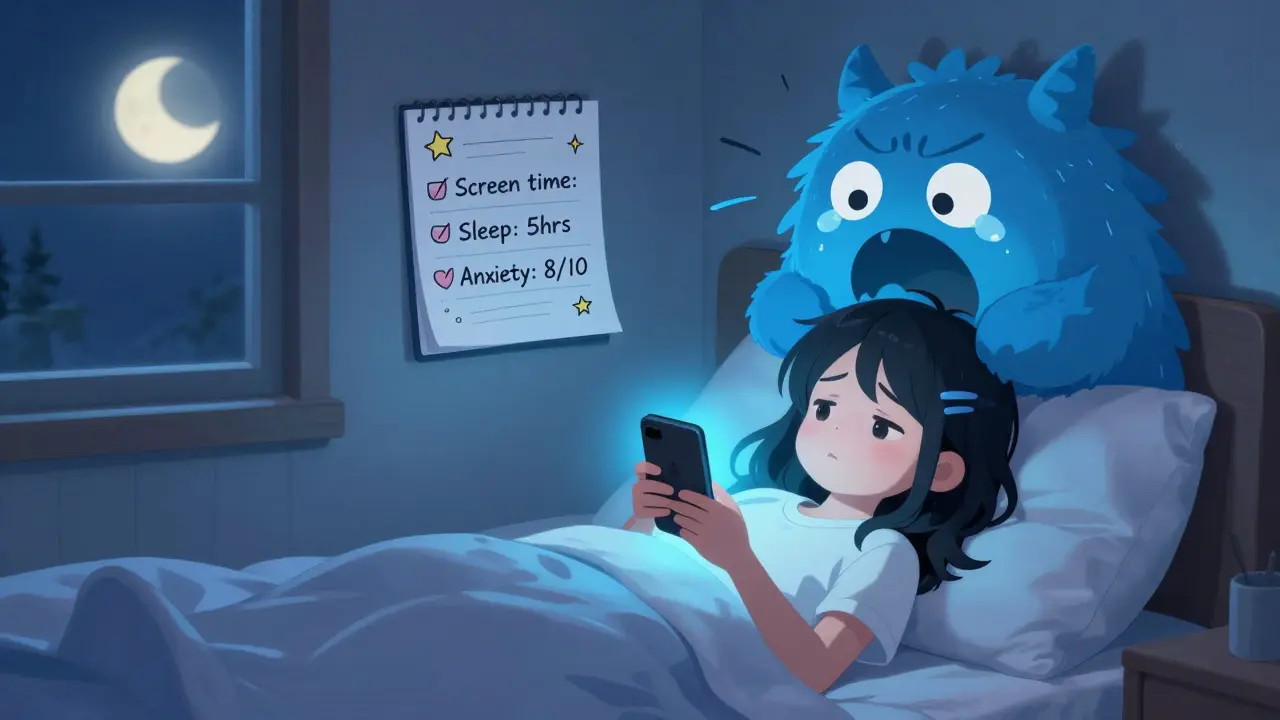
- A college student with anxiety noticed panic attacks always followed 4 hours of screen time after 10 p.m. She started reading before bed. Within two weeks, her attacks stopped.
- A man with fibromyalgia tracked his pain and found it spiked after drinking diet soda. He thought it was sugar-free, so it was “safe.” Turns out, aspartame triggered his nerves. He switched to water. Pain scores dropped from 8/10 to 3/10.
When Tracking Backfires
Tracking isn’t magic. It can make things worse - if you’re not careful. Some people, especially those with anxiety disorders, get obsessed. They start measuring every breath, every heartbeat, every flicker of discomfort. Instead of gaining control, they feel trapped in their own data. Harvard Medical School found that 12-15% of users with anxiety saw symptoms worsen because tracking turned into hypervigilance. If you notice yourself spiraling - checking your body constantly, feeling guilty for missing a log, or dreading the next symptom - pause. Take a week off. Talk to your doctor. Tracking should reduce stress, not create it. Also, don’t expect instant results. The first two weeks are messy. You’ll log things that don’t seem connected. That’s normal. Patterns don’t appear overnight. They emerge after repetition.
How to Start Today (No Overwhelm)
You don’t need to track everything tomorrow. Start small.- Choose one symptom you want to understand - headache, fatigue, nausea, anxiety.
- For the next 7 days, write down just three things:
- What happened right before it?
- How bad was it (0-10)?
- How long did it last?
- Do it at the same time every day - right before bed, for example.
- After 7 days, look back. Do you see anything? A food? A time of day? A stressor?
What Happens After You Find the Trigger
Finding the trigger is only half the battle. The next step is action. Once you know what’s causing your side effects, you can:- Eliminate it (e.g., stop eating certain foods)
- Modify it (e.g., take medication earlier, reduce screen time at night)
- Prepare for it (e.g., keep pain relief handy on high-risk days)
What’s Next for Side Effect Tracking
The future is getting smarter. Apps are now integrating with smart home devices that detect light levels, air quality, and noise. The FDA just cleared a digital tracker for use in clinical trials. The NIH is funding research to standardize tracking for 12 chronic conditions. But the real innovation isn’t in the tech. It’s in the mindset. More people are realizing that their body is talking - and tracking is how you learn to listen. You don’t need to be a scientist. You don’t need to be perfect. You just need to show up - day after day - and write down what’s happening. Because the answer to your symptoms isn’t in a pill. It’s in your daily life. And it’s waiting to be seen.How long does it take to see patterns in a symptom journal?
Most people start seeing clear patterns after 14 to 30 days of consistent tracking. While some triggers appear within a week, deeper connections - like how sleep and stress interact - often take longer. The 2023 Magnetaba study found that 87% of successful trigger identifications required at least 14 days of daily logs. For complex conditions like migraines or fibromyalgia, 30 days is the standard recommendation to capture enough data.
Can I track side effects without an app?
Yes - and many people find paper journals more effective. A 2024 MedShadow report showed 91% of users kept using paper trackers after six months, compared to just 39% for apps among adults over 65. Paper avoids screen fatigue, doesn’t require charging, and reduces the pressure to log perfectly. All you need is a notebook and a pen. Write down the date, time, symptom, intensity, and what happened right before it. That’s all the data you need to spot patterns.
What if I miss a day of tracking?
Missing a day doesn’t ruin your progress. What matters is consistency over time, not perfection. If you forget one day, just pick it up the next. Many successful trackers have gaps - they just keep going. The key is to avoid guilt. Tracking is a tool, not a test. If you’re feeling overwhelmed, take a short break. Return when you’re ready. The goal is to understand your body, not to meet a daily quota.
Can tracking make anxiety worse?
Yes - for about 12-15% of people with anxiety disorders, tracking can turn into obsessive monitoring. If you start checking your body constantly, fearing every twinge, or feeling guilty for missing entries, it may be doing more harm than good. Harvard Medical School warns that this can heighten hypervigilance and worsen symptoms. If this happens, pause tracking for a week. Talk to your doctor or therapist. You can return to tracking later with a simpler, less rigid approach.
What’s the most common trigger people miss?
Sleep disruption is often overlooked. Many people think they slept “enough” - say, 7 hours - but if they woke up three times or spent hours tossing and turning, that’s not restful sleep. A 2023 MigraineBuddy study found that poor sleep quality was the #1 trigger for migraines and anxiety, even more than diet or stress. Tracking sleep duration alone isn’t enough - note how rested you felt upon waking. That’s the real signal.
How do I know if my tracker is working?
You’ll know it’s working when you start predicting symptoms - not just reacting to them. For example, you might notice that every time you eat pizza on Friday night, you get a headache on Saturday morning. That’s a pattern. Then, when you skip pizza for a few Fridays and the headaches stop - that’s proof it’s working. Another sign: you feel more in control. Instead of saying, “It just happened,” you say, “I saw this coming, and I adjusted.” That’s the goal.
Jillian Angus
December 25, 2025 AT 06:49Spencer Garcia
December 26, 2025 AT 20:35suhani mathur
December 27, 2025 AT 12:03Pankaj Chaudhary IPS
December 28, 2025 AT 10:25niharika hardikar
December 29, 2025 AT 02:03Joe Jeter
December 29, 2025 AT 10:08Ademola Madehin
December 31, 2025 AT 02:49Jeffrey Frye
January 1, 2026 AT 21:07EMMANUEL EMEKAOGBOR
January 2, 2026 AT 13:02Austin LeBlanc
January 2, 2026 AT 16:44siddharth tiwari
January 3, 2026 AT 15:21Raja P
January 4, 2026 AT 14:17Sidra Khan
January 5, 2026 AT 06:01