
 Apr, 16 2026

Sentinel System Simulator
Simulate a Safety Signal Detection
Select a scenario to see how the FDA identifies potential side effects.
Ever wonder how the government knows a drug has a rare side effect months after millions of people have started taking it? Most of us assume the FDA just waits for doctors to call them with a problem. That's called passive surveillance, and honestly, it's a bit like waiting for a fire alarm to go off instead of patrolling the building for sparks. The FDA Sentinel Initiative is the FDA's way of patrolling. Instead of waiting for a report, it uses a massive network of electronic health data to actively hunt for safety issues in near real-time.
Launched in 2008 following the FDA Amendments Act of 2007, Sentinel shifted the goalposts for medical safety. It moved the agency from a "report-and-react" model to an "analyze-and-act" model. Today, it is arguably the largest multisite distributed database in the world dedicated to medical product safety, covering drugs, vaccines, and medical devices. If you've ever wondered if a medication is truly safe for a specific group-like the elderly or people with multiple chronic conditions-Sentinel is the engine providing those answers.
The Problem with Old-School Safety Reporting
For decades, the gold standard for post-market safety was the FDA Adverse Event Reporting System (also known as FAERS). While FAERS is a vital tool, it has a huge flaw: it relies on voluntary reporting. If a patient has a mild reaction or a doctor is too busy to fill out a form, that data is lost. This leads to massive underreporting and a lack of "denominator data"-meaning the FDA knows 100 people had a reaction, but they don't know if that's out of 1,000 users or 10 million users.
Sentinel fixes this by using Real-World Evidence (RWE). Instead of relying on a phone call or a letter, it looks at the actual medical records and insurance claims of millions of people. This allows the FDA to see the full picture: who is taking the drug, who is experiencing a side effect, and how common that side effect actually is across a diverse population.
How the Distributed Network Actually Works
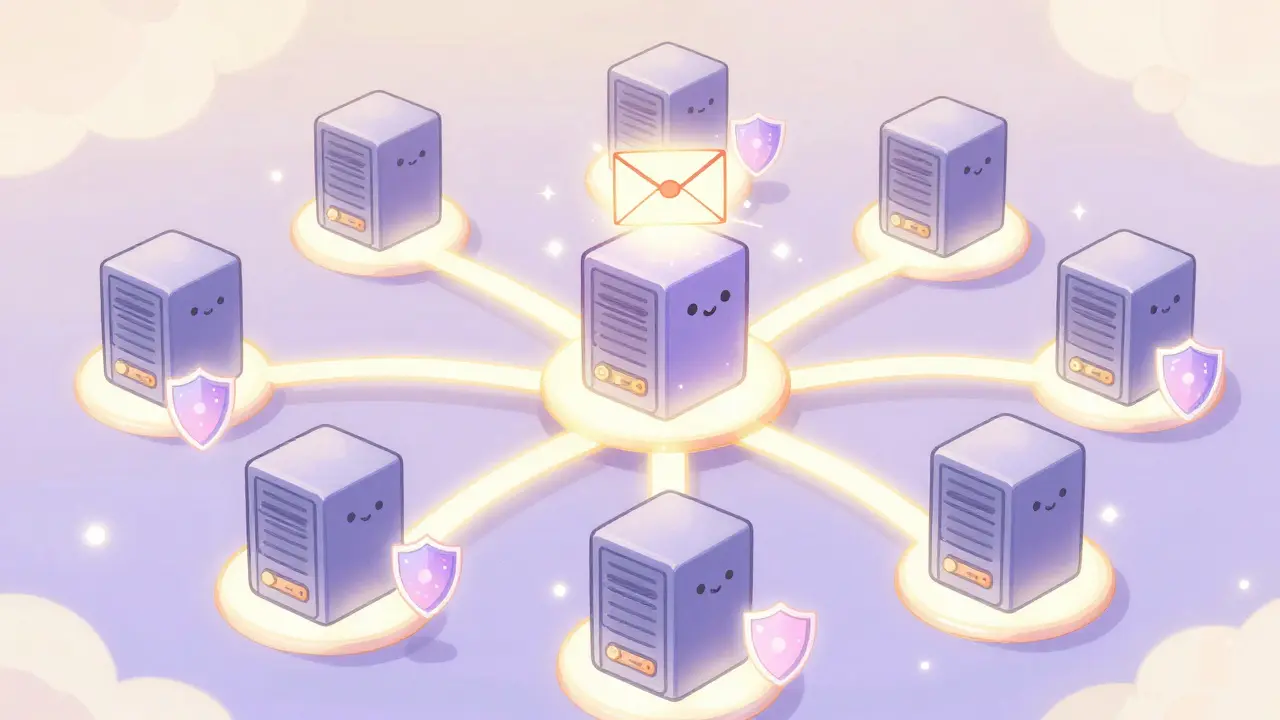
One of the biggest hurdles in big data is privacy. You can't just move millions of private medical records into one giant government folder. To solve this, Sentinel uses a distributed data network. Think of it like a search engine that doesn't own the pages it indexes; it just asks the pages for information.
The system consists of Data Partners-these are large insurance companies and healthcare systems that hold the actual records. When the FDA wants to investigate a potential safety signal, they don't download the data. Instead, they send a secure analytical query (a specific set of instructions) to the partners. Each partner runs the program on their own secure servers and sends back only the aggregated results.
| Feature | Passive (FAERS) | Active (Sentinel) |
|---|---|---|
| Data Source | Voluntary reports | Insurance claims & EHRs |
| Timing | Reactive (after event) | Proactive (near real-time) |
| Accuracy | Prone to underreporting | High population coverage |
| Population | Fragmented | Comprehensive real-world data |
Moving Beyond Billing Codes to Clinical Detail
For years, Sentinel mostly looked at health insurance claims. Claims data is great for knowing *that* a drug was prescribed, but it's terrible for knowing *how* the patient felt. It tells you a patient went to the ER, but not necessarily why if the coding was vague.
The next frontier is the integration of Electronic Health Records (EHRs). Since nearly 89% of U.S. hospitals now use certified EHR technology, there is a goldmine of structured and unstructured data available. By using Natural Language Processing (NLP), the Innovation Center within Sentinel can now scan through a doctor's handwritten notes to find safety signals that a billing code would never capture.
This evolution focuses on four key areas to make the data more useful:
- Data Infrastructure: Improving how different health systems talk to each other.
- Feature Engineering: Turning messy clinical notes into usable data points.
- Causal Inference: Determining if the drug actually caused the problem or if it was just a coincidence.
- Detection Analytics: Using machine learning to spot trends faster than a human analyst could.
The Human Side: Who Runs the Machine?
Sentinel isn't just an algorithm; it's a massive organizational effort. In 2019, the FDA restructured the initiative into three specialized hubs to make it more efficient. The Sentinel Operations Center (SOC) handles the day-to-day queries and ensures the data is clean. The Innovation Center (IC) is the R&D wing, testing out new AI tools and data science methods. Finally, the Community Building and Outreach Center works with the public, academics, and the pharmaceutical industry to make sure the system is transparent.
To make this work, the FDA employs a multidisciplinary team of epidemiologists, statisticians, and pharmacists. When a "signal" appears-perhaps a sudden spike in liver enzyme levels among users of a new blood pressure med-these experts design the query, deploy it across the network, and analyze the results to decide if a label change or a recall is necessary.
Real-World Impact and the Future
Is this actually working? Yes. Sentinel has completed hundreds of safety analyses that have directly influenced regulatory decisions. By emulating target trials-essentially recreating a clinical trial using real-world data-the FDA can see how a drug performs in the "wild' rather than in the sterile, controlled environment of a study with 500 perfectly healthy volunteers.
Looking ahead, the goal is to create a global learning health system. Imagine if the FDA's Sentinel network could talk to similar systems in Europe or Japan. We would be able to detect a rare side effect affecting 1 in 100,000 people almost instantly, regardless of where in the world the patient lives.
Does Sentinel mean the FDA has access to my private medical records?
No. The distributed network model ensures that your data stays with your healthcare provider or insurance company. The FDA never sees individual patient identities; they only receive aggregated, anonymized results from the analytical queries they run.
How is Sentinel different from a clinical trial?
Clinical trials are controlled environments with specific inclusion criteria. Sentinel looks at "real-world evidence," meaning it sees how drugs affect people with multiple diseases, different ages, and various lifestyles who might have been excluded from a trial.
What happens when Sentinel finds a safety issue?
If a signal is confirmed, the FDA may take several actions: updating the drug's warning label, issuing a safety communication to healthcare providers, or, in extreme cases, requesting a market withdrawal of the product.
Can Sentinel detect every possible side effect?
Not everything. Extremely rare events that only happen to a handful of people worldwide may still require traditional case reports or larger global datasets to be identified. However, it is far more effective than passive reporting alone.
Why does it use a "distributed" model instead of one big database?
Privacy and sovereignty. Insurance companies and hospitals are more likely to participate if they maintain control over their own data rather than handing it over to a centralized government repository.
Next Steps for Understanding Drug Safety
If you are a healthcare provider or a researcher, the best way to engage with this system is through the Sentinel Initiative's official documentation. For patients, the most practical takeaway is knowing that the safety monitoring of your medication doesn't end when the drug is approved-it's a continuous, data-driven process.
If you're interested in how this impacts your specific medications, keep an eye on FDA safety communications, which are often the end result of a Sentinel query. For those in the data science field, exploring the Innovation Center's work on causal inference and NLP is a great way to see how big data is saving lives in the real world.