
 Jan, 30 2026
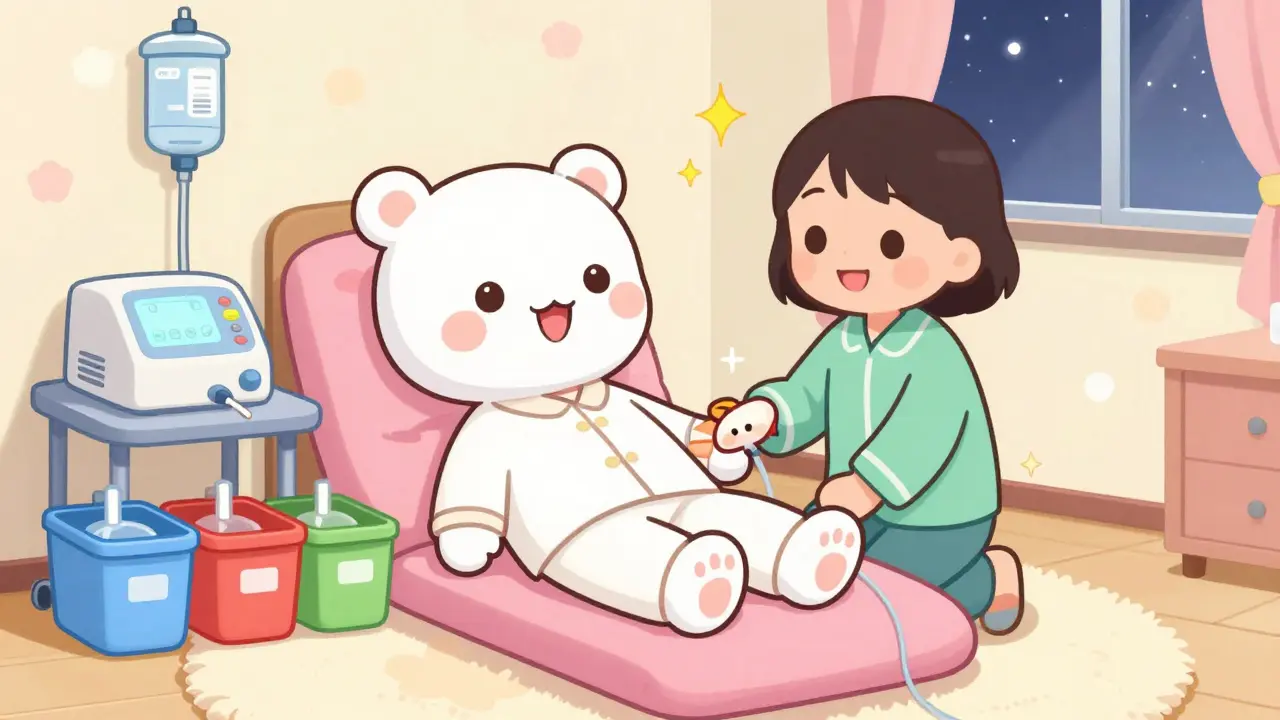
For people living with end-stage renal disease (ESRD), dialysis isn’t just a medical procedure-it’s a lifestyle. And for many, doing it at home changes everything. Home hemodialysis (HHD) lets patients take control of their treatment, fitting sessions around work, family, or sleep instead of the other way around. But it’s not as simple as plugging in a machine. Success depends on training, schedule choices, and having the right support system. If you’re considering HHD, here’s what you actually need to know-not just the basics, but the real details that make the difference between managing well and struggling to keep up.
How Training Works-And Why It Takes Longer Than You Think
Training for home hemodialysis isn’t a quick online tutorial. It’s hands-on, intensive, and usually lasts between three and twelve weeks. Most programs average four to six weeks, with daily sessions that can run three to five hours. You’re not just learning how to turn on the machine. You’re learning how to insert needles into your own fistula, check for leaks, calculate fluid removal, clean the water system, and respond to alarms-all while keeping your blood pressure stable.
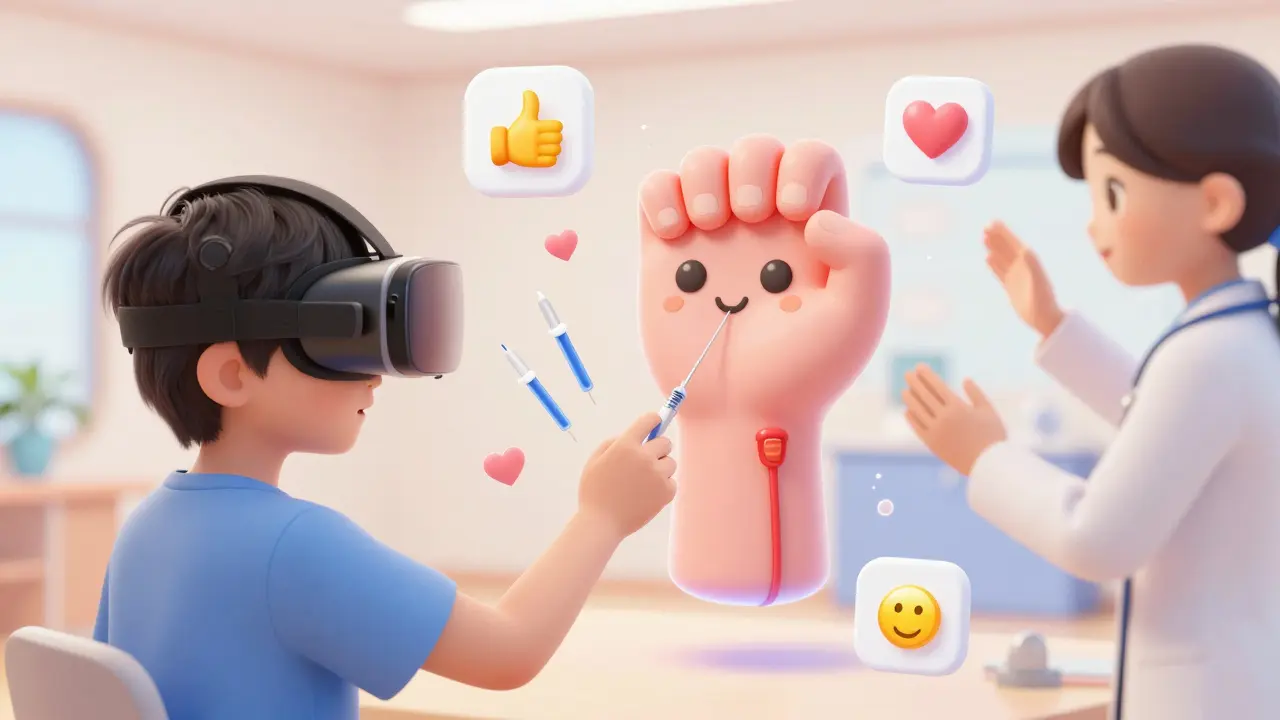
Medicare covers up to 25 training sessions, which is more than what’s offered for peritoneal dialysis. But time isn’t the only factor. Competency is. A study from the University of Washington found that using virtual reality simulators to practice needle insertion before ever touching a real patient boosted competency rates from 78% to 92%. That’s huge. Self-needling is the hardest skill for nearly half of trainees. Many start by having their care partner do it, then gradually take over. Some programs even let you practice self-needling during in-center treatments before going home.
And you’re not alone in this. Every patient must train with a care partner-usually a spouse, family member, or close friend. That partner learns everything you do. They’re not just there for moral support. They’re trained to handle emergencies: low blood pressure, air in the lines, bleeding from the needle site. The Maryland Department of Health says it clearly: “The patient cannot dialyze alone, but must ALWAYS have a trained partner present during treatment.” That rule isn’t flexible. About 30% of people who want to do HHD can’t because they don’t have someone reliable to help them.
Your Schedule: Three Choices, Three Different Lives
One of the biggest advantages of home hemodialysis is schedule flexibility. You get to pick how often and how long you dialyze. There are three main patterns, each with different effects on your body.
- Conventional home hemodialysis: Three times a week, four hours per session. This looks like in-center dialysis-but you do it in your pajamas at 7 p.m. instead of 10 a.m. at a clinic. It’s the easiest to start with, but doesn’t offer major health benefits over center-based treatment.
- Short daily hemodialysis: Five to seven times a week, two to three hours each. This is where things get powerful. More frequent sessions mean your body doesn’t build up toxins and fluid between treatments. A 2021 study in the Clinical Journal of the American Society of Nephrology found this schedule cut mortality risk by 28% compared to standard in-center dialysis. Patients report better sleep, less cramping, and more energy.
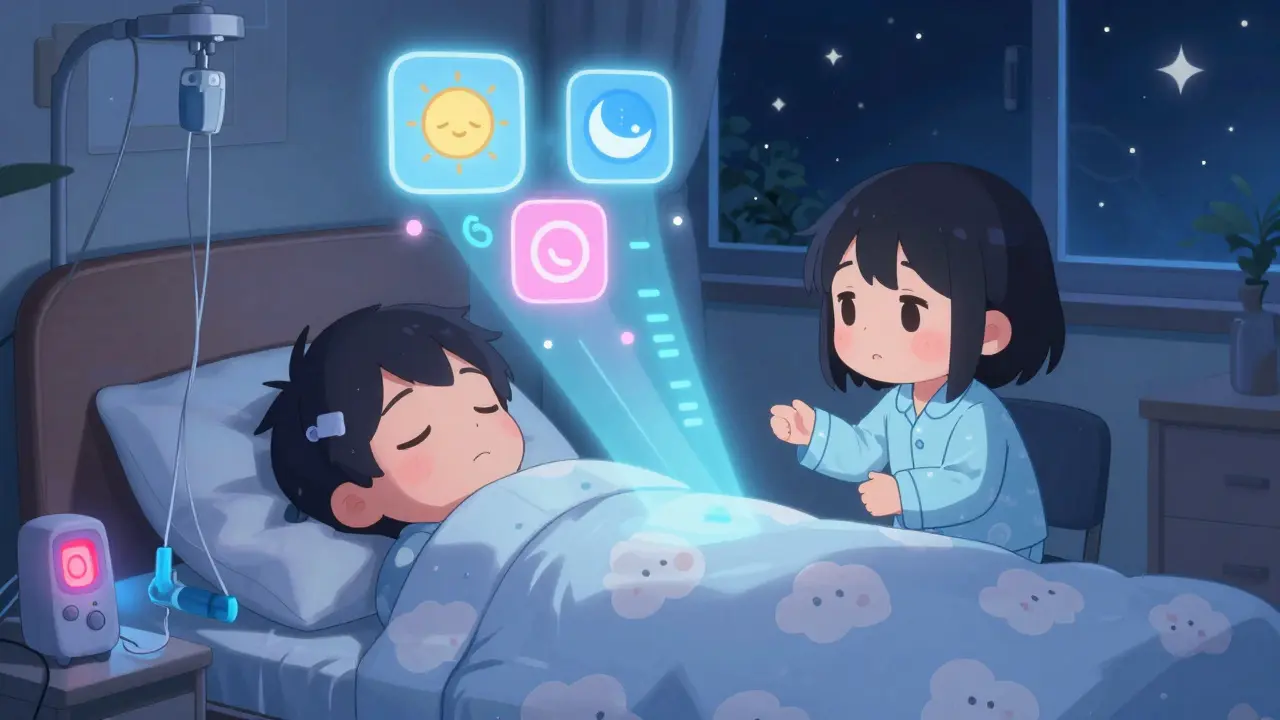
- Nocturnal home hemodialysis: While you sleep. Three to seven nights a week, six to ten hours per session. This is the gold standard for clearance. Because the treatment is slow and long, your body removes phosphorus and middle molecules far more effectively. One study showed patients on nocturnal HHD had 42% lower phosphate levels and cut their phosphate binder pills by over three per day. That’s a major win-high phosphate leads to heart problems and bone disease.
Choosing your schedule isn’t just about medical data. It’s about your life. Short daily dialysis means you’re doing it almost every day-great for energy, tough for travel. Nocturnal lets you reclaim your days, but you need a quiet bedroom and a partner who’s okay with being woken up if the machine alarms. Conventional is the safest bet if you’re nervous or have a busy household.
What You Need at Home-Space, Water, and Power
You can’t just roll a dialysis machine into your living room. You need a dedicated space. Most systems require at least a 6-foot by 6-foot area near a drain and a water line. The water isn’t tap water-it has to be purified. Every home dialysis system uses a reverse osmosis (RO) unit to remove chemicals, bacteria, and minerals. The U.S. standards (AAMI guidelines) require monthly water cultures, annual chemical testing, and logs of chlorine levels before each treatment. If your water isn’t clean, you risk infection or toxin buildup.
Electricity matters too. Most machines need a dedicated 120-volt, 20-amp circuit. No sharing with your microwave or coffee maker. If your home is older, you might need an electrician to upgrade your outlet. Plumbing often needs a new drain line-no standing in the tub while you dialyze.
Then there’s storage. You’ll need space for supplies: dialysate bags, needles, tubing, disinfectant wipes, gloves, and more. Some patients use a small closet or a dedicated cabinet. Others keep everything on a rolling cart. The key is organization. One patient in Texas told me she keeps her supplies in color-coded bins-blue for cleaning, red for dialysis, green for meds. It sounds small, but when you’re tired and your hands are shaking after a long session, color-coding saves time and prevents mistakes.
Outcomes: Why More People Are Choosing This Path
Let’s cut through the noise. Does home hemodialysis actually work better? Yes. The data doesn’t lie.
The United States Renal Data System (USRDS) shows home hemodialysis patients have a 15-20% lower risk of death than those on in-center dialysis. That advantage grows even stronger if you’re on short daily or nocturnal schedules. Why? Because your body isn’t being shocked with big, infrequent treatments. It’s being gently cleaned every day-like a slow drip instead of a flood.
Quality of life improves too. A 2019 review in the American Journal of Kidney Diseases found HHD patients scored 37% higher on quality-of-life surveys. People report being able to work part-time, take their kids to school, cook meals, and travel-things many in-center patients say they’ve given up.
And the numbers keep climbing. In 2016, only 8.9% of U.S. dialysis patients used home dialysis. By 2022, that number jumped to 12.1%. The 2021 Advancing American Kidney Health initiative aimed for 80% of new patients to start on home dialysis or transplant by 2025. We’re nowhere near that-but progress is real. New portable machines like the NxStage System One and the WavelinQ endoAVF are making it easier to travel and reducing the physical burden of treatment.
The Hidden Challenges No One Talks About
Yes, HHD is life-changing. But it’s not all freedom and flexibility. There are real downsides.
Machine alarms. They go off constantly at first. Air in the line. Low pressure. High venous pressure. You’ll learn to ignore most of them-but the first few months feel like living in a haunted house. One Reddit user said he had 12 alarms in one night. His partner cried. He didn’t sleep for two days.
Supply management is another hidden stressor. You order tubing, needles, and dialysate every few weeks. If you forget, you miss a session. If you order too much, you’re stuck with expired gear. Some patients use automated delivery services, but not all insurance covers them.
And then there’s the care partner. Most relationships improve-shared responsibility builds trust. But for 41% of users, according to a Reddit survey, it causes tension. One partner feels like a nurse. The other feels like a burden. Open communication isn’t optional. It’s survival. Many programs now offer counseling for care partners. Don’t skip it.
Who’s a Good Fit? Who Isn’t?
Not everyone is a candidate. You need to be physically stable-no uncontrolled heart failure or severe cognitive decline. You need to be compliant with meds and diet. But the biggest predictor of success? Psychological readiness. Dr. Steven Weisbord from the University of Pittsburgh says it plainly: “The most critical factor isn’t technical skill but psychological readiness and social support.”
If you’re someone who thrives on routine, hates surprises, and wants to be in control, HHD is ideal. If you’re anxious, overwhelmed, or live alone without backup, it’s not the right choice. And if you’re hoping to avoid the care partner requirement-don’t. Solo HHD is possible, but it’s rare, risky, and requires extra equipment and training. Most centers won’t approve it unless you’ve been on HHD for over a year and have zero complications.
Doctors are starting to push HHD harder. The American Society of Nephrology now recommends it as a first-line option for suitable patients. But here’s the catch: only 12% of U.S. dialysis centers offer HHD training. If your nephrologist doesn’t mention it, ask. If they say no, ask why. Maybe they don’t have the program. Maybe they don’t know how to refer you. Either way, you deserve to know your options.
What Comes Next?
If you’re serious about home hemodialysis, start by asking your nephrologist for a referral to a certified HHD program. Ask about their training length, success rates, and whether they use simulators. Ask if they offer counseling for care partners. Ask what happens if the machine breaks down at 2 a.m.
Don’t wait until you’re desperate. The best time to start HHD is when you’re still feeling relatively strong. The sooner you train, the sooner you reclaim your life.
Can I do home hemodialysis by myself?
Solo home hemodialysis is technically possible with special equipment and advanced training, but it’s not standard. Most programs require a trained care partner to be present during every treatment for safety. Even patients who eventually dialyze alone usually start with a partner. The risk of complications-like bleeding, air embolism, or low blood pressure-is too high to go without backup unless you’ve been on HHD for over a year with perfect results.
How much space do I need for home hemodialysis?
You need at least a 6-foot by 6-foot area near a drain and water line. This space holds the dialysis machine, water purification unit, and supply storage. You’ll also need a dedicated 120-volt, 20-amp electrical circuit. Some patients use a closet, garage, or spare bathroom. The key is cleanliness and accessibility-not just for you, but for your care partner.
Is home hemodialysis covered by Medicare?
Yes. Medicare covers home hemodialysis fully, including the machine, supplies, training, and monthly lab tests. It also pays for up to 25 training sessions-more than for peritoneal dialysis. Water testing and maintenance are covered too. You’ll still pay your Part B premium and any applicable deductibles, but the cost of treatment itself is covered.
How long does it take to get trained for home hemodialysis?
Training typically lasts between three and six weeks, though some programs extend to 12 weeks depending on your learning pace. Sessions are usually three to five hours long, held several times a week. You’ll need to pass written and practical tests before going home. Programs using virtual reality simulators for needle insertion can cut training time and improve confidence.
What are the biggest risks of home hemodialysis?
The biggest risks are infection from poor hygiene, bleeding from needle sites, air entering the bloodstream, and low blood pressure during treatment. These risks are minimized with proper training, clean equipment, and a trained care partner. Machine alarms are designed to catch these problems early. Most serious complications happen in the first few months-so stick with your training, don’t skip cleaning steps, and always call your team if something feels off.
Can I travel with home hemodialysis equipment?
It depends on your machine. Standard home dialysis units are not portable. But the NxStage System One is designed for travel-you can pack it in a suitcase. If you’re on conventional HHD, you’ll need to arrange dialysis at a clinic while traveling. Many clinics offer short-term treatments for travelers. Always plan ahead, get your prescriptions in order, and bring extra supplies. Some patients ship supplies ahead to their destination.
What happens if my care partner gets sick or can’t be there?
You need a backup plan. This is non-negotiable. Many patients train a second person-a sibling, friend, or neighbor. Some hire a home health aide for occasional help. If you don’t have a backup, your dialysis center may temporarily switch you to in-center treatments until your partner returns. Skipping a session can be dangerous, so never rely on hope. Plan for emergencies before you start.
Rohit Kumar
January 31, 2026 AT 05:43Home hemodialysis isn't just medical-it's a reclamation of autonomy. In India, where dialysis centers are scarce and travel is brutal, this isn't luxury, it's survival. The care partner requirement? That's not a barrier-it's a cultural strength. Families don't outsource suffering here; they shoulder it together. The machine doesn't heal you, but the rhythm of shared responsibility does.
And nocturnal dialysis? That’s the quiet revolution. Sleeping while your blood cleanses itself-no alarms, no panic, just the hum of a machine that finally respects your circadian rhythm. We don't need more data. We need more people to stop seeing this as a burden and start seeing it as a birthright.
Jodi Olson
January 31, 2026 AT 06:24Training takes weeks because you're learning to be your own medical team. Not just operating a device, but interpreting its language, anticipating failure, and trusting your hands when your body is failing you. The VR simulators? Brilliant. But the real breakthrough is the shift from patient to practitioner. You're not waiting for help anymore. You're the one who fixes it.
Marc Bains
January 31, 2026 AT 19:01Let me tell you about my neighbor, Maria. She’s 68, diabetic, did in-center for 3 years, then switched to short daily HHD. Her BP stabilized. She started walking her grandkids to school. She cooks again. She doesn’t talk about dialysis anymore-she talks about her garden. That’s the real outcome. It’s not survival. It’s living.
And yes, the alarms drive you nuts at first. But you learn. Like learning to drive. You don’t panic every time a car honks. You learn the difference between a warning and a crisis. The machine doesn’t scare you anymore. It just… works.
Eliana Botelho
February 1, 2026 AT 16:39Okay but why is everyone acting like this is some magical cure? I mean, I get the stats, but have you ever tried to store 20 boxes of dialysate in a 500 sq ft apartment in Brooklyn? Or explain to your landlord why your bedroom smells like bleach and plastic every Tuesday? Or watch your husband cry because he’s scared he’ll mess up and you’ll die? It’s not freedom-it’s a full-time job with no PTO. And don’t even get me started on insurance denying the RO unit because it’s ‘not medically necessary’ even though it’s literally the only thing keeping you alive. People talk about autonomy like it’s a TED Talk. It’s not. It’s laundry, logistics, and late-night panic attacks.
And don’t even get me started on the ‘care partner’ thing. My sister tried to help, lasted two weeks, now she won’t even answer my texts. Guess who’s doing it alone? Me. And yeah, I’m terrified every single time. But I do it anyway. Because what’s the alternative? Sitting in a clinic while your kids grow up without you?
April Allen
February 2, 2026 AT 10:18One underdiscussed variable is the pharmacokinetics of fluid removal. Conventional HHD (3x/week, 4h) creates a high interdialytic weight gain burden, leading to elevated intradialytic plasma refilling rates, which in turn elevate cardiac preload and increase myocardial stress. Short daily (5–7x/week, 2–3h) flattens the ultrafiltration curve, reducing left ventricular hypertrophy progression by 40–60% in longitudinal cohorts. Nocturnal, with its low ultrafiltration rate (<0.5 mL/kg/hr), allows for near-physiological clearance of middle molecules like β2-microglobulin, which accumulate in uremic toxicity and contribute to amyloidosis.
Additionally, the reverse osmosis unit’s chlorine residual must be maintained below 0.1 ppm per AAMI standards. Exceeding this triggers oxidative stress on dialyzer membranes, increasing cytokine activation and systemic inflammation. Monthly water cultures are non-negotiable-Pseudomonas aeruginosa biofilms in RO lines are a leading cause of septicemia in HHD patients. Most centers skip this. Don’t.
Donna Fleetwood
February 4, 2026 AT 05:35I wish I’d known about this five years ago. I’m on nocturnal HHD now. My husband and I started training scared out of our minds. Now? We watch movies together while the machine does its thing. I sleep through it. He reads. We talk. It’s weirdly peaceful. I used to dread Mondays. Now I look forward to Tuesdays-because that’s when I feel most alive.
To anyone thinking about it: you’re not giving up your life. You’re taking it back. One slow, quiet hour at a time.
Melissa Cogswell
February 4, 2026 AT 09:12Just wanted to say thank you for writing this. I’ve been on HHD for 18 months. The training was brutal. The first time I inserted my own needle, I threw up. But now? I do it while listening to audiobooks. I’m back at work part-time. My kids don’t even notice I’m dialyzing anymore.
It’s not perfect. But it’s mine.
Diana Dougan
February 5, 2026 AT 11:51Wow. So you’re telling me that after spending $100k on a machine, training, water filters, and a backup generator, the real win is… you can cook dinner while your blood gets cleaned? Big whoop. Meanwhile, my cousin in the UK gets dialysis at a clinic, gets free lunch, a nap, and a nurse who doesn’t yell at her when she forgets to wipe the port. I’m just saying… maybe the real problem isn’t the dialysis. It’s the fact that we’ve turned healthcare into a DIY survival game.
Also, typo: ‘dialysate’ is spelled wrong in paragraph 3. Just saying.
Shubham Dixit
February 7, 2026 AT 04:14India has over 200,000 ESRD patients. Only 1% are on home dialysis. Why? Because the system doesn’t care. Hospitals want you coming in every day. More beds. More revenue. More control. They don’t want you independent. They want you dependent. And they’ll bury you in paperwork, delay referrals, and make you jump through 17 hoops just to get a machine. The government gives you a free dialysis machine? No. They give you a pamphlet and tell you to ‘pray harder.’
But we’re changing it. My brother trained in Bangalore with a DIY water filtration rig made from RO membranes and repurposed IV tubing. He did 12 weeks of training with a nurse who only spoke Hindi. He’s been home for two years. No alarms. No complications. And yes, he still needs his wife there. But now, she’s not a nurse. She’s his partner. And that’s what this is really about-not machines. Not stats. Not Medicare. It’s about dignity. And dignity doesn’t need permission from a hospital administrator.