
 Mar, 9 2026
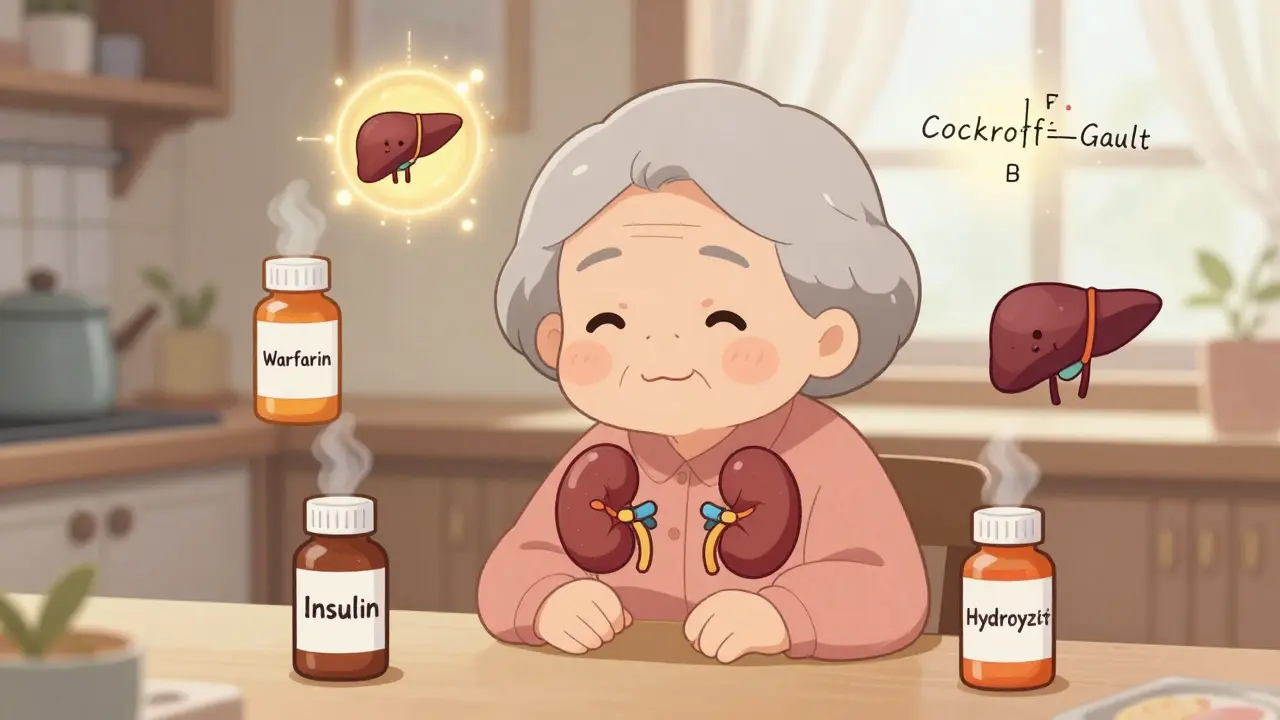
By the time you reach 65, your body no longer processes medications the same way it did when you were 30. It’s not just about taking more pills-it’s about how your body reacts to them. The changes are silent, gradual, and often overlooked. But they’re why so many older adults end up in the hospital from something as simple as a routine prescription. Medication isn’t one-size-fits-all, especially as you age. Understanding how aging reshapes your body’s response to drugs can prevent dangerous side effects, hospital stays, and even long-term cognitive decline.
How Your Body Processes Drugs Changes With Age
Your body handles medication in four main ways: absorption, distribution, metabolism, and elimination. All four change as you get older, and these shifts aren’t minor-they can double or triple the amount of drug circulating in your system.
First, your kidneys slow down. After age 40, your glomerular filtration rate (GFR)-the measure of how well your kidneys filter waste-drops by about 0.8 mL/min per year. By 80, you’re clearing drugs like digoxin, lithium, and many antibiotics 30-50% slower than you did at 40. That means if you’re still taking the same dose, you’re essentially overdosing. Many doctors still rely on serum creatinine alone to judge kidney function, but that’s misleading. Creatinine levels can stay normal even when kidney function is failing, because older adults have less muscle mass. The real measure? Creatinine clearance using the Cockcroft-Gault equation. If your clearance falls below 60 mL/min, about 40% of common medications need a dose adjustment.
Your liver isn’t working as hard either. Blood flow to the liver drops by 30-40% in people over 70. That affects drugs processed by the liver, like propranolol, lidocaine, and even some painkillers. These drugs stick around longer, increasing the chance of side effects. At the same time, your body’s fat percentage rises-jumping from 25% to 40-50% in women and 35% in men between ages 25 and 75. That means lipid-soluble drugs like diazepam, fluoxetine, and fentanyl build up in fat tissue, then slowly leak back into your bloodstream over days. That’s why a single dose of a sleeping pill can make you groggy for 24 hours.
Protein binding also shifts. Albumin, the main protein that carries drugs like warfarin and phenytoin through your blood, drops from 4.5 g/dL to 3.8 g/dL by age 80. Less albumin means more free, active drug in your bloodstream-even if the total dose hasn’t changed. That’s why someone on warfarin might have a dangerously high INR without changing their dose. The fix isn’t always to reduce the pill count. Sometimes, it’s just adjusting the dose.
Why You Feel Drugs More Strongly
It’s not just about how your body moves drugs around. It’s also about how your body responds to them. This is called pharmacodynamics-and it gets more sensitive with age.
Take benzodiazepines. A 75-year-old might feel the same drowsiness from 5 mg of lorazepam that a 30-year-old feels from 2 mg. That’s because aging brains have fewer inhibitory neurons and a more permeable blood-brain barrier. The result? Higher risk of falls, confusion, and memory problems. The American Geriatrics Society lists benzodiazepines as a medication to avoid in older adults for this exact reason.
Heart medications behave differently too. Beta-adrenergic receptors-the ones that respond to adrenaline and drugs like albuterol or epinephrine-lose 40-50% of their sensitivity after 70. That means a standard dose of a beta-blocker might not control blood pressure as well. But here’s the twist: alpha-adrenergic receptors, which control blood vessel tightening, stay strong. That’s why older adults often get lightheaded when standing up-not because their heart is weak, but because their blood vessels can’t constrict properly to maintain pressure.
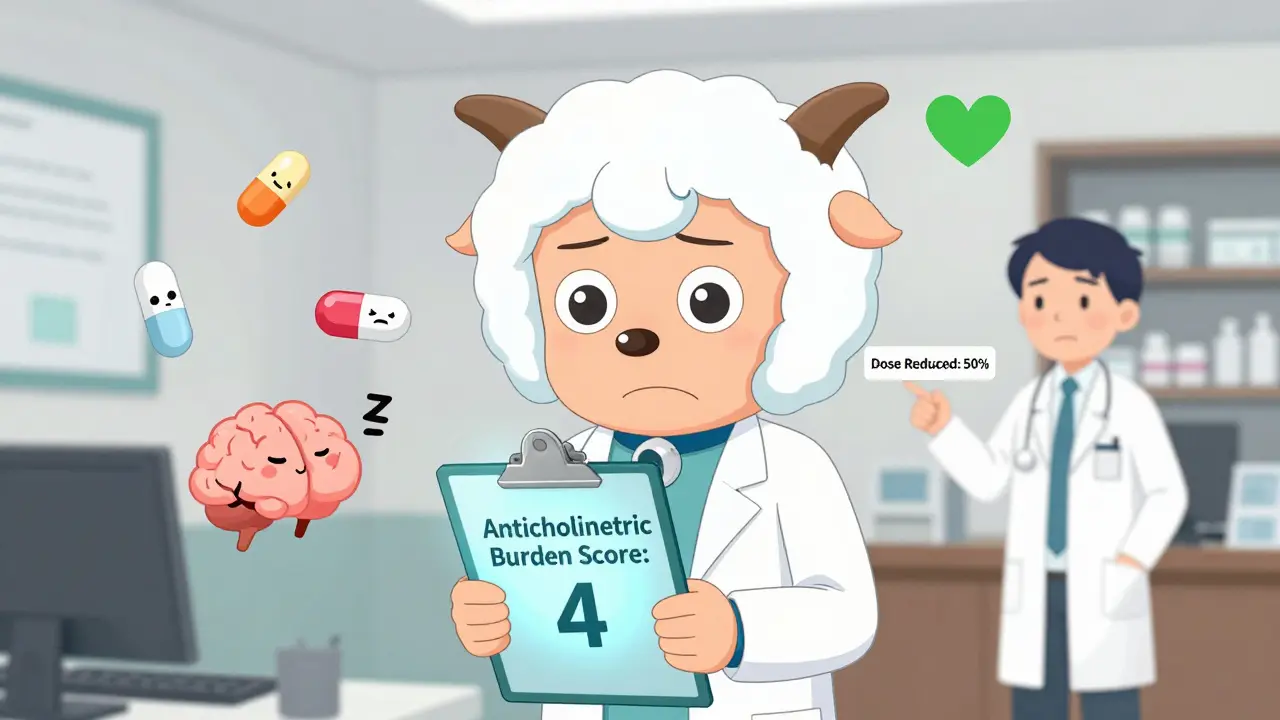
Anticholinergic drugs are another major concern. Medications like diphenhydramine (Benadryl), oxybutynin (for overactive bladder), and even some antihistamines block acetylcholine, a brain chemical critical for memory and attention. In people under 60, these might cause dry mouth. In someone over 75? They can cause confusion, urinary retention, constipation, and even hallucinations. Studies show 25% of older adults on these drugs develop confusion, compared to just 5-8% in younger people. And it’s not just one drug. The cumulative effect-called anticholinergic burden-matters. If you’re taking three medications with even mild anticholinergic effects, your risk of dementia over seven years jumps by 50%.
Why Standard Doses Don’t Work for Seniors
Most drug labels list dosing based on studies done in healthy 25-year-olds. That’s a problem. Clinical trials rarely include people over 75, even though they make up 25% of the U.S. population. As a result, we’re prescribing based on incomplete data.
Take warfarin. The standard starting dose is 5 mg daily. But for an 80-year-old with reduced liver function and lower albumin, that’s often too much. Studies show they need 20-30% less-sometimes as little as 3-4 mg daily-to reach the same blood-thinning effect. Too high, and they risk a bleed. Too low, and they’re not protected from stroke. The same goes for insulin. Older adults are more sensitive to its effects, and a standard dose can cause dangerous lows without warning. Many end up in the ER because their insulin wasn’t adjusted for age-related changes in metabolism and appetite.
Opioids are another trap. Pain is common in older adults, but their bodies process opioids differently. Slower metabolism means longer exposure. Reduced lung function means higher risk of breathing suppression. And because they’re more sensitive to the sedative effects, even small doses can cause confusion or falls. The CDC recommends starting opioids at 25-50% of the usual dose for anyone over 65.
And then there’s the issue of polypharmacy. Nearly 40% of adults over 65 take five or more prescription drugs. Each one adds another layer of interaction. A blood pressure pill might raise potassium, which makes a kidney drug more toxic. An antibiotic might interfere with a diabetes medication. The more pills, the higher the risk.
What Doctors Should Do-And What They Often Don’t
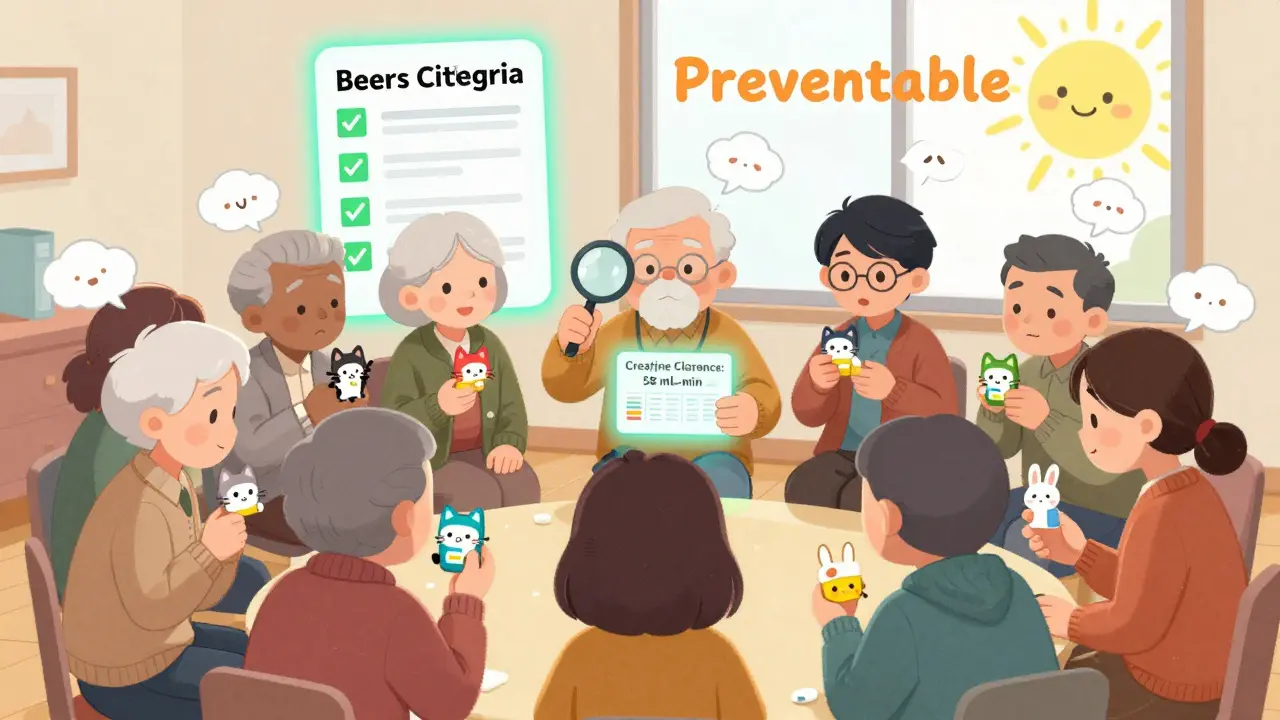
There are clear guidelines, but they’re not always followed. The American Geriatrics Society Beers Criteria lists 30 medication classes that should be avoided or adjusted in older adults. Yet, a 2022 study found that 35% of prescriptions for seniors still violate these guidelines.
Doctors need three tools to get this right:
- Cockcroft-Gault equation to calculate creatinine clearance-not just serum creatinine.
- Anticholinergic Burden Scale to count up all medications with anticholinergic effects. A score above 3 increases dementia risk.
- START/STOPP criteria-a checklist of 127 prescribing rules that help avoid harmful or unnecessary drugs.
Many clinics now use apps like the Beers Criteria mobile tool, downloaded over 250,000 times. Pharmacies use platforms like DosemeRx to auto-adjust doses based on kidney function. The VA system uses the Anticholinergic Burden Calculator in 65% of its hospitals. But outside these systems, many providers still rely on outdated assumptions.
One big gap? Training. The American Board of Internal Medicine requires 15 hours of geriatric pharmacology every two years for certification. But most primary care doctors don’t have that training. That’s why pharmacists are stepping in. A 2022 survey of 1,200 pharmacist practitioners found that 68% now start seniors on 25-50% of standard doses-and 82% saw fewer side effects and hospitalizations as a result.
Real Stories: What Happens When Dosing Isn’t Adjusted
One woman, 82, was prescribed 25 mg of hydroxyzine for anxiety. Within a week, she was confused, falling, and forgetting her grandchildren’s names. Her daughter brought her to the ER. The doctor reviewed her meds and realized hydroxyzine is a strong anticholinergic. The dose was cut to 10 mg. Within three days, she was back to herself.
Another man, 79, had atrial fibrillation. His apixaban dose was stuck at 2.5 mg for years-even though his kidney function improved after dialysis. His cardiologist never re-evaluated. He kept having small clots. When his dose was raised to 5 mg after a proper kidney test, his stroke risk dropped dramatically.
These aren’t rare cases. Medicare data shows 1.8 million emergency room visits each year in the U.S. are tied to improper dosing in seniors. Warfarin, insulin, and opioids top the list. But the good news? Most of these are preventable.
What You Can Do
You don’t need to be a doctor to protect yourself or a loved one. Here’s what works:
- Ask for a med review at least once a year. Bring all pills-even supplements and OTCs-to your doctor or pharmacist. Ask: "Which of these are still necessary?"
- Request a creatinine clearance test, not just a creatinine blood test. If your kidney function is below 60 mL/min, ask if any drugs need adjusting.
- Check for anticholinergic burden. Look up each medication on the Anticholinergic Burden Calculator. If you’re on three or more with any effect, ask for alternatives.
- Start low, go slow. If a new drug is prescribed, ask: "Can we start at half the usual dose?" Many drugs can be titrated up safely over weeks.
- Use a pill organizer and keep a written log of side effects. Write down dizziness, confusion, nausea, or unusual fatigue. These aren’t "just aging." They might be your body telling you the dose is too high.
Medication isn’t a set-it-and-forget-it deal. As your body changes, your drugs need to change too. The goal isn’t to take fewer pills-it’s to take the right ones, at the right dose, for your body now.
Why can’t my doctor just use the same dose they gave me when I was younger?
Your body changes as you age-your kidneys filter slower, your liver processes drugs less efficiently, and your fat-to-muscle ratio shifts. These changes mean a drug that was safe at 50 might be too strong at 75. Even if your blood test numbers look normal, your body’s ability to handle medication can be significantly reduced. Using the same dose without adjustment increases the risk of side effects like falls, confusion, and internal bleeding.
Is it safe to stop a medication if I think it’s causing side effects?
Never stop a medication on your own. Some drugs, like blood pressure pills or anticoagulants, can cause serious rebound effects if stopped suddenly. Instead, write down your symptoms-when they started, how bad they are-and bring them to your doctor. Many side effects improve with a simple dose reduction. Your doctor can help you taper safely or switch to a better alternative.
What’s the difference between serum creatinine and creatinine clearance?
Serum creatinine is a blood test that measures how much waste is in your blood. But it doesn’t tell you how well your kidneys are filtering. Creatinine clearance estimates your kidney’s actual filtering rate using your age, weight, sex, and serum creatinine. It’s more accurate for older adults because muscle mass drops with age, making serum creatinine misleading. Always ask for clearance-not just creatinine-when discussing medication dosing.
Can supplements affect how my medications work?
Yes. Even natural supplements can interact with prescription drugs. St. John’s Wort can make blood thinners and antidepressants less effective. Grapefruit juice can cause dangerous buildup of cholesterol and blood pressure meds. Garlic and ginkgo can increase bleeding risk with warfarin. Always tell your doctor or pharmacist about every supplement you take-even if you think it’s "harmless."
Are there medications that older adults should avoid completely?
Yes. The American Geriatrics Society Beers Criteria lists 30 drug classes that are risky for older adults. These include benzodiazepines (like Valium), anticholinergics (like Benadryl), nonsteroidal anti-inflammatories (like ibuprofen), and certain diabetes drugs that cause low blood sugar. These aren’t banned, but they should only be used if no safer alternative exists. Always ask: "Is there a safer option for someone my age?"
Dan Mayer
March 10, 2026 AT 14:45So let me get this straight-you’re telling me we’ve been giving old people the same pills as 20-year-olds for decades? That’s not negligence, that’s criminal. My uncle died because his doctor kept him on benadryl for ‘sleep.’ He was 81. His kidneys were shot. The doc didn’t even check creatinine clearance. Just assumed ‘it’s just aging.’ Nah. It’s laziness. And now we got 1.8 million ER visits a year because nobody bothered to learn the Cockcroft-Gault equation. Fix this. Now.
Stephen Rudd
March 11, 2026 AT 02:15Every time I see one of these ‘senior medication’ posts, I cringe. You’re all acting like the medical system is some broken machine. It’s not. It’s just that people don’t want to admit their bodies are decaying. You think a 75-year-old should get half the dose of a 30-year-old? What’s next? Do we start giving toddlers adult doses because their livers are ‘more efficient’? This isn’t science-it’s ageist panic dressed up as medicine.
Erica Santos
March 11, 2026 AT 08:34Oh sweet mercy. Another ‘here’s how to save old people from themselves’ lecture. Let me guess-you also believe in ‘natural remedies’ and think statins are Big Pharma’s plot to kill grandma? You know what’s really dangerous? Assuming every side effect is ‘medication-related’ when it’s just dementia, depression, or the fact that your body is literally falling apart. Maybe instead of dosing down, we should stop pretending 80-year-olds can still function like 40-year-olds. Reality check: aging isn’t a bug. It’s the feature.
George Vou
March 11, 2026 AT 18:19they said the same thing about vaccines. now they say it about meds. next they’ll say ‘dont give insulin to diabetics over 60’ bc it’s ‘too strong’. i saw a vid where a guy said his mom got confused from a zpack. well duh. she also took 3 other pills, drank grapefruit juice, and thought ‘natural’ meant ‘safe’. the system is broken but dont blame the drugs. blame the people who think supplements are medicine.
Scott Easterling
March 12, 2026 AT 01:38Let’s be real: 40% of seniors take 5+ meds? That’s not ‘polypharmacy’-that’s medical overreach. Who approved this? Who signed off? My aunt is on 11 prescriptions. 7 of them are for side effects of the other 4. The system is a Ponzi scheme. Pharmacies make money off refill rates. Doctors get bonuses for ‘managing chronic conditions.’ And we’re all just collateral damage. Stop calling it ‘aging.’ Call it corporate greed.
Mantooth Lehto
March 13, 2026 AT 10:40I lost my dad because they didn't adjust his warfarin. He was 78. They said 'his numbers looked fine.' His numbers were fine because they didn't test the right thing. I cried for weeks. Then I started doing my own research. Now I do med reviews for my friends' parents. I don't care if it's not 'my job.' If you're old, you deserve better. This isn't about science-it's about love. And we're failing. 💔
Melba Miller
March 14, 2026 AT 21:29Americans think if you're over 65, you're a liability. We don't invest in geriatric training because we don't value elderly lives. We'd rather let them die quietly than spend $200 on a pharmacist consultation. Meanwhile, we spend $800 billion on military drones. Who’s the real villain here? It’s not the doctors. It’s the culture that sees aging as failure.
Katy Shamitz
March 15, 2026 AT 18:59My mom is 80 and on 6 meds. I took her to a geriatric pharmacist last year. She cried because she finally felt heard. The pharmacist said, 'We can cut three of these.' And guess what? Her energy came back. She started gardening again. She remembered my birthday. It’s not magic. It’s just… paying attention. You don’t need a PhD. You just need to care enough to ask, 'Is this really helping?'
Nicholas Gama
March 16, 2026 AT 00:06Corporations. That’s the root. Drug trials exclude the elderly because they’re ‘too complex.’ Then we sell them the same pills. Profit. Then we blame the patient for side effects. It’s not medicine. It’s market manipulation. The Beers Criteria? A Band-Aid. The real fix? Ban drug trials that exclude people over 70. Simple. Elegant. Necessary.
Janelle Pearl
March 16, 2026 AT 18:20I work in home care. I’ve seen this firsthand. An 84-year-old woman on 12 meds. We cut three. She stopped falling. She started laughing again. One of those was diphenhydramine. She’d been on it for 15 years because ‘it helped her sleep.’ It was making her hallucinate. We switched to melatonin. No side effects. She said, ‘I didn’t know I could feel this good.’ It’s not complicated. Just listen. And don’t assume it’s ‘just old age.’
Ray Foret Jr.
March 17, 2026 AT 12:57my grandma took half her pill dose for 3 years and never told anyone. she thought it was 'too strong' and was scared. i found out when she passed out. she was fine after we adjusted. never assume. always ask. and if you're over 65? don't be shy. your life matters. ❤️
Samantha Fierro
March 19, 2026 AT 03:11The data is clear. The guidelines exist. The tools are available. The problem isn’t ignorance-it’s inertia. Health systems are built for volume, not precision. We need policy change: mandatory geriatric pharmacology training for all prescribers. Reimbursement for med reviews. Incentives for pharmacists to lead these interventions. This isn’t a patient problem. It’s a system failure. And it’s fixable.
Robert Bliss
March 20, 2026 AT 10:15my dad is 79. he takes 4 meds. we sat down, made a list, called his pharmacist. cut one, lowered two. he says he feels like himself again. no drama. no panic. just a simple conversation. you don’t need to be a doctor. you just need to care enough to ask. 🙏