
 Dec, 25 2025
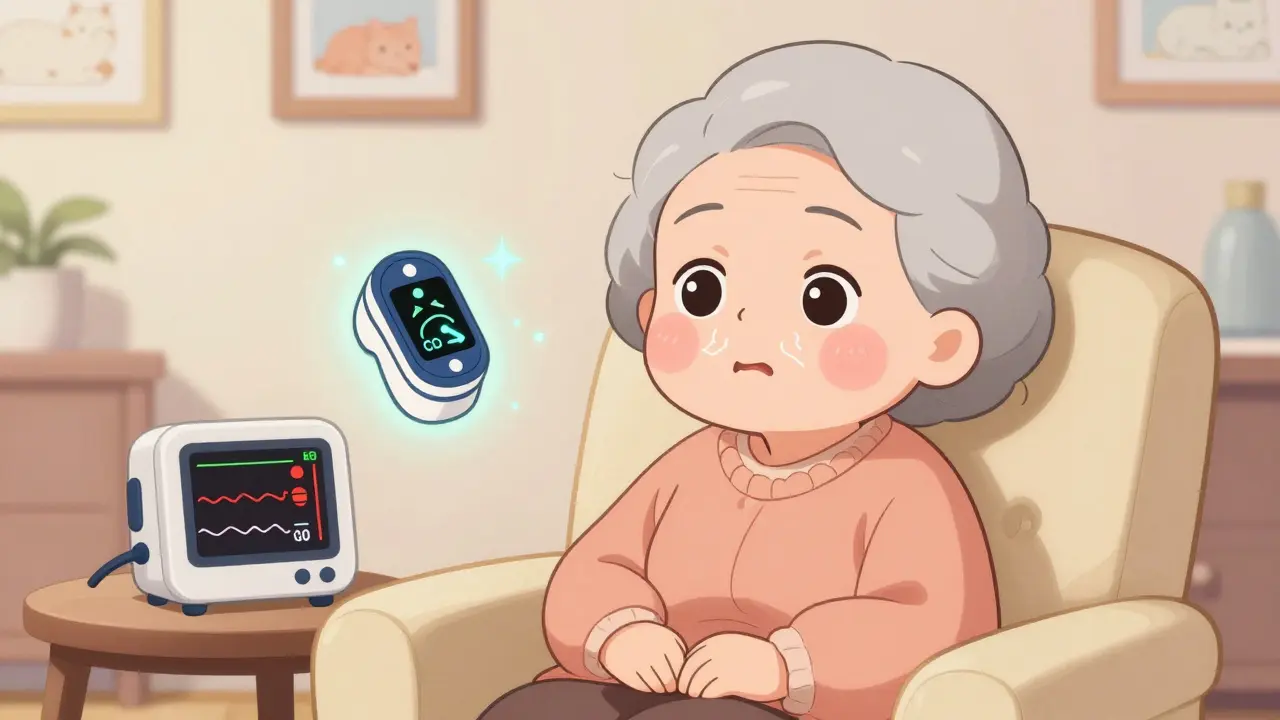
When seniors take pain meds, sleep aids, or anxiety medications, their bodies don’t process them the same way they did at 30. Slower metabolism, weaker kidneys, and a more porous blood-brain barrier mean even small doses can push them into dangerous territory. Over-sedation doesn’t always look like someone passed out on the couch. Sometimes it’s just quiet breathing, slower than usual, or a blank stare that lasts too long. And if you’re not watching closely, it can turn into respiratory arrest - fast, silent, and often fatal.
Why Seniors Are at Higher Risk
People over 65 are 3.5 times more likely to suffer serious side effects from sedatives and opioids than younger adults. Their liver and kidneys don’t clear drugs as efficiently. Between ages 20 and 80, liver function drops by 30% to 50%. Kidney filtration declines by about 0.8 mL/min/1.73m² every year after 40. That means drugs like morphine, oxycodone, diazepam, or even over-the-counter sleep aids stay in their system longer, building up to toxic levels without anyone realizing it.Supplemental oxygen, often given during procedures or for COPD, makes things worse. It hides low oxygen levels. A senior on oxygen might show 94% SpO₂ on a monitor - seemingly fine - while their breathing is so shallow they’re not exhaling enough CO₂. This is called silent hypoxia. By the time their oxygen drops below 90%, they’re already in respiratory distress.
Key Signs of Over-Sedation and Overdose
You don’t need a machine to spot danger. Watch for these five clear warning signs:- Slowed breathing - fewer than 8 breaths per minute. This is the most critical red flag.
- Unresponsiveness - they don’t wake up when you speak their name, shake their shoulder gently, or tap their chest.
- Bluish lips or fingertips - a late sign, but unmistakable when present.
- Confusion or extreme drowsiness - not just tired, but disoriented, slurring words, or unable to follow simple commands.
- Low blood pressure - dizziness, cold skin, or fainting when standing up.
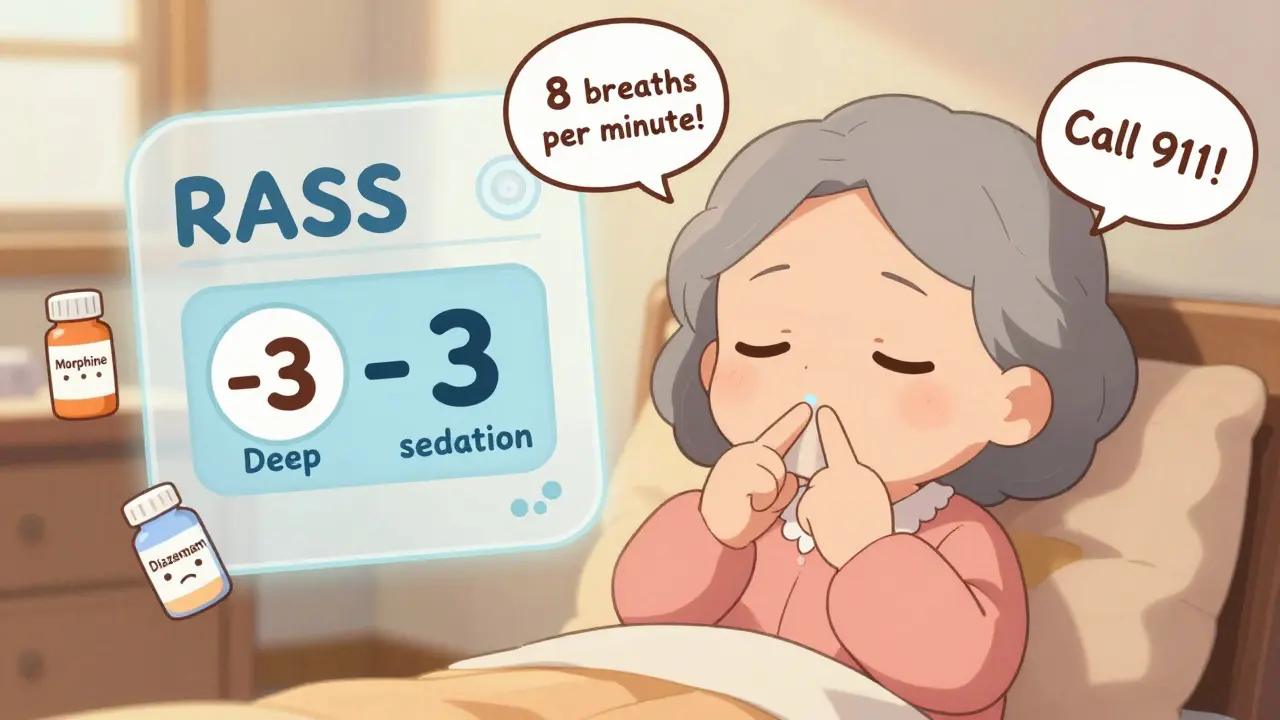
Use the Richmond Agitation-Sedation Scale (RASS) to rate their level of consciousness. A score of -2 means moderate sedation. At -3 or lower, they’re in deep sedation and need immediate help. Many hospitals use this scale daily. Families can learn it too - it’s simple and reliable.
What Monitoring Tools Actually Work
Not all monitors are created equal. Pulse oximeters alone are not enough. Here’s what works - and what doesn’t - for seniors:| Tool | Sensitivity for Detecting Respiratory Depression | False Alarm Rate | Best For |
|---|---|---|---|
| Pulse Oximetry (SpO₂) | 67% | Low | Basic oxygen tracking - but fails with supplemental oxygen |
| Capnography (EtCO₂) | 92% | 38% | Early detection of breathing slowdown - gold standard for seniors |
| Integrated Pulmonary Index (IPI) | 89% | Low | Combines breathing, heart rate, oxygen - predicts trouble 12+ minutes early |
| Modified Early Warning Score (MEWS) | 84% | Low | Simple scoring system using vital signs - good for home use |
| Intermittent Checks (every 5 min) | 22% | N/A | Too slow - misses 78% of events |
Capnography, which measures carbon dioxide in exhaled breath, is the most reliable tool. It catches breathing problems before oxygen drops. In a 2020 study of 387 seniors, capnography spotted apnea 92% of the time - while pulse oximetry alone only caught it 67% of the time. But capnography alarms can be noisy. Up to 38% are false positives because older people breathe irregularly. That’s why combining it with other tools - like IPI or RASS - reduces alarm fatigue and increases accuracy.
How to Monitor at Home
Most seniors aren’t in hospitals. They’re at home, taking pills daily. Here’s how to keep them safe:- Know the dose. Use this rule: for every year over 60, reduce the standard dose by 0.5%. So a 75-year-old should get 7.5% less than a 60-year-old. If a doctor prescribes 10 mg of a drug, that’s 9.25 mg for someone 75.
- Check breathing every hour. Sit with them for 30 seconds. Count breaths. If it’s below 10, watch closer. Below 8 - call 911.
- Use a pulse oximeter. Buy one that shows both SpO₂ and pulse rate. Check it twice a day - morning and night. If SpO₂ drops below 92% for more than 10 seconds, recheck in 5 minutes. If it stays low, contact their doctor.
- Watch for changes. Did they stop eating? Are they sleeping more? Do they forget names? These aren’t just aging - they’re signs their brain is being affected by too much medication.
- Keep a log. Write down times they took meds, their breathing rate, and how alert they seemed. Share this with their doctor at every visit.
Some families use smart devices - like wearable monitors that track breathing and heart rate overnight. These aren’t perfect, but they add a layer of safety. The FDA-approved Opioid Risk Monitoring System (ORMS) can pause IV pain pumps automatically if breathing slows. It’s mostly used in hospitals now, but home versions are coming.
What to Do If You Suspect an Overdose
If someone is unresponsive, breathing fewer than 8 times a minute, or turning blue:- Call 911 immediately. Say: “I think someone is overdosing on sedatives or opioids.”
- Give naloxone if available. Naloxone (Narcan) reverses opioid overdoses. It doesn’t work on benzodiazepines like Valium, but it’s safe to try if you’re unsure. Nasal spray is easy - one puff in each nostril.
- Start rescue breathing. Tilt their head back, pinch their nose, and give one breath every 5 seconds until help arrives.
- Don’t wait. Every minute counts. Waiting to see if they “wake up on their own” is how people die.
Common Mistakes and How to Avoid Them
Even trained nurses make these errors. Families do too:- Assuming oxygen means they’re safe. A senior on oxygen can still stop breathing. Watch their chest rise and fall - not just the number on the screen.
- Ignoring irregular breathing. Older adults often have irregular patterns. That’s normal. But if it gets slower and shallower over time, that’s not.
- Using adult dosing for seniors. Many prescriptions are written for 18-65 year olds. Seniors need less. Always ask: “Is this dose appropriate for someone over 70?”
- Not checking after new meds. The highest risk is within 24-48 hours of starting a new drug or changing a dose. Monitor extra closely then.
- Trusting technology over observation. Machines can fail. Electrodes fall off. Batteries die. Always pair tech with human eyes and ears.
What Facilities Should Be Doing
If your loved one is in a hospital, rehab center, or outpatient clinic, ask:- Are they using capnography during sedation?
- Is someone checking RASS scores every 15 minutes?
- Are staff trained to recognize silent hypoxia?
- Is there a written sedation protocol for seniors?
According to 2023 data, only 42% of outpatient endoscopy centers use continuous capnography for seniors - even though it’s recommended by the American Society of Anesthesiologists. That’s unacceptable. If a facility won’t use proper monitoring, consider switching.
Future Improvements and What’s Coming
New tools are on the way. The American Society of Anesthesiologists is testing AI-powered systems that analyze breathing patterns, heart rate, and oxygen trends to predict problems 20 minutes before they happen. These systems will one day auto-adjust pain pump doses based on real-time data.But no algorithm replaces a trained person watching closely. The Agency for Healthcare Research and Quality found that safe sedation depends most on staffing ratios - not gadgets. One nurse per patient during sedation remains the safest model.
What’s clear: monitoring seniors for over-sedation isn’t optional. It’s life-or-death. With the right tools, knowledge, and vigilance, we can prevent tens of thousands of preventable deaths every year.
What are the first signs of over-sedation in seniors?
The earliest signs are slower breathing (fewer than 10 breaths per minute), unusual drowsiness, confusion, or difficulty responding to simple questions. They may seem more tired than usual, but not just from aging - it’s a change in their baseline. If they can’t wake up fully when spoken to, that’s a red flag.
Can pulse oximeters alone detect an overdose in seniors?
No. Pulse oximeters only measure oxygen levels. Seniors on supplemental oxygen can have normal SpO₂ readings even when they’re not breathing enough to clear carbon dioxide. This is called silent hypoxia. Capnography, which tracks CO₂ levels, is needed to catch breathing problems early.
How much should I reduce a senior’s medication dose?
Use this simple formula: reduce the standard adult dose by 0.5% for each year over 60. For example, a 75-year-old should get 7.5% less than the standard dose (75 - 60 = 15 years; 15 × 0.5% = 7.5%). Always confirm with a pharmacist or doctor - some drugs need even greater reductions.
Is naloxone safe to use if I’m not sure it’s an opioid overdose?
Yes. Naloxone is safe to give even if you’re unsure. It only works on opioids and has no effect on other sedatives like benzodiazepines. Giving it won’t harm someone who doesn’t need it. If they’re unresponsive and breathing slowly, give it immediately - it could save their life.
Why do some hospitals still use only pulse oximetry for seniors?
Cost, lack of training, and outdated protocols. Capnography devices cost more and require staff to interpret waveforms. Some outpatient centers still rely on old practices because they haven’t updated policies. But guidelines from the American Society of Anesthesiologists have required capnography for seniors since 2018. If a facility doesn’t use it, ask why - and consider a different provider.
Becky Baker
December 26, 2025 AT 19:30Rajni Jain
December 28, 2025 AT 01:29Erwin Asilom
December 28, 2025 AT 15:22Sumler Luu
December 29, 2025 AT 07:03sakshi nagpal
December 29, 2025 AT 14:38Sandeep Jain
December 30, 2025 AT 01:20Amy Lesleighter (Wales)
December 31, 2025 AT 01:09Natasha Sandra
December 31, 2025 AT 11:02roger dalomba
January 1, 2026 AT 13:03