
 Jan, 24 2026
Expired controlled substances aren’t just old pills gathering dust on a shelf-they’re legal liabilities, environmental hazards, and potential sources of addiction if they fall into the wrong hands. You can’t throw them in the trash, flush them down the toilet, or dump them in the sink. The DEA has strict rules for handling these drugs, and failing to follow them can lead to fines, license suspension, or even criminal charges. Whether you work in a hospital, veterinary clinic, pharmacy, or research lab, knowing how to dispose of expired controlled substances isn’t optional-it’s mandatory.
Why You Can’t Just Throw Them Away
Controlled substances are classified by the DEA into five schedules based on their potential for abuse and medical use. Schedule II drugs like oxycodone, fentanyl, and Adderall have high abuse potential and no refills allowed. Schedule III and IV include drugs like hydrocodone with acetaminophen and benzodiazepines. Even Schedule V substances, like cough syrups with low codeine, are regulated. These aren’t ordinary medications. They’re tracked from manufacturer to patient to disposal because of their risk of diversion. The DEA doesn’t allow disposal methods that leave the drug recoverable. Mixing expired pills with coffee grounds or kitty litter might work for over-the-counter pain relievers, but it’s explicitly forbidden for controlled substances. Why? Because someone can still extract the active ingredient. The same goes for pouring them down the drain, throwing them in sharps containers, or using blue disposal pads. These methods don’t meet the DEA’s standard: the drug must be rendered non-retrievable.Two Types of Disposal: Inventory vs. Wastage
The DEA makes a critical distinction between two types of disposal: inventory disposal and wastage. This isn’t just paperwork-it changes how you handle the drugs. Inventory disposal applies to entire bottles, vials, or stockpiles of expired, damaged, or unwanted controlled substances. This is common in pharmacies that are closing a line of inventory or research labs that no longer need a drug. For Schedule I and II substances, you must transfer them to a DEA-registered reverse distributor. You’ll need to complete DEA Form 222 (now mostly electronic via the Electronic Registration System, or ERS) to document the transfer. The reverse distributor will then incinerate the drugs under DEA supervision. This is the only approved method for rendering Schedule I and II drugs non-retrievable. Wastage refers to small amounts left in syringes, vials, or IV bags after a dose has been administered. For example, if a nurse draws up 10 mg of morphine but only gives 8 mg, the remaining 2 mg is wastage. For Schedule III-V substances, wastage can be destroyed on-site under direct observation by two authorized personnel. The process must be documented with names, dates, quantities, and signatures. Schedule II wastage still requires reverse distributor disposal-no exceptions.Who Can Dispose of Controlled Substances?
Only DEA-registered entities can legally handle controlled substance disposal. That includes hospitals, clinics, pharmacies, veterinary practices, and research institutions. Individuals (like patients) can’t dispose of these drugs themselves unless they use an authorized take-back program. For institutions, at least two authorized personnel must witness the disposal. One must be the registrant or an authorized agent-someone with a DEA registration tied to the facility. The second can be another licensed staff member, such as a pharmacist, nurse, or research coordinator. Both must sign the disposal log. This isn’t a suggestion. It’s a federal requirement. The American Dental Association found in a 2022 audit that 18.7% of dental practices had errors in their disposal documentation. Common mistakes? One person signing for both, missing dates, or failing to record the quantity destroyed. These aren’t clerical errors-they’re violations that can trigger DEA inspections and penalties.Step-by-Step Disposal Process
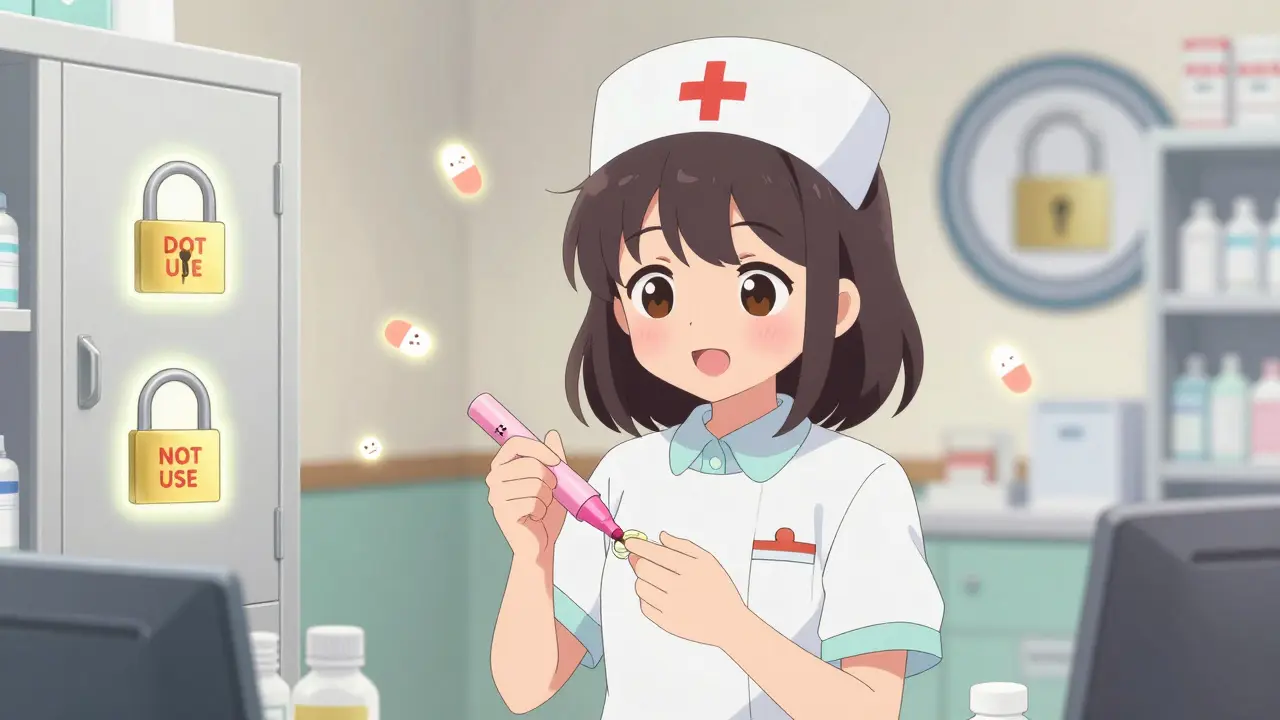
Here’s how to do it right:- Label everything. Clearly mark expired or unwanted controlled substances as “DO NOT USE,” “EXPIRED,” or “TO BE DISPOSED.” Store them separately from active inventory in a locked, secure cabinet.
- Classify the substance. Is it Schedule II? Then you need a reverse distributor and DEA Form 222. Is it Schedule IV wastage? Then two staff members can destroy it on-site.
- For inventory disposal: Contact a DEA-registered reverse distributor. Major providers include Stericycle, Daniels Health, and Drug and Laboratory Disposal, Inc. (DLD). Schedule pickups in advance-wait times can be up to two weeks.
- For wastage: Two authorized personnel witness the destruction. For liquids, pour into a neutralizing agent like activated charcoal or a DEA-approved absorbent. For pills or capsules, crush and mix with an irreversible binding agent (like cement or resin) under supervision. Document the exact quantity, date, time, names, and method.
- Record everything. Maintain logs for at least two years. Use your facility’s system-whether it’s paper, Excel, or an online tool like UCSF’s Research Inventory Online (RIO). Digital systems reduce errors by 70% compared to paper logs.

What Happens After Disposal?
Once the drugs leave your facility, they’re destroyed by incineration at a licensed facility. The DEA requires this because it’s the only method proven to make the substance unrecoverable. Other methods-like chemical neutralization or landfill burial-are not approved for controlled substances. Reverse distributors provide a Chain of Custody Form or DEA Form 41 as proof of destruction. Keep this with your disposal logs. During a DEA inspection, they’ll ask for these documents. If you can’t produce them, you’re in violation-even if you did everything else right.Common Mistakes and How to Avoid Them
Most violations come from simple oversights:- Using kitty litter or coffee grounds. The FDA allows this for non-controlled medications, but the DEA explicitly bans it for narcotics. Don’t assume it’s okay.
- One person disposing alone. Two witnesses are required. No exceptions. Even if you’re the only pharmacist on shift, wait until someone else is available.
- Delaying disposal. Don’t let expired drugs sit for months. The longer they’re stored, the higher the risk of theft or accidental use. Schedule pickups monthly, not quarterly.
- Ignoring training. DEA requires 2 hours of initial training and 1 hour annually. A 2022 audit found only 67% of facilities complied. Make training mandatory and track attendance.
Costs and Logistics
Disposal isn’t free. Reverse distributors charge $250-$500 per pickup for inventory disposal, depending on volume and location. For small practices, this can be a burden. But the cost of non-compliance is higher: DEA fines averaged $7,500 per violation in 2022, and repeat offenders face license revocation. Veterinary practices face unique challenges. Only 41.7% of small animal clinics comply with proper disposal, according to the American Animal Hospital Association. Many don’t know where to find reverse distributors. The DEA’s online disposal locator tool, updated in November 2022, helps. Enter your zip code and it lists registered providers within 50 miles.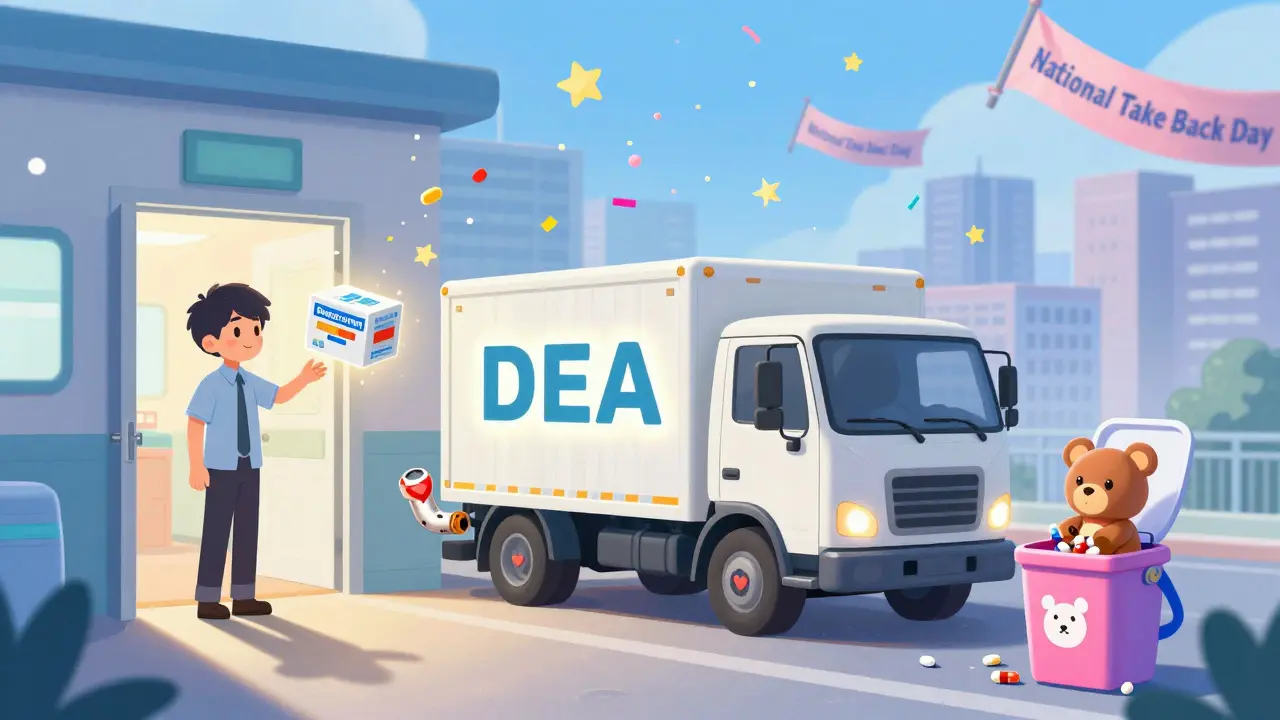
What’s Changing in 2025?
The DEA is rolling out the Electronic Inventory Management System (EIMS) by 2025. This will require real-time reporting of all controlled substance disposals. You’ll no longer be able to wait until year-end to update your logs. Every disposal must be recorded within 24 hours. Also, the DEA plans to increase inspections. In 2022, they conducted 1,847 disposal audits and issued 327 warning letters. Fines rose 23.6% year-over-year. If you’re not compliant now, you’re playing with fire.What About Patients?
Patients shouldn’t be disposing of controlled substances themselves. But they can drop them off at DEA-authorized collection sites-pharmacies, hospitals, or police stations that host National Take Back Days. In October 2023, over 888,000 pounds of medication were collected nationwide. These events are safe, free, and effective. Encourage your patients to use them.Final Reminder: Documentation Is Everything
You can do everything right-label, witness, destroy, document-and still get in trouble if your paperwork is missing. The DEA doesn’t care if you’re busy, understaffed, or confused. They care about records. Two years of logs. Two witnesses. One signature per person. One form per transfer. No shortcuts. If you’re unsure, ask your facility’s compliance officer. If you don’t have one, contact your state pharmacy board or the DEA’s Diversion Control Division. It’s better to ask than to risk a violation.Can I flush expired controlled substances down the toilet?
No. Flushing is never allowed for controlled substances, even if the FDA previously listed certain drugs as safe to flush. The DEA explicitly prohibits this because the drugs can still be recovered from water systems. Always use approved disposal methods like reverse distributors or on-site destruction with two witnesses.
What if I have a small amount of Schedule II drug left in a syringe?
Even small amounts of Schedule II drugs must be transferred to a reverse distributor. You cannot destroy them on-site, even with two witnesses. This includes wastage from injections or infusions. Always use DEA Form 222 (electronic) and schedule a pickup. There are no exceptions.
Do I need training to dispose of controlled substances?
Yes. The DEA requires all personnel handling controlled substances to complete 2 hours of initial training and 1 hour of annual refresher training. Failure to train staff is a common violation during DEA inspections. Training must cover proper disposal methods, documentation, and chain of custody.
Can I use a sharps container to dispose of expired pills?
No. Sharps containers are for needles and syringes only. Placing pills, capsules, or vials in them is not an approved disposal method. It violates DEA regulations and creates a safety hazard. Use proper disposal logs and reverse distributors instead.
How long do I need to keep disposal records?
You must retain all disposal records for at least two years. This includes DEA Form 222, Chain of Custody Forms, disposal logs, and witness signatures. The DEA can audit your records at any time, and failure to produce them is a violation, regardless of whether the disposal itself was done correctly.
What if my reverse distributor is too expensive or slow?
Cost and wait times are common frustrations, but they don’t excuse non-compliance. If your current provider is too slow, switch to another DEA-registered reverse distributor. Many facilities use multiple vendors. You can find alternatives through the DEA’s online disposal locator. Delaying disposal increases risk-don’t let cost or convenience override legal responsibility.
Betty Bomber
January 25, 2026 AT 23:43Just saw this and had to chuckle - I once accidentally left a bottle of old oxycodone in my coat pocket for six months. Thank god I found it before my kid did. The DEA’s rules are strict, but honestly? They’re there for a reason. Better safe than sorry.
Also, reverse distributors aren’t as scary as people think. My clinic uses Stericycle - they even send you prepaid boxes. Just label, seal, and drop it off. Done.
Renia Pyles
January 27, 2026 AT 05:26Oh please. This whole ‘two witnesses’ thing is just bureaucratic theater. I’ve worked in three clinics and not one of them ever had two people sign off. Nobody cares. The DEA doesn’t show up unless you’re already on their radar. This is just fear-mongering dressed up as compliance.
And don’t even get me started on ‘incineration’ - like burning pills is some sacred ritual. We’re talking about a few grams of synthetic chemicals. The planet doesn’t care. The patients do. Let them use it.
George Rahn
January 27, 2026 AT 23:55Let us not confuse the sanctity of the rule of law with the whims of bureaucratic convenience. The Controlled Substances Act was not drafted by bureaucrats - it was forged in the crucible of a nation’s moral awakening to the plague of addiction.
To dismiss the two-witness protocol as ‘overkill’ is to betray the very foundation of civil order. When the state entrusts you with Schedule II substances, you become a steward of the social contract. One signature? One person? That is not governance - it is anarchy in a lab coat.
And let us not forget: the reverse distributor is not a vendor. It is the last sentinel between the pill and the gutter. The incinerator is not a furnace - it is a pyre for the sins of negligence.
Do not mistake compliance for burden. It is the price of civilization.
Ashley Karanja
January 29, 2026 AT 20:15As someone who manages controlled substance inventory across three clinical sites, I can say with absolute certainty that digital logs (like RIO) cut documentation errors by 70% - and honestly, they’ve saved our team from multiple near-misses.
But beyond the tech, what’s been transformative is the culture shift: making disposal part of daily huddles, not an afterthought. We started with a 10-minute ‘Disposal Check-In’ during morning rounds - now it’s automatic. Staff even remind each other.
And yes, training matters. We do our 1-hour annual refresher via Zoom with a DEA-certified pharmacist. It’s not just compliance - it’s harm reduction in action. When you treat disposal like a ritual of care, people show up.
Also - if your reverse distributor is slow? Reach out to local hospitals. Many have surplus capacity and will let you piggyback on their pickup. Community collaboration > red tape.
And yes, I used emojis in this comment because this stuff is emotional. 💉🪦📚
Karen Droege
January 30, 2026 AT 22:05Okay, real talk - I’m a vet tech in rural BC and we used to just bury expired narcotics behind the clinic. No joke. Then a kid found a fentanyl patch in the woods. That changed everything.
Now we use the DEA’s locator tool. Found a provider 37 miles away - they come every 4 weeks. Costs $300, but it’s cheaper than a lawsuit or a dead child.
And yes, two people? Absolutely. Even if one is the receptionist who’s been here 12 years. She signs. She watches. She knows what’s at stake.
Also - if you think kitty litter works for this? You’re not just wrong. You’re dangerous. Please stop.
Shweta Deshpande
January 31, 2026 AT 17:17This is so important! I work in a pharmacy in India and we don’t have reverse distributors here - but we still follow the same principle: never throw away, never flush. We collect expired meds and send them to our central pharmacy for safe storage until we can coordinate with local authorities.
It’s not perfect, but it’s better than nothing. I wish more places had this awareness. Medication safety isn’t just a Western thing - it’s a human thing. ❤️
Simran Kaur
February 1, 2026 AT 23:51I’m from Punjab and I’ve seen how opioids spread through families after a relative’s death - leftover pills from pain management. That’s why this post hit me so hard.
Even in places without formal systems, we can still do the right thing: lock it up, label it, and never let it leave the house unattended. It’s not just law - it’s love.
Thank you for writing this. I’m sharing it with my uncle who’s a pharmacist in Delhi. Maybe we can start something here too.
🫶
Neil Thorogood
February 3, 2026 AT 15:58So let me get this straight - you’re telling me I can’t just dump my 10-year-old Percocet into the compost bin because ‘someone might dig it out’?
Bro. The person who digs through your compost is probably already on meth. Let ‘em have it. 🤷♂️
Jk. I actually follow the rules. Mostly. Because I don’t want to be the guy who gets audited by the DEA while wearing pajamas.
Also - why does every DEA form have to look like it was printed in 1998? 😭
Jessica Knuteson
February 5, 2026 AT 00:43Compliance is performative. The DEA doesn’t care about your logs. They care about arrests. Your ‘two witnesses’ are just theater. The real risk is theft - not paperwork.
And incineration? That’s just burning money. Chemical neutralization is cheaper, safer, and just as effective. But the DEA won’t approve it because it doesn’t fit their narrative.
Don’t confuse procedure with safety. They’re not the same thing.
Angie Thompson
February 5, 2026 AT 22:30THIS. THIS RIGHT HERE. I work ER and I’ve seen kids OD on grandma’s leftover fentanyl patches. No one told her they were expired. No one told her they were dangerous.
Just last week, a patient brought in a bag of old meds - said her husband died last year and she didn’t know what to do.
We took them. We called Stericycle. We gave her a free take-back bag.
Small act. Big impact.
Do the thing. Even if it’s annoying. Even if it’s slow. Even if it costs money.
Someone’s life is worth it. 💪❤️
James Nicoll
February 6, 2026 AT 05:37They say ‘documentation is everything’ - but what if the documentation is a lie? What if the two witnesses are just two people who signed a sheet they never saw?
Compliance is a mirror. It reflects the culture of the institution. If you treat disposal as a chore, it becomes one. If you treat it as sacred, it becomes a ritual.
And maybe - just maybe - the real problem isn’t the pills. It’s the silence around them.
John Wippler
February 7, 2026 AT 19:02Let me tell you about the time I caught a nurse trying to flush a Schedule II syringe because ‘it was only 0.5 mL.’
I stopped her. We did the two-person destruction. Logged it. Filed the form.
She cried. Said she was ‘just tired.’
I didn’t report her. I sat with her. We talked about burnout.
Then I made sure she got her training. Again.
Because rules aren’t about punishment. They’re about protection.
And sometimes - the most dangerous thing isn’t the drug.
It’s the exhaustion that makes you forget.