
 Feb, 1 2026
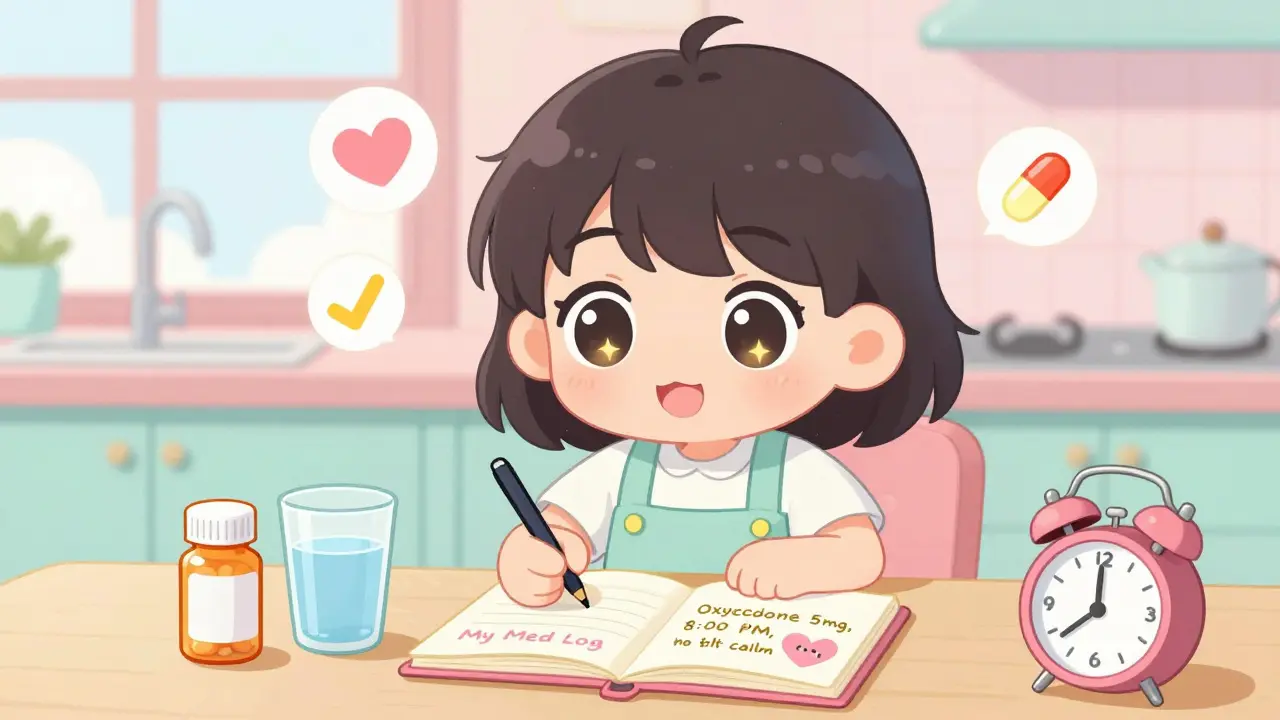
Every year, thousands of people accidentally take too much of a medication-sometimes because they lost track, sometimes because they mixed drugs without knowing the risks, and sometimes because they thought, "I just took one, it’s fine." But one more pill, one more hit, one more drink with a painkiller can turn into an emergency. The good news? You don’t need fancy tech or a doctor’s order to stop this. All you need is a simple medication log.
Why a Medication Log Works
Most overdose errors aren’t about being reckless. They’re about forgetting. You took a pill for back pain yesterday. Today, you’re still sore. Did you already take your dose? Was it 5 mg or 10 mg? Did you take it with alcohol? You can’t remember. That’s when mistakes happen. A medication log fixes that. It’s not a medical record for your doctor-it’s your personal safety net. Think of it like a fitness tracker for your meds. You log what you take, when, and how you feel. Over time, patterns show up: "Every time I take oxycodone after beer, I feel dizzy." Or, "I took two doses 3 hours apart and crashed." That’s not luck. That’s awareness. The CDC says one of the biggest risks for overdose is mixing opioids with alcohol, benzodiazepines, or other depressants. But most people don’t track what else they’ve taken that day. A log forces you to write it down. No guessing. No assumptions.What to Include in Your Log
A good log doesn’t need to be fancy. Just write down these five things every time you take a medication:- Medication name (brand or generic-be specific. "Pain pill" isn’t enough.)
- Dosage (5 mg, 10 mg, 1 mL-don’t estimate. Use the label.)
- Time taken (exact hour, not "around noon".)
- Method of use (swallowed, crushed, injected, snorted-this changes risk dramatically.)
- Other substances taken (alcohol, marijuana, sleep aids, muscle relaxers-even OTC stuff like Benadryl.)
That’s it. Five lines. Takes less than 30 seconds.
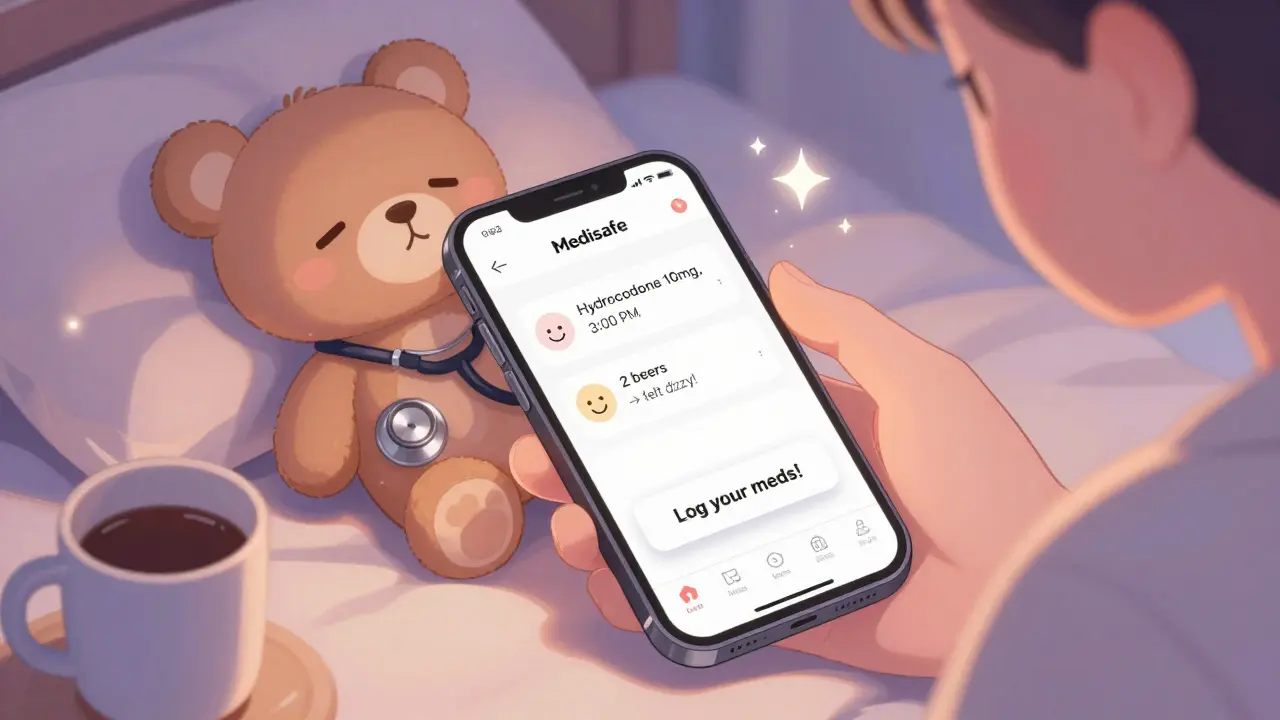
Some people also add a sixth line: how they felt. Did you feel calmer? Nauseous? Dizzy? Sleepy? This helps you spot early signs of tolerance or dangerous reactions. If you write, "Felt foggy at 3 PM after taking 10 mg hydrocodone + 2 beers," you’ve just给自己 a warning sign.
How to Start-Paper or Digital?
You don’t need an app. A notebook works fine. But here’s the trade-off:- Paper log: Cheap, always works, no battery, no hacking. But easy to lose or forget to carry. Best for people who write things down anyway.
- Digital log: Apps like Medisafe, MyTherapy, or even a notes app on your phone let you set reminders and add timestamps automatically. Some even flag dangerous drug combinations. But if your phone dies, you’re stuck.
Start with what’s easiest. If you already use your phone for everything, use Notes or a free app. If you prefer writing by hand, grab a small notebook and keep it in your wallet or pocket.
Pro tip: Set a daily alarm-"Log your meds"-at the same time every day. Even if you didn’t take anything, write: "No meds today." That builds the habit.
What You’ll Start to Notice
After a week of logging, you’ll see things you never noticed before:- You’re taking more than you thought-maybe because you’re doubling up when pain flares.
- You’re mixing meds with alcohol on weekends, and you feel awful Monday.
- You’ve taken the same pill twice in one day because you forgot.
- You’re using a higher dose than prescribed because the bottle says 10 mg, but you think you need more.
These aren’t failures. They’re data. And data saves lives.
One person in Austin told me she started logging after her cousin overdosed. She was taking 15 mg oxycodone daily for sciatica. Her log showed she was also drinking wine every night. She cut out the wine. She dropped to 5 mg. She hasn’t had a bad reaction since. She didn’t quit the meds. She just started tracking.
How to Handle Medication Changes
If your doctor changes your dose, switches your med, or adds a new one-update your log immediately. Don’t wait. Don’t assume the pharmacy told you everything.Here’s a real example: A man was prescribed tramadol for nerve pain. His doctor didn’t mention it could interact with his antidepressant. He started feeling confused and dizzy. He checked his log and saw he took both meds within 4 hours. He called his pharmacist. They caught the interaction. He switched meds before he had a seizure.
Your log is your first line of defense. It doesn’t replace your doctor-but it gives you the facts to talk to them with confidence.
Sharing Your Log for Safety
One of the most powerful things you can do is share your log-with a trusted friend, family member, or peer.SamHSA’s overdose prevention toolkit says: "Never use alone." But what if you’re alone? What if you’re home, and you feel yourself fading?
Leave your log on the kitchen counter. Or send a copy to someone you trust. If you don’t respond in 2 hours after taking a dose, they check your log. They see you took 20 mg of oxycodone and a Xanax at 8 PM. They call 911. They know what to tell the paramedics. They know what to do.
This isn’t about surveillance. It’s about backup. You’re not asking someone to police you. You’re giving them the tools to save you.
What Doesn’t Work
Don’t rely on memory. Don’t trust your bottle labels-they can be wrong or faded. Don’t assume "it’s just one more" because you’ve done it before.Don’t skip logging when you’re feeling fine. That’s when habits form. Overdoses happen when you’re not in crisis. They happen when you’re relaxed, tired, or thinking, "I’ve got this."
And don’t wait until you’re already struggling. Start logging before you need it. If you’re on a new prescription, start day one. If you’re using pain meds for the first time, log from the start. Prevention isn’t reactive. It’s routine.

What About Prescription Monitoring Programs (PDMPs)?
Yes, your doctor checks a state database called a PDMP before prescribing opioids. That’s great. But here’s the catch: PDMPs show what was prescribed, not what you took.Maybe you sold your pills. Maybe you crushed them. Maybe you took an extra dose because you were in pain. The PDMP doesn’t know. Your log does.
Your log fills the gap. It’s the only system that tracks your actual behavior. That’s why it’s so powerful.
Getting Help If You Need It
If you’re struggling to keep up with your log, or if you’re worried about your use, reach out. You don’t have to do this alone.- Call the SAMHSA National Helpline: 1-800-662-HELP (4357). Free, confidential, 24/7.
- Find a local harm reduction center-they often give out free log templates and drug testing strips.
- Ask your pharmacist to review your meds. Most will do it for free.
There’s no shame in needing help. The shame is in pretending you don’t need a safety net.
Final Thought: Your Log Is Your Lifeline
A medication log isn’t about control. It’s about clarity. It’s about knowing what’s in your body and why you’re taking it. It’s about making choices based on facts, not fear or forgetfulness.You don’t need to be perfect. Miss a day? Just start again. Forgot the time? Write "approx." and move on. The goal isn’t perfection-it’s awareness.
One entry. One day. One life.
Do I need to log every single pill, even over-the-counter ones?
Yes. Over-the-counter meds like Benadryl, sleep aids, or even cold medicine can interact dangerously with prescription drugs. If it affects your brain or breathing, log it. The more complete your record, the safer you are.
What if I take meds irregularly, like only when I’m in pain?
That’s even more reason to log. Irregular use makes it harder to track patterns. Write down every time you take a dose-even if it’s once a week. You’ll start seeing triggers: "I always take it after work," or "I take it when I’m stressed." That’s insight you can’t get otherwise.
Can I use a phone app instead of writing by hand?
Absolutely. Apps like Medisafe, MyTherapy, or even a simple notes app work. Some even send reminders and flag dangerous drug combinations. Just make sure you have a backup-like a printed copy or cloud sync-in case your phone dies.
What if I’m worried someone will judge me for keeping a log?
Your health is your business. Keeping a log isn’t a sign of addiction-it’s a sign of responsibility. People who manage their meds safely are the ones who stay alive. If someone judges you for taking care of yourself, that’s their problem-not yours.
How long should I keep my medication log?
Keep it as long as you’re taking any medication that affects your central nervous system-painkillers, sleep aids, anxiety meds, antidepressants. Even after you stop, keep the last 3 months for reference. Doctors often ask about recent use.
Can I use a medication log if I’m not on opioids?
Yes. Benzodiazepines, muscle relaxers, sleep meds, and even some antidepressants can cause dangerous interactions or overdose when mixed with alcohol or other drugs. Anyone taking meds that cause drowsiness, dizziness, or slowed breathing should log them.
Next Steps
Start today. Grab a notebook or open your phone’s Notes app. Write down the next time you take a medication. Name, dose, time, method, other substances. That’s it.Don’t wait for a crisis. Don’t wait until you feel something’s wrong. Start now. Your future self will thank you.
Ishmael brown
February 1, 2026 AT 23:04Nancy Nino
February 2, 2026 AT 19:14franklin hillary
February 3, 2026 AT 10:08Bob Cohen
February 4, 2026 AT 00:13June Richards
February 5, 2026 AT 02:35Jaden Green
February 6, 2026 AT 14:19Nidhi Rajpara
February 7, 2026 AT 10:59Rachel Liew
February 7, 2026 AT 23:32vivian papadatu
February 8, 2026 AT 00:45Melissa Melville
February 8, 2026 AT 09:16Deep Rank
February 8, 2026 AT 21:48