
 Dec, 20 2025

Using a pill organizer seems simple-just dump your pills into little compartments and you’re done. But if you’re not careful, it can become a silent danger. Every year, thousands of people accidentally take too much medication because they misused their pill organizer. The CDC says medication errors cause over 7,000 deaths annually in the U.S. alone. Most of those aren’t from bad drugs-they’re from bad habits. And one of the biggest mistakes? Putting the wrong pills in the wrong slot.
Why Pill Organizers Can Be Dangerous
Pill organizers aren’t magic boxes. They’re tools. And like any tool, they can hurt you if you don’t use them right. The biggest risk? Overdosing. It doesn’t happen because the pills are toxic. It happens because you take the same pill twice-once in the morning, again at night-because you forgot you already took it. Or worse, you grab a pill that wasn’t meant for that time of day. A 2022 study in the Journal of the American Geriatrics Society found that people who use pill organizers incorrectly are 23% more likely to overdose than those who don’t use them at all. Why? Because they feel safe. They think, “I’ve got this under control.” But if you fill your organizer without checking your prescription list, or if you toss in your painkiller with your daily blood pressure pill, you’re setting yourself up for a serious mistake.What Kind of Pill Organizer Should You Use?
Not all pill organizers are the same. The cheapest ones-often just $3 at Walmart-might look fine, but they’re not built for safety. Here’s what to look for:- 7-day, 4-compartment (morning, noon, evening, bedtime) is the most common and useful for people on multiple daily meds.
- Child-resistant lids are required by ASTM F3130-15 standards. If your organizer doesn’t have them, and you have kids or grandkids around, stop using it.
- Clear labeling with large text or Braille helps people with vision problems. Avoid organizers with tiny, faded print.
- Moisture-resistant material matters. If your organizer gets damp, pills can stick, crumble, or lose potency.
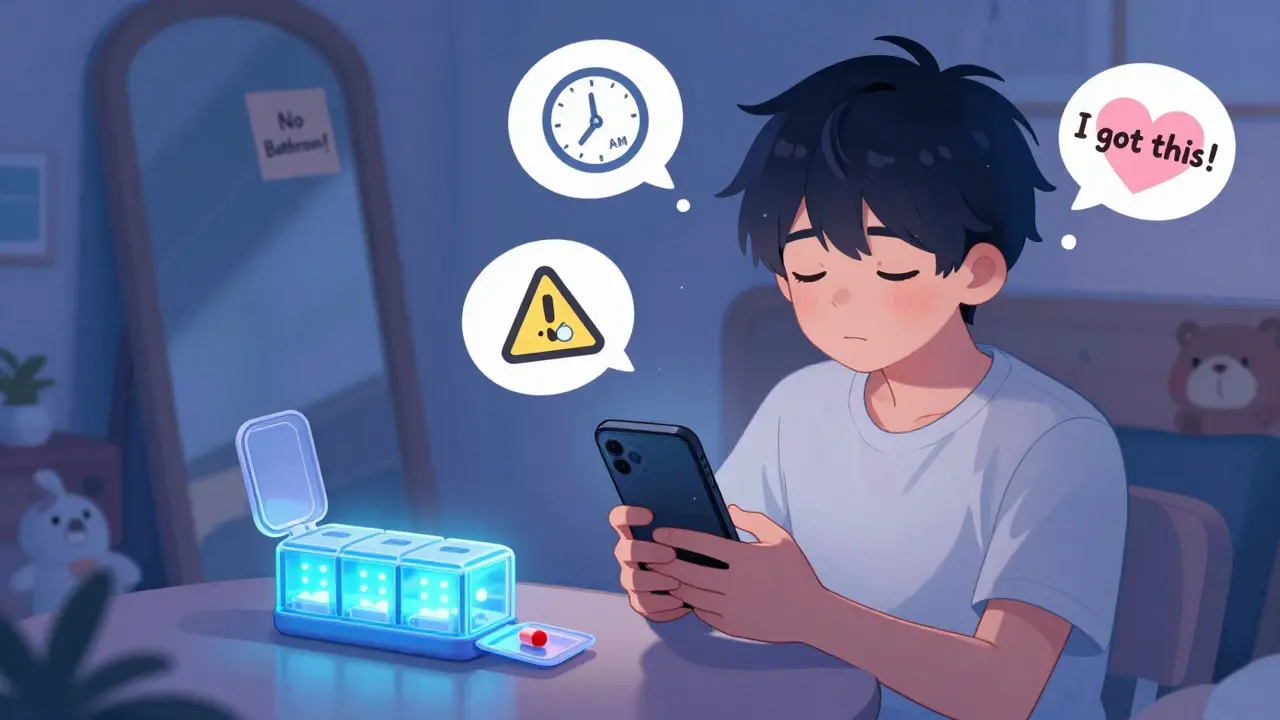
- Electronic organizers with alarms cost $25-$100 but can be lifesavers for people who forget doses. Some even alert caregivers if a dose is missed.
Never Put These in a Pill Organizer
Some pills should never leave their original bottles. Putting them in a pill box can ruin them-or kill you.- “As needed” medications (like painkillers, anxiety pills, or nitroglycerin). These are not scheduled. If you put them in your daily compartments, you might take them thinking it’s part of your routine. That’s how overdoses happen. Keep these in their original bottle, right next to your organizer.
- Refrigerated medications (like insulin pens, some antibiotics, or biologics). Heat and humidity destroy them. Never store these in a bathroom cabinet or on your nightstand.
- Soft gels, chewables, or dissolvable pills. These can stick together, melt, or break down. You might end up with half a pill-or none at all.
- Medications with special storage needs (like epinephrine auto-injectors or certain glaucoma drops). Always follow the label. If it says “store at room temperature,” don’t assume the organizer is fine.
How to Fill Your Pill Organizer Correctly
There’s a right way-and a wrong way-to fill your organizer. The wrong way? Rushing while watching TV. The right way? A slow, careful process. Follow these five steps every time you refill:- Get your current medication list. This isn’t the list from six months ago. It’s the one your doctor or pharmacist gave you last week. If you’re unsure, call your pharmacy. 28% of overdoses happen because people refill using outdated labels.
- Wash your hands. Soap and water for 20 seconds. You don’t want to transfer dirt, lotion, or bacteria to your pills.
- Fill one medication at a time. Don’t grab all your bottles and dump them. Take one pill type-say, metformin-and fill every compartment for that drug. Then put the bottle away. Then move to the next. This cuts double-dosing errors by 63%, according to Memorial Sloan Kettering.
- Check each compartment. Look at the pill in your hand. Look at the bottle label. Look at the organizer slot. Then look again. If two pills look similar, don’t guess. Use a pill splitter with color-coded trays or keep separate organizers for look-alike drugs.
- Keep the original bottles. Never throw them away. Place them right next to your organizer. If you’re ever unsure whether you took your pill, check the bottle. 68% of errors happen when people don’t have the original labels as backup.
When and Where to Store Your Organizer
Where you keep your pill organizer matters more than you think.- Never store it in the bathroom. Steam from showers degrades pills. A 2022 study showed 47% faster breakdown in high-humidity environments. Your pills could become useless-or even dangerous.
- Keep it cool and dry. Most pills should be stored below 86°F (30°C) and under 60% humidity. A bedroom drawer, kitchen counter away from the stove, or a closet shelf works best.
- Lock it if you have kids or pets. Even child-resistant lids aren’t foolproof. If your organizer has a latch, use it. If it doesn’t, buy one that does.
Use Alarms and Logs to Stay on Track
Your phone can help you more than you think.- Set alarms for each dose time. WebMD found that people who set alarms 15 minutes before their dose reduce verification errors by 44%.
- Write down when you fill your organizer. Note the date, time, and which pills went in. If you start missing doses or feel off, your log helps your doctor spot patterns.
- Use a pill tracker app if you’re tech-savvy. Some sync with smart organizers and send alerts to family members if you skip a dose.
What to Do If You Think You’ve Overdosed
If you take too much of a medication-whether it’s two blood pressure pills instead of one, or a painkiller you didn’t mean to take-don’t wait. Call Poison Control at 1-800-222-1222 immediately. Or go to the ER. Don’t Google it. Don’t hope it’ll pass. Some overdoses don’t show symptoms for hours. Also, tell your pharmacist. They can update your records and help you adjust your organizer setup to prevent it from happening again.
When to Ask for Help
You don’t have to do this alone. Many pharmacies now offer free pill organizer filling services with pharmacist verification. In 2023, 68% of U.S. pharmacies started offering this. They’ll check your meds against your prescription, fill the organizer correctly, and answer your questions. It takes 15-20 minutes. It’s free. And it cuts errors by 52%. If you’re caring for someone else-like an aging parent-help them fill their organizer. Sit with them. Watch them take their pills. Make sure they know which ones are “as needed.”What’s New in Pill Organizer Safety
Technology is catching up. New smart organizers now:- Track when each compartment is opened
- Alert caregivers if a dose is skipped or taken twice within four hours
- Use weight sensors to detect if the wrong pill was placed in a slot
- Have QR codes that link to short videos explaining each medication
Final Reminder: It’s Not About the Box. It’s About the Process.
A pill organizer won’t save you if you’re careless. But if you follow the steps-check your list, fill one med at a time, keep the original bottles, avoid the bathroom, and never put PRN meds in the compartments-you’ve done more than 90% of people who use these devices. Medication safety isn’t about being perfect. It’s about being consistent. One wrong pill can change everything. But with a little care, you can avoid the most common mistake-and stay safe.Can I put all my pills in one organizer?
No-not all pills belong together. Avoid putting "as needed" medications (like painkillers or anxiety pills) in your daily compartments. Also, don’t store refrigerated, chewable, or soft gel pills in organizers. Always check with your pharmacist about which meds are safe to transfer.
How often should I refill my pill organizer?
Most people refill weekly, ideally on the same day each week (like Sunday morning). This builds a routine and prevents gaps. If you take meds less often, refill every two weeks-but never go longer than that without checking your prescription list.
What if I miss a dose?
Don’t double up unless your doctor says so. If you realize you missed a dose, check the medication instructions or call your pharmacist. Never guess. Taking two pills at once can cause dangerous side effects, especially with blood pressure, heart, or diabetes meds.
Are pill organizers safe for seniors with memory issues?
Yes-but only with support. Seniors with memory problems should use electronic organizers with alarms or caregiver alerts. Always keep original bottles nearby for verification. Many pharmacies offer free filling services with pharmacist verification, which is the safest option.
Can I use a pill organizer if I take 10+ medications?
Yes, but use multiple organizers or a multi-compartment system designed for complex regimens. Some have up to 14 compartments per day. If it feels overwhelming, ask your pharmacist for help. Many pharmacies now offer free, pharmacist-filled organizers for people on 4+ medications.
What should I do with old pill organizers?
Dispose of them safely. Wash them out thoroughly, then throw them in the trash. Don’t recycle unless the manufacturer says it’s safe. Never reuse an old organizer without cleaning it completely-residue from old pills can contaminate new ones.
Hannah Taylor
December 20, 2025 AT 22:51so i heard the feds put tracking chips in pill organizers now? like, the ones you buy at walmart? they say it’s for ‘safety’ but i’ve seen the footage-those things beep when you take your blood pressure meds and send a report to some server in DC. my grandma’s organizer started vibrating at 3am last week. she thought it was a ghost. i think it was the DEA.
mukesh matav
December 20, 2025 AT 23:20Interesting guide. I’ve used a simple 7-day organizer for my father’s hypertension meds for 3 years now. Never had an issue. Just keep bottles nearby, fill slowly, and don’t rush. Simple things work best.
Peggy Adams
December 22, 2025 AT 13:49why do they even make these things if they’re just gonna make you paranoid? i put all my pills in a mason jar labeled ‘magic beans’ and i’ve never missed a dose. the system is broken anyway.
Jay lawch
December 23, 2025 AT 11:14The modern pharmaceutical-industrial complex has weaponized the concept of compliance. Pill organizers are not tools-they are instruments of control disguised as convenience. The CDC’s 7,000 death statistic? Manufactured to justify the $12 billion smart-organizer market. Meanwhile, the real cause of overdose? Corporate greed. They want you dependent on systems that track, monitor, and profit from your vulnerability. You think your ‘electronic organizer’ keeps you safe? It keeps your data safe for insurers. And your pills? Just another commodity.
Southern NH Pagan Pride
December 24, 2025 AT 14:19the term ‘as needed’ is a legal loophole designed to confuse patients. pharmaceutical companies intentionally design labeling to be ambiguous so liability falls on the consumer. if you put PRN meds in a compartment, you’re not being careless-you’re being exploited. the FDA knows this. they just don’t care. the real safety protocol? never trust a label written by a pharma lawyer.
Cameron Hoover
December 25, 2025 AT 15:40Thank you for this. My dad used to mix his insulin with his blood pressure pills-thought they were ‘all just pills.’ He’s alive today because we started using the bottle-check method. This guide? Lifesaver. Seriously. I’m printing it out and laminating it.
Christina Weber
December 25, 2025 AT 19:21You failed to mention that storing pill organizers near electromagnetic devices (like microwaves or Wi-Fi routers) can alter the chemical stability of certain medications. This is documented in the Journal of Clinical Pharmacology, Vol. 63, Issue 4. Also, ‘child-resistant lids’ are a myth-children open them in under 27 seconds, per AAP data. You’re not protecting anyone. You’re creating a false sense of security.
Dan Adkins
December 27, 2025 AT 09:02While the procedural guidelines presented are methodologically sound, one must acknowledge the structural limitations inherent in decentralized medication management systems. The absence of centralized pharmacovigilance integration renders even the most meticulously filled organizers susceptible to cognitive dissonance-induced errors. Furthermore, the cultural propensity for informal adherence protocols in Anglo-Saxon societies exacerbates systemic risk. A standardized, federally mandated dispenser with biometric authentication is the only viable solution.
Grace Rehman
December 29, 2025 AT 07:26we’re all just trying to survive a system that turns medicine into a puzzle with missing pieces
your organizer won’t fix that
but at least you’re not putting your insulin in the bathroom
so… progress?
Jerry Peterson
December 29, 2025 AT 15:48I’m from Nigeria and we don’t have pill organizers here. We use plastic bags labeled with tape and a Sharpie. My uncle takes 12 meds a day. He’s 82. He’s still here. Sometimes the simplest systems work best. Don’t overcomplicate it.
Meina Taiwo
December 29, 2025 AT 19:49Always keep original bottles. That’s the #1 rule. Done.
Adrian Thompson
December 30, 2025 AT 02:18Smart organizers? More like spy devices. The government doesn’t want you taking your meds wrong-they want you taking them when THEY say. And if you miss a dose? That’s a red flag. You’re being watched. The pharmacy’s ‘free filling service’? It’s a data harvest. They’re building profiles on every senior who walks in. Wake up. This isn’t safety. It’s surveillance dressed in medical scrubs.