
 Feb, 5 2026
Over 1.2 billion people worldwide struggle with iron deficiency anemia. That's more than 1 in 6 people. But here's the good news: a simple dietary trick can double your iron absorption. It's not a fancy supplement or expensive pill-just vitamin C. Let's break down exactly how it works, what to do, and what to avoid.
How Vitamin C Boosts Iron Absorption
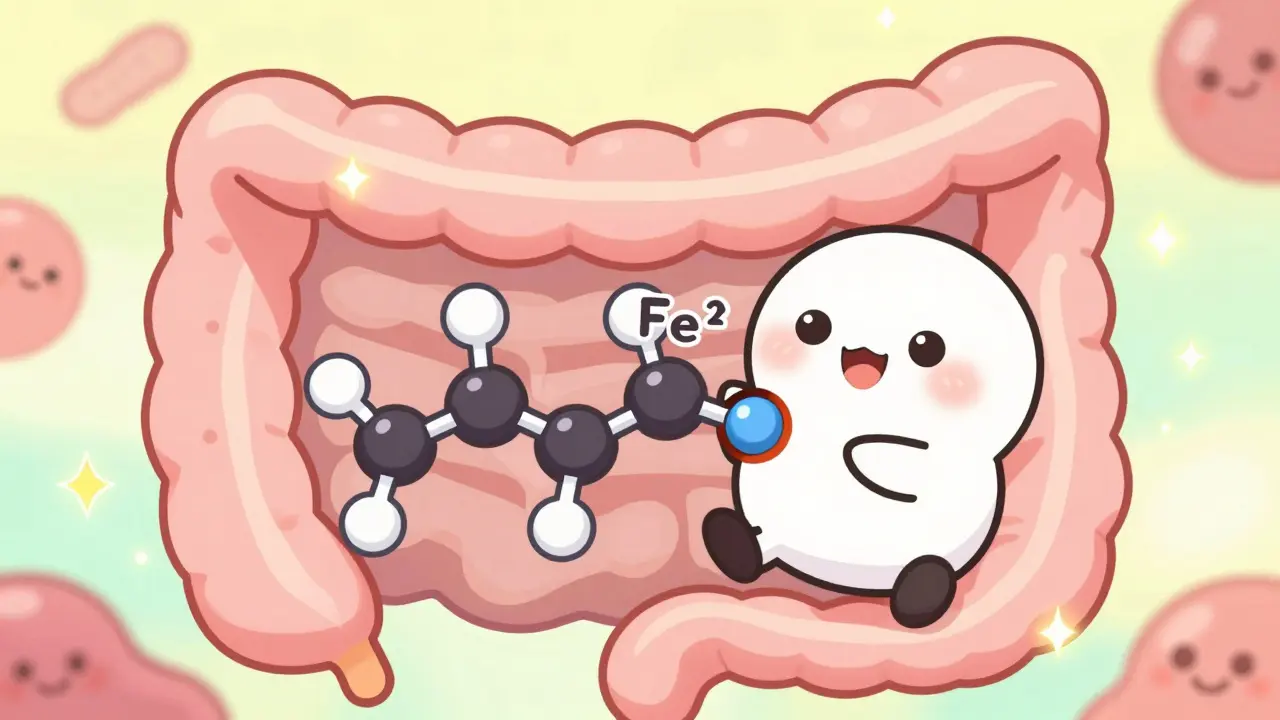
Vitamin C (ascorbic acid) works by changing iron's form. Non-heme iron from plants is harder to absorb. Vitamin C turns ferric iron (Fe³⁺) into ferrous iron (Fe²⁺), which your body can use better. This happens in your small intestine where the Dcytb enzyme uses vitamin C to donate electrons. Without vitamin C, only 2-20% of non-heme iron gets absorbed. With it, that jumps to 30-40%.
Research from the 1980s first showed this effect. A landmark 1989 study in the American Journal of Clinical Nutrition found vitamin C could increase non-heme iron absorption by 2-6 times. Modern studies confirm it. A 2022 meta-analysis in ACS Omega showed a 100mg dose of vitamin C boosts absorption by 100% for plant-based iron sources. The effect is dose-dependent: 25mg increases absorption by 50%, 100mg by 100%, and 200mg by 150-200%.
| Food | Vitamin C (mg) |
|---|---|
| Medium orange | 70 |
| ½ cup red bell peppers | 150 |
| 1 cup strawberries | 100 |
| 6 oz orange juice | 120 |
| 1 kiwi | 75 |
| 1 cup broccoli | 90 |
How Much Vitamin C Do You Need?
You don't need a huge dose. Studies show 100-200mg per meal is enough. That's about:
- One medium orange (70mg)
- ½ cup of red bell peppers (150mg)
- A cup of strawberries (100mg)
- 6 ounces of orange juice (120mg)
Taking more than 200mg doesn't help much. In fact, high doses (over 500mg) can cause stomach upset for 15-20% of people. The World Health Organization recommends 100mg of vitamin C with iron-rich plant meals to combat iron deficiency. This is the sweet spot for most people.

When to Avoid Vitamin C (Drug Interactions)
Vitamin C helps iron absorption, but it can interfere with other medications. Here's what to watch out for:
- Thyroid medication (like levothyroxine): Wait at least 2 hours after taking thyroid meds before consuming iron with vitamin C. Iron can block thyroid medication absorption.
- Calcium supplements: Separate them by at least 4 hours. Calcium blocks iron absorption by 50-60%.
- Antacids (with aluminum or magnesium): Take them 2 hours apart from iron. Antacids cut iron absorption by 70-80%.
- Coffee and tea: These contain polyphenols that inhibit iron. Wait 2 hours after drinking them before eating iron-rich foods.
Dr. Laura E. Murray-Kolb, a nutritional sciences professor at Penn State, states, "Vitamin C is the single most effective dietary strategy for improving non-heme iron bioavailability." But timing matters. If you take thyroid meds or calcium, you need to space them out properly.
Common Mistakes and Fixes
Many people mess up the timing. A 2023 Healthline survey found 67% didn't know when to take vitamin C with iron. Common mistakes include:
- Drinking coffee with iron-rich meals (blocks absorption)
- Taking iron supplements with calcium supplements (reduces absorption)
- Taking too much vitamin C (causing stomach issues)
- Not pairing enough vitamin C with plant-based iron sources
Here's how to fix them:
- Pair iron with vitamin C-rich foods at the same meal. For example, add orange slices to your lentil soup or have strawberries with fortified cereal.
- Avoid coffee and tea within 2 hours of iron intake. Swap your morning coffee for water or herbal tea.
- Use natural vitamin C sources instead of high-dose supplements. A small orange or a handful of strawberries is enough.
Reddit users report success with simple swaps. One r/nutrition member said, "I started adding strawberries to my morning oatmeal with iron-fortified cereal. My energy levels improved within two weeks." Amazon reviews show iron supplements with vitamin C get higher ratings-4.2 stars versus 3.6 for iron-only products.
Practical Tips for Everyday Meals
Here's how to incorporate this into your daily routine:
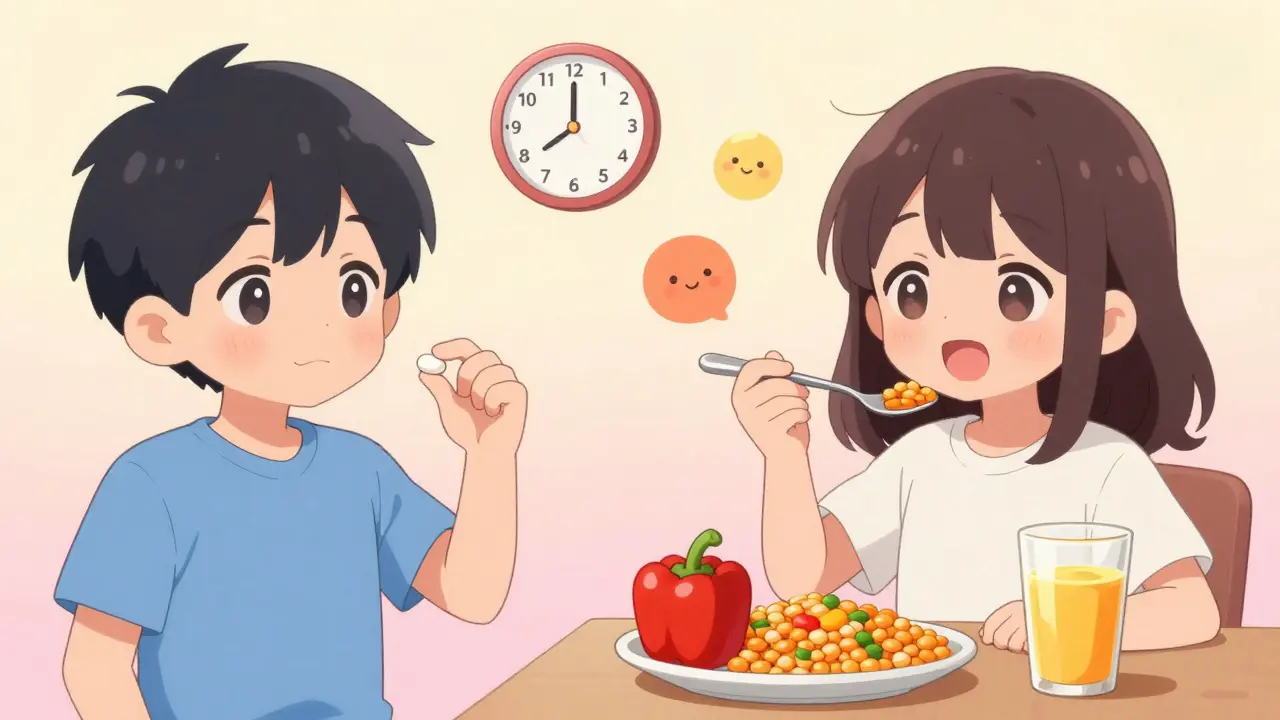
- Breakfast: Fortified cereal with orange juice or sliced oranges. Avoid milk (calcium) with iron-rich cereals.
- Lunch: Spinach salad with tomatoes and bell peppers. Add lemon juice for extra vitamin C.
- Dinner: Beans or lentils with red peppers. A side of broccoli (another vitamin C source) boosts absorption.
- Snacks: Kiwi fruit, guava, or citrus fruits. These pack more vitamin C than oranges.
For vegetarians and vegans, this is especially important. Plant-based iron sources need vitamin C to be absorbed well. A Michigan State University case study showed a pregnant woman with iron deficiency (hemoglobin 9.8 g/dL) raised it to normal levels (12.1 g/dL) in 8 weeks by pairing fortified cereals with vitamin C-rich foods.
Frequently Asked Questions
How much vitamin C do I need with iron?
For optimal iron absorption from plant-based sources, aim for 100-200mg of vitamin C per meal. This is equivalent to one medium orange, ½ cup red bell peppers, or a cup of strawberries. Higher doses don't provide additional benefits and may cause stomach upset.
Can I take vitamin C with calcium supplements?
No. Calcium blocks iron absorption by 50-60%. Separate calcium supplements from iron by at least 4 hours. Take calcium in the morning and iron with vitamin C in the evening, or vice versa, to avoid interference.
Does vitamin C help with iron from meat?
Not significantly. Heme iron from animal products (like meat, fish, poultry) has a natural absorption rate of 15-35%, so vitamin C doesn't boost it much. Vitamin C's main benefit is for non-heme iron from plants, which absorbs at only 2-20% without enhancement.
What should I avoid when taking iron?
Avoid coffee, tea, and calcium-rich foods within 2 hours of iron intake. These contain polyphenols and calcium that block absorption. Also, don't take antacids (like Tums) with iron-they reduce absorption by 70-80%. If you take thyroid medication, wait at least 2 hours before consuming iron with vitamin C.
Is it better to take vitamin C with iron supplements?
Yes, if the supplement contains non-heme iron (like ferrous sulfate). Vitamin C increases absorption by up to 185% when taken together. However, some iron supplements already include vitamin C. Check the label-if it doesn't, pair it with vitamin C-rich foods or a supplement. For heme iron supplements (like ferrous bisglycinate), vitamin C isn't necessary.
Joey Gianvincenzi
February 7, 2026 AT 08:46Vitamin C is absolutely essential for non-heme iron absorption from plant sources. If you're skipping it, you're not getting the full benefit. I've seen too many vegetarians struggle with anemia because they don't pair it right. Simple fix: have an orange with your lentil dish. No excuses.
Mayank Dobhal
February 9, 2026 AT 04:06Pairing vitamin C with iron is a game-changer. I do this daily. No more fatigue. Works every time.
Marcus Jackson
February 11, 2026 AT 02:10Actually, the effect is dose-dependent. 100mg is optimal. More than that doesn't help. And it's specifically for non-heme iron from plants. Heme iron from meat doesn't need it.
Natasha Bhala
February 12, 2026 AT 09:06Added strawberries to my cereal. Energy levels shot up. Love it.
Gouris Patnaik
February 13, 2026 AT 12:33This is why Indian cuisine has always included lemon with dal. We've known this for centuries. Western science is just catching up. Simple and effective.
Jesse Lord
February 14, 2026 AT 05:50I've helped many clients with iron deficiency by just adding vitamin C-rich foods. It's simple and effective. No need for supplements.
AMIT JINDAL
February 15, 2026 AT 09:25Actually, the science is more nuanced. Vitamin C reduces ferric iron to ferrous, which is more absorbable. The Dcytb enzyme facilitates this process. Without it, absorption is poor. So it's not just about eating vitamin C, but understanding the mechanism. I've written papers on this. 😎
Catherine Wybourne
February 17, 2026 AT 03:25I love how this article mentions red bell peppers. They're underrated. A cup has more vitamin C than an orange. And they're delicious in salads. Plus, no added sugar like juice. 😏
Mary Carroll Allen
February 18, 2026 AT 10:29Red bell peppers are great but dont forget kiwi. One kiwi has 75mg. And theyre way tastier than peppers for me. Also, avoid coffee with meals. Its a game changer.
Amit Jain
February 19, 2026 AT 12:17This is all common sense. Vitamin C helps absorption. But the real problem is people taking too much iron supplements. Iron overload is a real issue. This article ignores that.
Eric Knobelspiesse
February 21, 2026 AT 10:32Iron overload is rare. Most people are deficient. The data shows 1.2 billion people have iron deficiency. You're worrying about something that's not a problem for most. 😒
Heather Burrows
February 22, 2026 AT 15:26Hmm. Maybe. But some studies say too much iron is bad. I'm not sure. I'll just take a supplement with vitamin C.