
 Nov, 28 2025
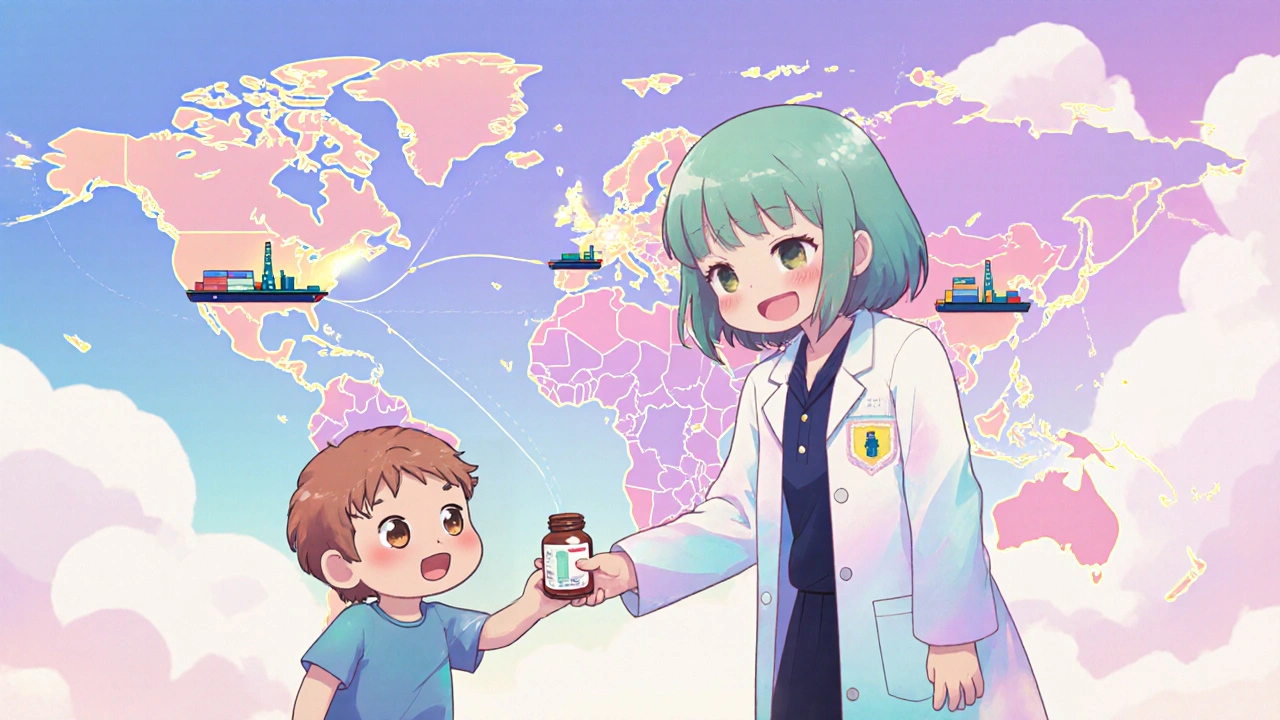
When you pick up your prescription at the pharmacy, you probably don’t think about where the medicine came from. But more than 80% of the active ingredients in U.S. drugs are made overseas-mostly in China and India. That’s not just a detail; it’s a vulnerability that’s now causing real shortages of life-saving medications. In 2024, the FDA reported over 300 drug shortages, many tied to disruptions in foreign manufacturing. And with global supply chains still stretched thin, this isn’t going away anytime soon.
How Did We Get Here?
The shift to foreign manufacturing didn’t happen overnight. For decades, pharmaceutical companies chased lower costs. Making active pharmaceutical ingredients (APIs) in China or India cost a fraction of what it did in the U.S. or Europe. Factories there could produce massive volumes, and labor was cheaper. By 2025, 94% of multinational drugmakers rely on foreign suppliers for at least one critical ingredient. It made sense-until it didn’t.
Then came the pandemic. Ports shut down. Shipping delays stretched from weeks to months. A single factory in China that made a key antibiotic ingredient went offline for 120 days in 2024. The result? Hospitals rationed doses. Patients waited. Some couldn’t get their medication at all.
It wasn’t just COVID. Trade wars, tariffs, and geopolitical tensions added pressure. The U.S. added 12 new tariff categories between 2024 and 2025, hitting $340 billion in imported goods-including pharmaceuticals. Companies that didn’t plan for this saw their costs jump 200-300% overnight. Many passed those costs to consumers. Others cut back production.
Why Foreign Manufacturing Is Still the Norm
Even with all the risks, most drugmakers haven’t moved production back home. Why? Because it’s still cheaper overseas. Manufacturing wages in the U.S. are 4.8 times higher than in China for the same type of work. Building a new API plant in the U.S. costs $500 million or more. In India, it’s under $100 million. That’s not just a difference-it’s a dealbreaker for profit margins.
There’s also expertise. China and India have spent 30 years perfecting the scale and precision needed for pharmaceutical manufacturing. They’ve built supply chains for raw materials, chemicals, and packaging that no other country can match yet. Even if the U.S. wanted to reshore everything, it would take 18 to 24 months just to get a new facility up and running-and that’s assuming you can find the skilled workers.
And here’s the catch: 33% of companies in 2025 still report being understaffed in global trade and logistics roles. Finding people who understand FDA regulations, international shipping, and customs compliance isn’t easy. So even if you want to bring production home, you can’t always find the team to run it.
What’s Being Done to Fix It?
Companies aren’t sitting still. In 2025, 78% of pharmaceutical firms are using inventory buffers and supplier diversification-up from just 35% in 2020. That means keeping extra stock on hand and working with multiple suppliers across different countries. One Fortune 500 medical device maker cut its drug shortage risk by 90% by shifting key components to Mexico. Transportation costs dropped 30-40%, and lead times shrank from 45 days to 12.
Others are turning to nearshoring. Mexico and Eastern Europe are becoming popular alternatives to China. The U.S.-Mexico-Canada Agreement (USMCA) renegotiation in early 2025 is helping stabilize tariffs between these countries. That’s giving companies more confidence to invest there.
Technology is playing a bigger role too. AI-driven forecasting now helps predict demand spikes and supply gaps before they happen. Digital twins-virtual models of supply chains-are being used to simulate disruptions. One company reduced inventory waste by 22% and improved delivery accuracy to 99.2% using these tools.
Blockchain is also gaining traction. It’s being used to track ingredients from factory to pharmacy, reducing quality disputes by 65%. That’s huge when you’re dealing with sterile injectables or cancer drugs where contamination can be deadly.

The Real Cost of Dependence
The human cost of this dependence is hard to measure, but it’s real. In 2024, a shortage of a common blood pressure medication forced thousands of elderly patients to switch to less effective alternatives. Another shortage of insulin analogs led to rationing in rural clinics. Patients reported skipping doses or using expired vials.
And it’s not just about price. It’s about control. When your medicine comes from halfway across the world, you’re at the mercy of foreign governments, weather events, and political decisions. A flood in India shut down 12 API plants in 2023. A labor strike in China delayed shipments for six weeks in 2024. These aren’t rare events anymore-they’re part of the new normal.
Even small companies are feeling it. Over 90% of global businesses are small or medium-sized. Many don’t have the resources to diversify suppliers or build inventory buffers. They rely on big distributors who, in turn, rely on foreign factories. When those factories slow down, these smaller players get squeezed out first.
What’s Next?
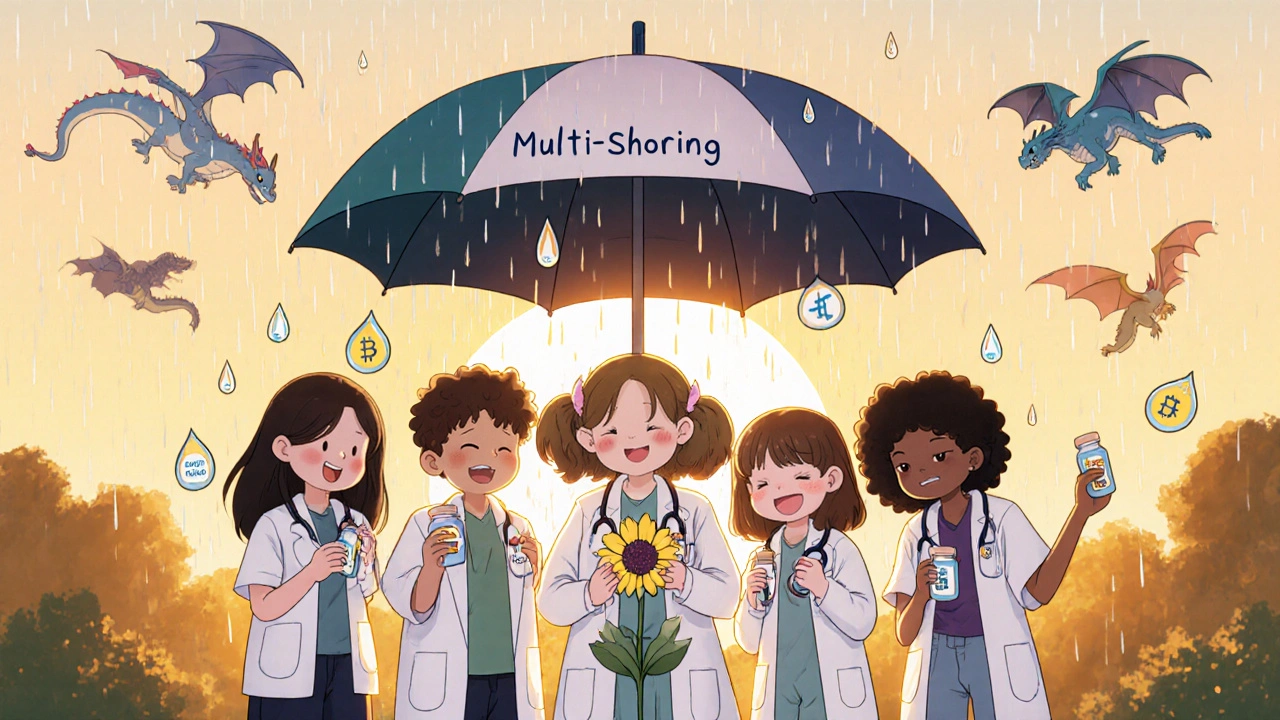
Experts agree: the old model of single-source, low-cost manufacturing is broken. The future is multi-shoring-spreading production across multiple regions so no single disruption can cripple the system. IDC forecasts that by 2025, half of all manufacturers will have adopted this approach. It’s not perfect. It’s more expensive. But it’s more reliable.
Investments in automation and microfactories are also picking up. These small, agile plants can be set up in the U.S. or Europe to make niche drugs quickly. They’re not meant to replace massive overseas factories-they’re meant to fill the gaps when those factories fail.
The government is stepping in too. The FDA has started fast-tracking inspections of foreign suppliers. It’s also offering grants to companies that bring API production back to the U.S. But progress is slow. Building domestic capacity takes years. And without clear, long-term policy, companies won’t risk billions of dollars.
What You Can Do
As a patient, you can’t fix global supply chains. But you can stay informed. Ask your pharmacist: “Is this medication made in the U.S.?” If not, ask if there’s an alternative with a different source. Some generics have multiple manufacturers. Switching might mean avoiding a shortage.
Also, don’t wait until you’re out of medication to refill. Keep a small buffer. If your drug is on the FDA’s shortage list, talk to your doctor early. There may be another option that works just as well.
And if you’re part of a healthcare organization, push for supplier diversity. Don’t rely on one vendor. Build relationships with multiple international and domestic suppliers. Use technology to monitor inventory and lead times in real time.
The truth is, we’re not going to stop importing drugs. We can’t afford to. But we can stop being so fragile. The goal isn’t to bring everything home-it’s to make sure that when something breaks overseas, we have a backup. And that backup needs to be ready before the next crisis hits.
Why This Matters More Than Ever
By 2027, the global pharmaceutical market is expected to hit $1.8 trillion. But if supply chains keep cracking, that growth could stall-or worse, cost lives. Climate change, cyberattacks, and political instability aren’t going away. If we keep treating drug manufacturing like a cost center instead of a public health priority, we’ll keep seeing the same shortages, over and over.
The companies that survive won’t be the ones that cut the deepest. They’ll be the ones that built resilience into their systems. And the patients who get their medicine on time? They’ll be the ones who didn’t wait for the system to fix itself.
Why are so many drugs made overseas?
Most drugs are made overseas because it’s significantly cheaper. Active pharmaceutical ingredients (APIs) cost 4.8 times less to produce in China than in the U.S. Factories there have decades of experience, specialized infrastructure, and lower labor costs. Companies prioritize profit margins, and foreign manufacturing delivers that-at least for now.
How do supply chain issues cause drug shortages?
When a factory in China, India, or another country shuts down-due to a pandemic, natural disaster, labor strike, or trade ban-the supply of key ingredients stops. Since many U.S. drugs rely on just one or two foreign suppliers, there’s no immediate backup. Even a 30-day delay can trigger a nationwide shortage, especially for drugs with no alternatives.
Is reshoring drugs to the U.S. a realistic solution?
Reshoring isn’t impossible, but it’s slow and expensive. Building a new API plant in the U.S. costs $500 million or more and takes 18-24 months. There’s also a shortage of workers with the right skills. Most experts agree that full reshoring isn’t practical. The better path is multi-shoring: spreading production across multiple countries, including the U.S., Mexico, and Eastern Europe.
What’s the role of AI and digital tools in fixing supply chains?
AI helps predict demand, track inventory in real time, and simulate disruptions before they happen. Digital twins let companies test how a factory shutdown in India would affect U.S. supply. Blockchain verifies the origin and quality of ingredients, reducing fraud and quality disputes by 65%. These tools don’t replace human decisions-they make them faster and smarter.
Can patients do anything about drug shortages?
Yes. Ask your pharmacist where your medication is made. If it’s from a country with recent disruptions, ask if there’s a generic version made elsewhere. Don’t wait until you’re out-refill early. If your drug is on the FDA’s shortage list, talk to your doctor about alternatives. Small actions can help you avoid gaps in treatment.
Justina Maynard
November 29, 2025 AT 21:40Let’s be real-when your blood pressure med suddenly vanishes because some factory in Gujarat had a power outage, it’s not just inconvenient, it’s terrifying. I’ve watched my mom ration insulin because the supply chain snapped like a dry twig. This isn’t abstract economics-it’s people dying because we outsourced our health to profit margins. We need to treat APIs like critical infrastructure, not commodities.
Evelyn Salazar Garcia
December 1, 2025 AT 19:54China steals our medicine. End of story.
Clay Johnson
December 3, 2025 AT 05:22The illusion of efficiency is the most dangerous economic fallacy of the 21st century. We optimized for cost, not resilience. Now we pay in suffering. The market didn’t fail. We did. We chose convenience over survival and called it progress.
Jermaine Jordan
December 4, 2025 AT 00:29This isn’t just about drugs-it’s about sovereignty. When your life depends on a shipment crossing an ocean, you’ve already lost. We’re not just outsourcing manufacturing-we’re outsourcing our future. It’s time to rebuild. Not because it’s patriotic-but because it’s necessary. The clock is ticking and every day we wait, someone dies waiting for a pill that should’ve been made here.
Chetan Chauhan
December 5, 2025 AT 07:30lol u think us is safer? u know how many fake meds come from usa? u think fda is perfect? india makes 40% of generic drugs globally. u just hate that we're good at something. u want to pay $500 for aspirin? go ahead.
Phil Thornton
December 6, 2025 AT 02:21My pharmacist just told me my metformin is now made in Mexico. Took me 3 weeks to get it. No big deal. But yeah, this whole system is a mess. We need backups. Like, yesterday.
Pranab Daulagupu
December 6, 2025 AT 11:18Multi-shoring is the only viable path forward. India’s scale, Mexico’s proximity, U.S. quality control-it’s not about replacing one, it’s about layering. We need interoperable systems, not nationalism. And yes, the tech exists. We just need to deploy it without political noise.
Barbara McClelland
December 6, 2025 AT 15:27Hey, if you’re on a med that’s been on the shortage list for months, don’t panic-talk to your doctor. Ask about generics from different manufacturers. Some brands use the same API but different packaging. It’s not magic, but it’s actionable. And if you’re in healthcare? Push for dual sourcing. Small steps add up.
Alexander Levin
December 7, 2025 AT 18:595G, AI, blockchain… all just distractions. The real reason? The Deep State wants you dependent on foreign meds so they can control the population. You think the FDA is investigating? They’re covering it up. Watch the supply chain data-they’re deleting it. Stay vigilant.
Ady Young
December 9, 2025 AT 10:48I’ve worked in pharma logistics for 12 years. The shift to multi-shoring is real, but it’s messy. Companies are scrambling to onboard new suppliers, but compliance is a nightmare. One tiny documentation error and a whole batch gets stuck at customs. We’re not back to normal-we’re in a weird transitional phase where everyone’s trying to fix things but nobody’s got the playbook yet.