
 Dec, 27 2025
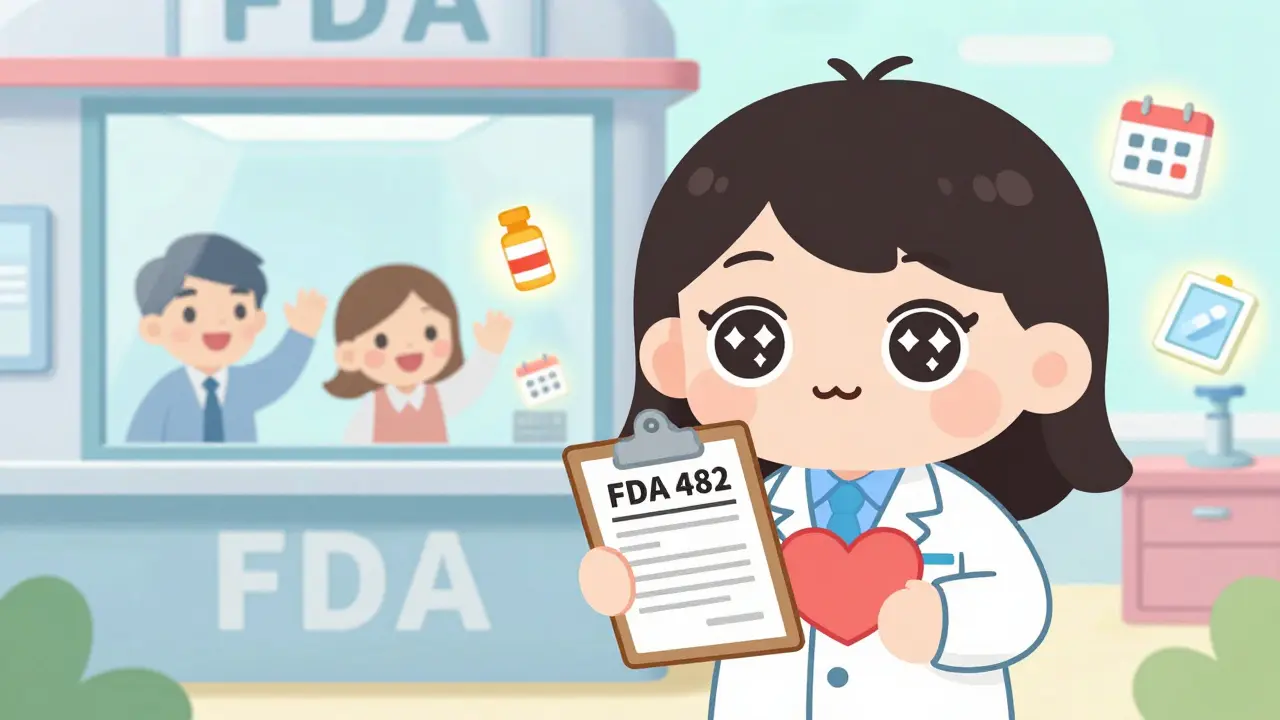
When you take a pill, you assume it’s safe. But behind that pill is a complex system of inspections, records, and rules that keep it from being contaminated, mislabeled, or ineffective. The FDA inspection records are the backbone of that system. Yet most people - even those working in manufacturing - don’t fully understand what’s accessible, what’s protected, and how to prepare for an inspection. This isn’t about bureaucracy. It’s about trust. And if you’re in pharmaceuticals, medical devices, or any regulated manufacturing, knowing how FDA inspection records work isn’t optional. It’s survival.
What the FDA Can and Can’t See
The FDA doesn’t get free access to everything inside your facility. There’s a clear line between what’s open for review and what’s shielded. Under Compliance Policy Guide (CPG) Sec. 130.300, internal quality assurance audit reports are generally off-limits - if they’re done properly. These are the reports your team writes to find problems before the FDA does. They’re meant to be honest, candid, and sometimes uncomfortable. The FDA won’t read them to avoid discouraging companies from doing them at all. But here’s the catch: if something goes wrong - a batch fails, a customer complains, a product is recalled - then all bets are off. The FDA can demand every internal investigation, deviation log, and CAPA report tied to that incident. These aren’t protected. They’re required by 21 CFR 211.192 and 21 CFR 820.100. The difference? Internal audits are about prevention. Quality control investigations are about fixing what broke. A real example: A company finds a labeling error in a batch during an internal audit. They fix it, document the root cause, and update their training. That audit report stays private. But if that same error reaches patients and someone files a complaint? Now the FDA can demand every email, meeting note, and corrective action tied to it. The same document becomes public.What Records Must Be Kept - and For How Long
The FDA doesn’t just show up and ask for things. They know exactly what to look for because manufacturers are legally required to keep specific records. For drug makers, 21 CFR 211.180 says you must keep CGMP records - batch production records, equipment logs, calibration data, validation reports - for at least one year after the product expires. For medical devices, 21 CFR 820.180 requires records to be kept for the device’s lifespan plus two years. That means if you make a pacemaker, you’re keeping records for 15, 20, even 30 years. These aren’t just files sitting in a drawer. They need to be contemporaneous. That means written or entered at the time the activity happened - not recreated weeks later. In 2024, 22% of FDA warning letters cited back-dated or reconstructed records. That’s a red flag. The FDA doesn’t just check if you have records. They check if they’re real-time.What Happens During an Inspection
When an FDA inspector walks in, they’re not there to be nice. They follow a strict protocol. First, they hand you Form FDA 482 - the Notice of Inspection. You can’t refuse it. Denying access is a violation of Section 301(f) of the FD&C Act and can lead to product seizure or facility shutdown. Then they ask for specific documents: batch records, training logs, equipment maintenance, deviation reports, and complaint files. They’ll ask to see your CAPA system. They’ll interview staff - not just managers, but line operators. They’re looking for consistency. If the person on the floor says one thing and the SOP says another, that’s a problem. At the end, if they find issues, they issue Form FDA 483. This isn’t a fine. It’s a list of observations. Things like: "Missing signature on batch record," "Calibration overdue," "No root cause analysis on complaint #2024-087." You have exactly 15 business days to respond. No extensions. No excuses. Companies that respond with a full root cause analysis, a detailed corrective action plan, and evidence of implementation close 89% of these within six months. Those that send vague promises - "We’ll look into it" - get warning letters. And warning letters mean your products could be blocked at the border.
Unannounced Inspections Are Now the Norm - Especially Overseas
In 2023, only 12% of foreign manufacturing facilities got unannounced inspections. By the end of 2025, that number will hit 35%. That’s a massive shift. The FDA is tired of companies cleaning up right before an inspection. Now, they want to see your facility as it is - on a Tuesday at 10 a.m., not the Monday after you’ve been warned. Domestic facilities still mostly get scheduled inspections - 92% in 2025, according to McGuireWoods. But foreign facilities? They’re under pressure. Why? Because 78% of the FDA’s critical inspection findings in 2024 came from overseas plants. The GAO report in 2024 called it a "significant risk to U.S. drug supply." So the FDA is changing tactics. If you make drugs in India, China, or Vietnam, you need to be ready for inspectors to show up without notice. That means your records are always in order. Your staff always knows the procedures. Your CAPA system always works. There’s no "inspection season." It’s year-round.Remote Assessments Are Changing the Game
In July 2025, the FDA finalized its guidance on Remote Regulatory Assessments (RRAs). This isn’t a full inspection. It’s a virtual check-in. They might ask you to give them read-only access to your electronic records system. Or they might video-call your QA manager to walk through your deviation logs. RRAs don’t generate Form 483s. But they can trigger a full inspection if something looks off. And here’s the kicker: companies using RRAs reduced inspection-related downtime by 65%. That’s huge. One Fortune 500 company saved over $1.2 million in lost production time in 2024 by switching to RRA-ready systems. If you’re not ready for remote access - meaning your records are searchable, tagged, and backed up - you’re falling behind. By Q1 2025, 73% of top pharmaceutical companies had already built RRA-compatible systems. You can’t wait.Why This Matters for Your Business
The cost of not being ready? It’s not just fines. It’s lost time. Lost trust. Lost market access. According to a 2025 survey by TheFDAGroup, companies spend an average of $385,000 a year preparing for inspections. That’s training, documentation, audits, consultants, software. But the cost of a failed inspection? Often over $2 million - from production delays to product recalls to legal fees. And here’s the hidden risk: inconsistency. A 2024 ECA Academy survey found that 41% of quality executives saw different FDA inspectors interpret CPG Sec. 130.300 differently. One district says internal audits are protected. Another says, "We need to see the version from last quarter." That’s chaos. You can’t control the inspector. But you can control your records.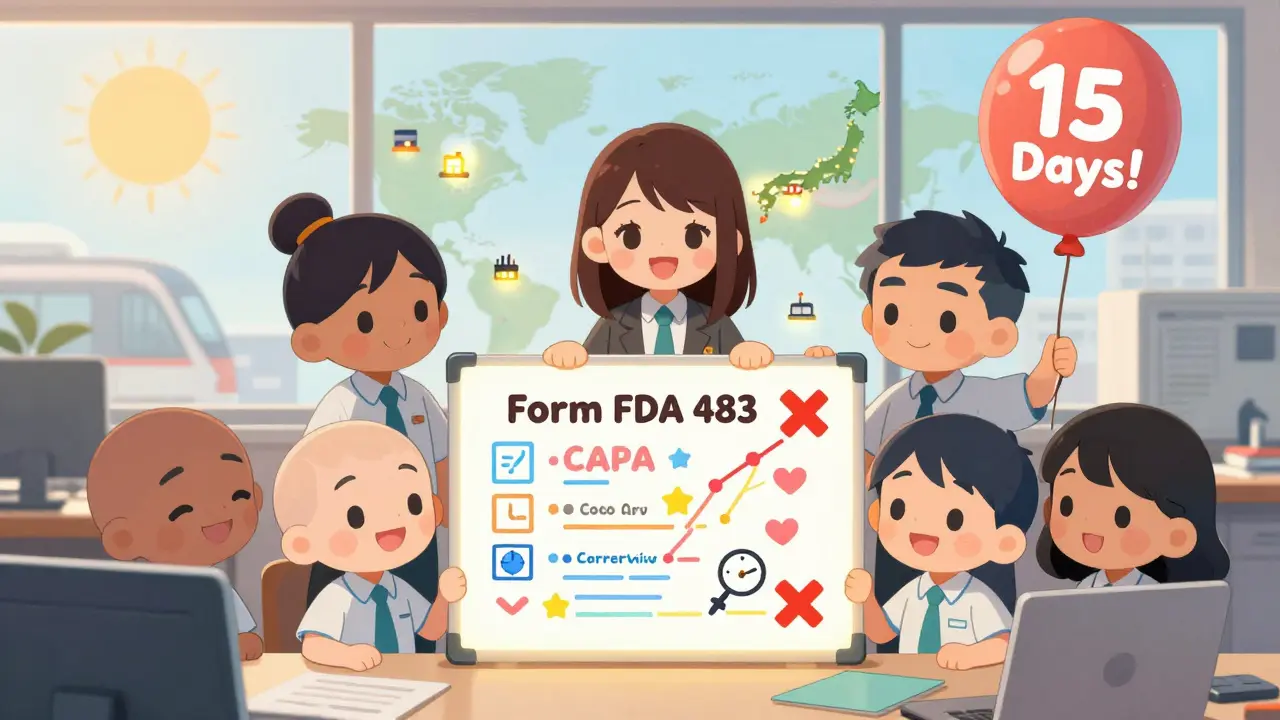
How to Get Ready - Step by Step
1. Separate your audits from your investigations. Create two distinct systems. One for internal audits (protected). One for quality investigations (open to FDA). Use different templates, different storage, different access controls. 2. Train your team on contemporaneous recording. If someone doesn’t sign a batch record until the next day, fix it. Train them. Audit them. Make it part of their KPIs. 3. Build a Form 483 response playbook. Don’t wait until you get one. Have a template ready. Include root cause analysis steps, corrective actions, preventive actions, evidence of implementation. Test it with mock inspections. 4. Go digital. Paper records are a liability. Electronic systems with audit trails, version control, and secure access are no longer optional. Look for FDA-compliant LIMS or QMS software. 5. Prepare for unannounced visits. Keep your facility clean, your records updated, and your staff trained - every day. Assume the FDA could walk in tomorrow.What’s Coming Next
The FDA’s 2025-2027 Strategic Plan aims to cut inspection cycle times by 25% using digital records. That means faster, smarter inspections - but also less room for error. At the same time, Congress is pushing the Pharmaceutical Supply Chain Transparency Act, which could force public disclosure of inspection findings. Right now, those records are confidential. But that might change. The industry is divided. PhRMA says public reports will kill honest internal audits. FDA says transparency builds public trust. The truth? Both sides have a point. But if you’re a manufacturer, you don’t get to wait for the debate to end. You need to be ready for whatever comes next.Final Thought
Manufacturing transparency isn’t about pleasing the FDA. It’s about protecting patients. Every record you keep, every audit you do, every response you write - it’s not just compliance. It’s a promise. A promise that the medicine people rely on is safe, effective, and made right. The FDA doesn’t inspect to punish. They inspect because lives depend on it. If you’re in this game, don’t see inspections as a threat. See them as proof that you’re doing it right.Can the FDA inspect my facility without notice?
Yes, especially for foreign facilities. As of 2025, the FDA plans to conduct unannounced inspections at 35% of overseas manufacturing sites - up from 12% in 2023. Domestic facilities still mostly receive scheduled inspections, but refusal to allow entry is a violation of federal law and can lead to product seizures or facility shutdowns.
What records must I give the FDA during an inspection?
You must provide all current Good Manufacturing Practice (CGMP) records, including batch production records, equipment logs, validation protocols, deviation reports, complaint investigations, and CAPA documentation. These are required under 21 CFR 211.180 for drugs and 21 CFR 820.180 for medical devices. Internal quality assurance audit reports are protected unless tied to a specific product failure or complaint.
How long do I have to respond to a Form FDA 483?
You have exactly 15 business days to respond to a Form FDA 483. The FDA expects a detailed, evidence-based response that includes root cause analysis, corrective actions, preventive actions, and proof that changes were implemented. Late or vague responses often lead to warning letters or regulatory action.
Are internal audit reports protected from FDA review?
Yes - but only if they’re part of a formal, written quality assurance program and not tied to a specific product failure. Under CPG Sec. 130.300, the FDA generally does not review these to encourage honest internal reviews. However, if an issue leads to a complaint, deviation, or recall, those same findings become subject to inspection under 21 CFR 211.192.
What’s the difference between a Form 483 and a warning letter?
A Form FDA 483 is a list of observations made during an inspection - it’s not a penalty. A warning letter is a formal regulatory action issued if the FDA believes your response to the Form 483 is inadequate or if violations are serious. Warning letters can lead to import bans, product seizures, or injunctions. Over 80% of warning letters in 2024 followed poor Form 483 responses.
Can the FDA inspect my facility remotely?
Yes. Since July 2025, the FDA has formalized Remote Regulatory Assessments (RRAs), which allow inspectors to review electronic records, conduct video walkthroughs, or request live access to digital systems. RRAs don’t result in Form 483s but can trigger a full physical inspection. Companies with RRA-ready systems reduce inspection downtime by up to 65%.
What happens if I don’t keep records for the required time?
Destroying or failing to retain required records is a violation of federal law. The FDA considers this evidence of intent to conceal noncompliance. In 2024, 17% of warning letters cited improper record retention. Penalties include product recalls, import alerts, and even criminal charges in extreme cases.
Vu L
December 27, 2025 AT 14:34Bro, the FDA doesn't care about your 'internal audits'-they just want to see if you're lying. I've seen companies get nailed for 'protected' docs that were just glorified Excel sheets with fake signatures. You think you're slick? They've got AI that flags inconsistencies now. Stop pretending compliance is a game.
James Hilton
December 29, 2025 AT 09:44So let me get this straight-we’re supposed to be paranoid about paperwork so some guy in Maryland can feel powerful? I mean, I get it-people die if pills are bad. But also, why does the FDA get to be the only agency that treats manufacturers like criminals until proven innocent? Just saying.
Mimi Bos
December 30, 2025 AT 22:58wait so if i mess up a batch record and fix it the same day its fine? but if someone notices and complains then its a problem? im so confused now lol
Payton Daily
January 1, 2026 AT 21:32Let me ask you this: what is truth? Is it the record you write at 2 a.m. after a 16-hour shift? Or is it the sanitized version you edit at 9 a.m. because you’re scared of the FDA? We pretend we’re in control-but we’re just actors in a play written by regulators who’ve never touched a vial of active ingredient. The real violation isn’t missing signatures-it’s losing faith in the system. And that? That’s what kills patients.
Kelsey Youmans
January 2, 2026 AT 04:20While I appreciate the comprehensive overview provided, I would respectfully suggest that greater emphasis be placed on the ethical imperative underlying regulatory compliance. The preservation of patient safety is not merely a legal obligation but a moral covenant between the manufacturer and the public. Ensuring contemporaneous documentation is not administrative diligence-it is an act of profound human responsibility.
Sydney Lee
January 3, 2026 AT 09:38Let’s be honest: if you’re still using paper logs in 2025, you’re not just non-compliant-you’re a liability to humanity. I’ve seen companies with 40-year-old binders and handwritten notes that look like they were scribbled by a drunk toddler. This isn’t regulation. This is negligence dressed up as tradition. You think the FDA is being harsh? They’re being kind compared to what happens when a child gets a tainted vaccine because someone didn’t timestamp a calibration. Wake up.
oluwarotimi w alaka
January 3, 2026 AT 22:18USA always say they want transparency but they dont want to pay fair price for medicine made in Nigeria or India. Now they say 'unannounced inspection' like we are criminals. You import our drugs, use our workers, then act like we dont know how to make pills? We make 80% of your antibiotics and you treat us like we are cheating? This is colonialism with a clipboard.
Debra Cagwin
January 4, 2026 AT 19:51This is such an important topic-and honestly, I’m so proud of the people in manufacturing who show up every day to get this right. You’re not just following rules-you’re protecting families. If you’re reading this and feeling overwhelmed? You’re not alone. Start small: pick one process, fix it, document it, celebrate it. Then move to the next. Progress, not perfection. You’ve got this.