
 Dec, 3 2025
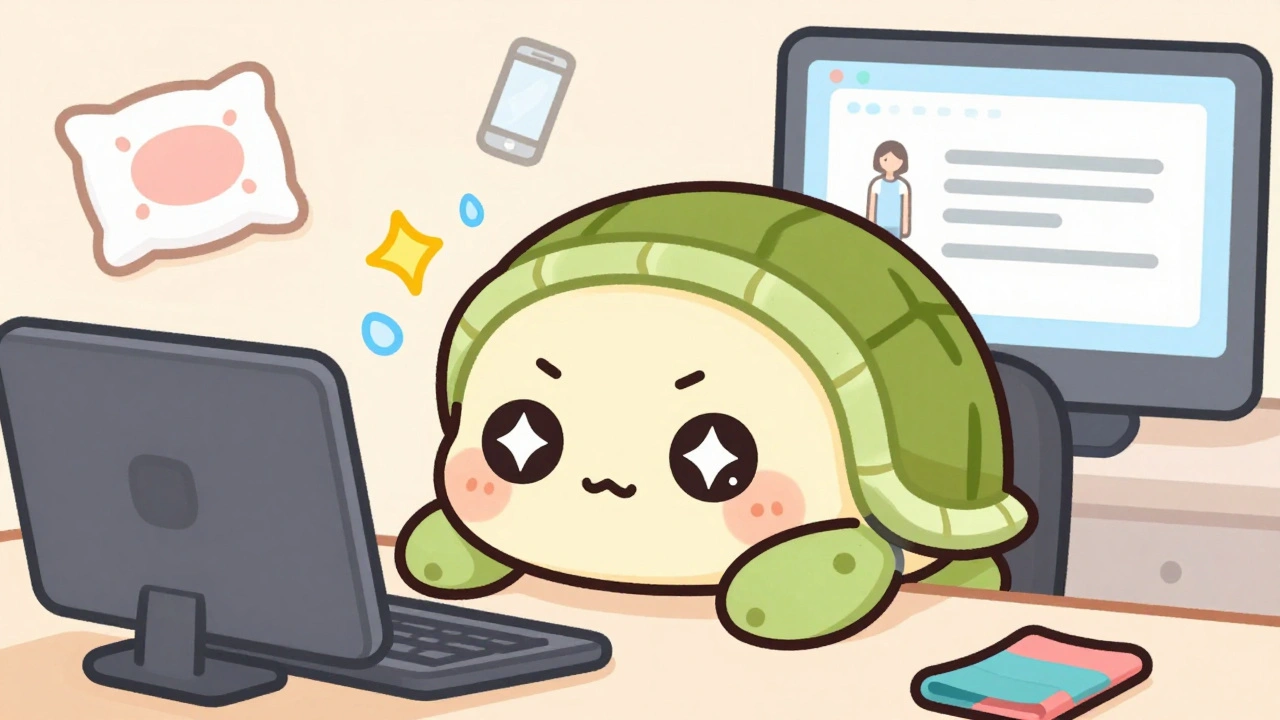
Neck pain isn’t just annoying-it can stop you from turning your head, sleeping comfortably, or even focusing at work. If you’ve ever woken up with your neck locked up, or felt a sharp ache after sitting at your desk too long, you’re not alone. About cervical strain is the most common reason people visit their doctor for neck pain, making up 60-70% of all cases. It’s not a spine fracture or a pinched nerve. It’s your muscles and tendons getting overstretched-usually from bad posture, sudden movements, or holding your head in one position too long.
What Exactly Is Cervical Strain?
Cervical strain happens when the soft tissues in your neck-muscles like the trapezius and levator scapulae, or tendons connecting them to your spine-get pulled beyond their limit. Think of it like a rubber band that’s stretched too far. It doesn’t snap, but it hurts. You might feel it right after a car accident, a fall, or even a bad night’s sleep on a pillow that doesn’t support your neck.
The pain is usually sharp or dull and stays right in your neck and upper shoulders. You won’t feel numbness or tingling down your arm-that’s a different problem, like a pinched nerve. With cervical strain, the pain gets worse when you move your head, especially when looking up or turning side to side. Most people rate the pain between 4 and 6 out of 10 during the first few days.
There are three levels of strain:
- Mild: Tiny tears in muscle fibers. Pain fades in 2-3 days.
- Moderate: Partial tearing. Pain lasts 1-2 weeks.
- Severe: Complete tear or rupture. Recovery takes 6-12 weeks.
Ultrasound studies show the trapezius muscle (the big muscle that runs from your neck to your shoulders) is involved in 65% of cases. The levator scapulae and sternocleidomastoid are also common trouble spots.
How Is It Different From Other Neck Problems?
Not all neck pain is the same. It’s easy to assume your neck pain is arthritis or a herniated disc-but those are different beasts.
Cervical stenosis happens when the spinal canal narrows, often in people over 40. It causes numbness, weakness in the arms, or even trouble walking. Cervical strain doesn’t do that.
Osteoarthritis in the neck develops slowly. You’ll feel a grinding sensation when you move, and the pain is worse in the morning but improves as you move around. Strain pain comes on suddenly and gets worse with movement.
Rheumatoid arthritis causes morning stiffness that lasts more than 30 minutes and affects both sides of the body. Strain pain is one-sided and tied to a specific movement or injury.
And then there’s cervical radiculopathy, or a pinched nerve. That’s when pain shoots down your arm, sometimes to your fingers. With strain, the pain stays put-right in your neck and shoulder blades.
Why Does It Happen So Often?
Modern life sets us up for neck strain. Most people spend hours hunched over computers, phones, or tablets. The average office worker’s head is positioned 4-6 centimeters forward of where it should be. That’s like carrying a 10-pound bowling ball on your neck all day. Over time, your muscles get tired, tight, and easily injured.
A 2022 OSHA ergonomic study found that 68% of office workers have forward head posture. That’s the biggest hidden cause of chronic neck strain. Even your sleeping position matters. Sleeping on your stomach with your head twisted to one side puts extreme stress on your neck muscles.
Car accidents are another major cause. Even low-speed collisions can cause whiplash-a sudden jerk that tears neck tissues. That’s why cervical strain became a well-documented condition in the 1920s, when cars became common.
People aged 35-54 are most at risk, making up nearly half of all cases. And while you might think manual laborers get more neck pain, office workers have 2.3 times higher rates because they sit still for hours, not because they lift heavy things.
What Should You Do Right Away?
Don’t panic. Most cervical strains heal on their own-but what you do in the first 72 hours makes a huge difference.
First 48-72 hours: Rest, but don’t stay completely still. Move your head gently. Apply ice for 15-20 minutes every 2-3 hours. A Journal of Athletic Training study showed this cuts pain by 32% compared to just resting. Avoid heat in the first few days-it can increase swelling.
Don’t wear a neck brace. It might feel comforting, but studies show wearing one longer than 72 hours slows recovery by 37%. Your muscles need to move to heal.
Medication? Over-the-counter pain relievers like acetaminophen or ibuprofen can help. But the American Academy of Physical Medicine and Rehabilitation says NSAIDs (like ibuprofen) shouldn’t be used beyond 7-10 days. They don’t help more after that-and they raise your risk of stomach problems by 15%.
Recovery: What Works After the First Week?
After the first few days, it’s time to start moving again. This is where most people fail-they wait too long to start exercises.
The American College of Physicians says people who begin physical therapy within 72 hours recover 28% faster than those who wait. Here’s what works:
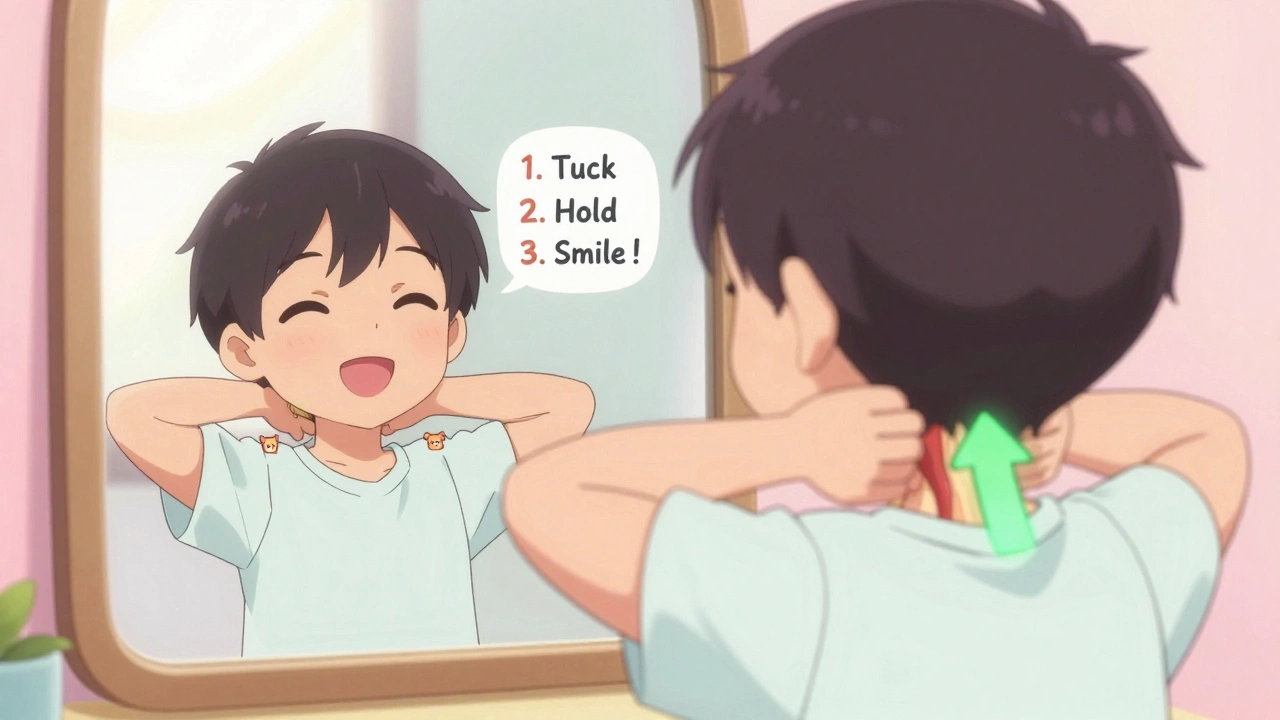
- Chin tucks: Sit or stand tall. Gently pull your chin straight back, like you’re making a double chin. Hold for 3 seconds. Do 10-15 reps, 3 times a day.
- Scapular retractions: Squeeze your shoulder blades together as if you’re trying to hold a pencil between them. Hold for 5 seconds. Repeat 10 times, 3 times daily.
- Neck rotations: Slowly turn your head to the right, then left. Don’t force it. Just go as far as comfortable. Do 5 reps each side, twice a day.
By day 14, people who do these exercises regularly see an 18.7-degree improvement in how far they can turn their head, according to the Spine Journal.
From week 3 onward, add resistance. Use a TheraBand® (a light exercise band) for gentle resistance. Do 2 sets of 15 reps, 3 times a week. Studies show this builds 23% more strength than just bodyweight moves.
But here’s the catch: only 41% of people stick with their exercises by week 6. The ones who do? They build a habit. They do chin tucks while brushing their teeth. They do shoulder squeezes while waiting for their coffee. Habit-stacking-tying exercises to daily routines-makes adherence 68% more likely.
What About Chiropractic or Massage?
Many people turn to chiropractors or massage therapists. On Healthgrades, chiropractic care gets 3.9 out of 5 stars. People love the immediate relief after an adjustment. But 32% say the relief is temporary and they need to keep going back.
Physical therapy gets higher ratings-4.3 out of 5. Why? Because it teaches you how to fix the root cause. One Reddit user, u/NeckPainWarrior, had chronic pain for 6 months. After focusing on strengthening the lower trapezius and serratus anterior muscles, his forward head posture improved from 4.2 cm to 1.8 cm. His headaches disappeared.
Massage helps with muscle tension, but it doesn’t correct posture or build strength. It’s good for short-term comfort, not long-term recovery.
When Should You Worry?
Most cervical strains heal in 2-4 weeks. But if you don’t get better, something else might be going on.
See a doctor if:
- Pain lasts longer than 4 weeks
- You feel numbness, tingling, or weakness in your arms or hands
- You have trouble walking or balancing
- Pain wakes you up at night
- You lost bladder or bowel control (this is rare but urgent)
Many people wait too long. A Spine-Health.com forum found users averaged 8.2 weeks before seeing a specialist. By then, the strain had turned into myofascial pain syndrome-requiring 6 months of treatment instead of 2-3 weeks.
New Tools and Future Trends
The field is changing. In January 2023, the FDA approved a wearable device called NeckSense™ by DorsaVi. It uses sensors to track your neck posture in real time and vibrates when you slouch. It’s 92.7% accurate compared to X-rays.
Doctors are also starting to screen for psychological factors. People who score high on the Pain Catastrophizing Scale (fearing the worst, feeling helpless) are 3.2 times more likely to develop chronic pain. Cognitive-behavioral techniques are now part of top treatment plans.
Research from the NIH is testing whether early multimodal care-physical therapy, posture training, and behavioral support-can cut chronic neck pain from 15% to 8%. The results could change how we treat this common problem.
How to Prevent It From Coming Back
Recovery isn’t the end. Prevention is the real win.
- Adjust your computer screen so the top is at eye level.
- Use a supportive pillow-your neck should be aligned with your spine, not bent.
- Take a 2-minute break every 30 minutes. Stand up, stretch your neck and shoulders.
- Strengthen your upper back. Push-ups, rows, and wall angels help.
- Don’t hold your phone between your ear and shoulder. Use speaker or headphones.
Workplaces are catching on. 92% of employer wellness programs now include neck and posture education. It’s not just about comfort-it’s about productivity. Neck pain costs the U.S. $8.9 billion a year in medical bills and lost work.
The good news? You don’t need surgery, injections, or expensive gadgets. Most cases of cervical strain respond to simple, consistent movement and better posture. Your neck isn’t broken. It’s just tired. Give it the right care, and it will thank you.
How long does cervical strain usually take to heal?
Most mild to moderate cervical strains heal within 2 to 4 weeks. Mild cases improve in 2-3 days, moderate ones take 1-2 weeks, and severe strains with full muscle tears can take 6-12 weeks. Recovery speed depends on how early you start movement and whether you address posture issues.
Is it safe to use heat for neck strain?
Avoid heat in the first 48-72 hours. Heat increases swelling and inflammation right after an injury. After the initial swelling goes down, heat can help relax tight muscles. Use a heating pad for 15-20 minutes at a time, no more than twice a day.
Can neck strain cause headaches?
Yes. Tight muscles in the neck, especially the upper trapezius and levator scapulae, can refer pain to the base of the skull and trigger tension headaches. These headaches feel like pressure around the head and often improve once neck mobility and posture are restored.
Do I need an X-ray or MRI for neck strain?
No, not usually. Cervical strain is diagnosed based on symptoms and physical exam. Imaging is only needed if pain lasts more than 4 weeks, if you have neurological symptoms like numbness or weakness, or if there’s no improvement with conservative treatment. Unnecessary imaging can lead to false alarms and higher costs.
What’s the best sleeping position for neck strain?
Sleeping on your back with a supportive pillow that keeps your neck aligned with your spine is best. Side sleeping is okay if you use a pillow that fills the space between your ear and shoulder. Avoid sleeping on your stomach-it twists your neck and puts pressure on your muscles and joints.
Can neck strain become chronic?
Yes, if it’s not properly managed. About 10-15% of acute cervical strains turn chronic, especially if you keep poor posture, avoid movement, or ignore muscle weakness. Forward head posture increases chronicity risk to 22%. Early physical therapy and posture correction can reduce that risk significantly.
Are painkillers the best treatment for neck strain?
No. Painkillers like NSAIDs or acetaminophen help with discomfort, but they don’t fix the problem. The most effective treatment is movement, posture correction, and strengthening. Relying on medication beyond 7-10 days doesn’t improve recovery and increases side effect risks.
Is chiropractic care better than physical therapy for neck strain?
Chiropractic adjustments may give quick relief, but physical therapy is more effective long-term. PT teaches you how to move correctly, strengthens weak muscles, and corrects posture-reducing the chance of recurrence. Studies show patients who start physical therapy within 72 hours recover 28% faster than those who don’t.
Dematteo Lasonya
December 4, 2025 AT 03:25Rudy Van den Boogaert
December 4, 2025 AT 12:20Gillian Watson
December 5, 2025 AT 12:20Jordan Wall
December 6, 2025 AT 16:07Gareth Storer
December 7, 2025 AT 21:47Pavan Kankala
December 9, 2025 AT 10:14Ashley Elliott
December 10, 2025 AT 02:34jagdish kumar
December 11, 2025 AT 20:12Benjamin Sedler
December 12, 2025 AT 19:03zac grant
December 14, 2025 AT 00:09michael booth
December 15, 2025 AT 04:04Carolyn Ford
December 16, 2025 AT 09:23Heidi Thomas
December 16, 2025 AT 13:08Alex Piddington
December 17, 2025 AT 00:23Libby Rees
December 17, 2025 AT 16:13Rudy Van den Boogaert
December 17, 2025 AT 19:29