
 Dec, 4 2025
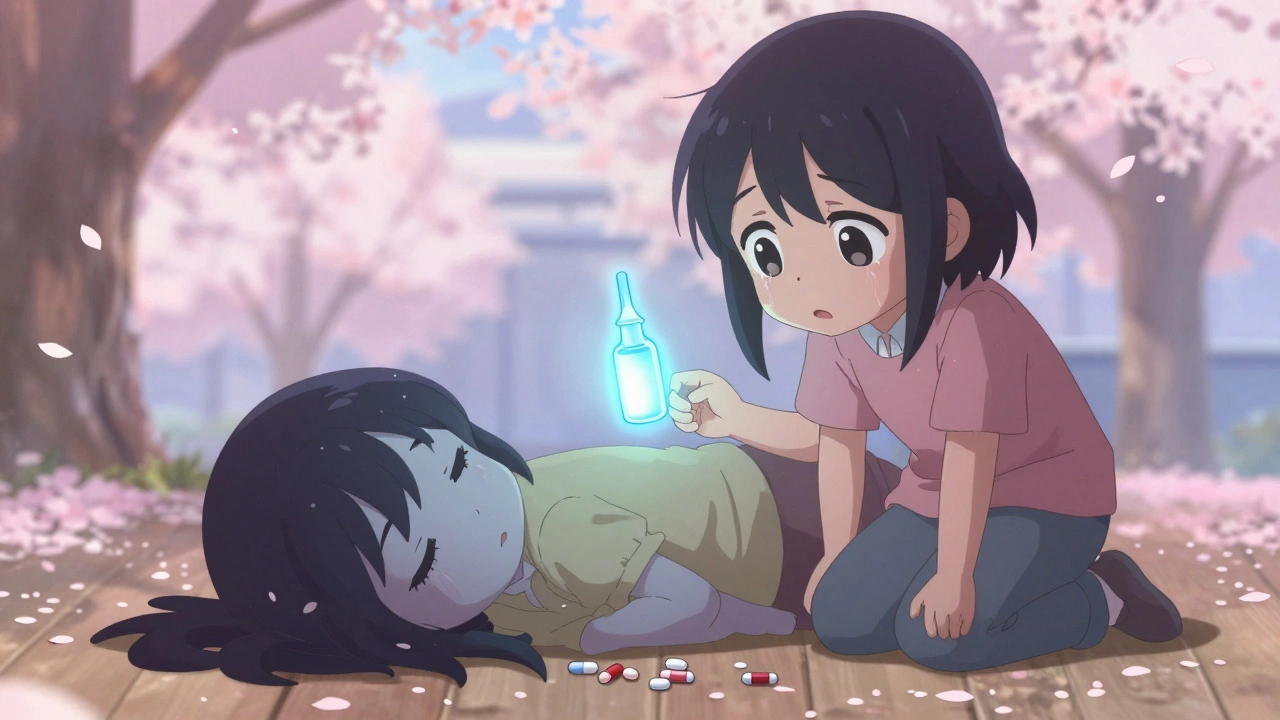
What Happens During an Opioid Overdose?
When someone takes too much of an opioid-whether it’s heroin, oxycodone, fentanyl, or even a prescription pill-their breathing slows down until it stops. This isn’t just feeling sleepy. It’s the brain’s breathing center shutting down. Without oxygen, brain damage starts in as little as four minutes. Death follows quickly after that.
Opioids bind to receptors in the brainstem, especially the preBötzinger complex, which controls rhythm. Too much of the drug overwhelms this system. The result? Breathing drops below 12 breaths per minute. In severe cases, it’s one breath every 3 to 5 seconds-or worse, no breath at all.
Fentanyl is the biggest threat today. It’s 50 to 100 times stronger than morphine. Most illicit pills and powders now contain fentanyl, often without the user’s knowledge. The California Department of Public Health found it in 60 to 80% of tested overdose cases. That means even someone who’s used opioids before can overdose on a tiny amount they thought was safe.
How to Spot an Opioid Overdose
You don’t need to be a doctor to recognize the signs. Look for three key things: unresponsiveness, abnormal breathing, and blue or gray skin.
- Unresponsive: Try shaking the person firmly and shouting their name. If they don’t wake up, it’s a red flag. This isn’t passed out from alcohol-it’s deeper. They won’t respond to pain, loud noises, or even a sternum rub.
- Abnormal breathing: Normal breathing is 12 to 20 breaths per minute. In overdose, it’s fewer than 12. Often, it’s shallow, gurgling, or stops entirely. You might hear a wet, rasping sound-sometimes called a "death rattle"-as air struggles past blocked airways.
- Cyanosis: Lips, fingernails, or skin turn blue, purple, or gray. On darker skin tones, this looks more ashen or grayish. Cold, clammy skin often goes with it.
Don’t wait for all these signs. If someone is unresponsive and breathing oddly, act. Time is everything.
Why Naloxone Works
Naloxone, sold as Narcan or Evzio, doesn’t cure addiction. It doesn’t make someone feel good. It does one thing: it kicks opioids off brain receptors and replaces them.
Think of it like a key. Opioids are keys that fit into brain locks (receptors) and shut down breathing. Naloxone is a better-fitting key. It slips in faster and harder than most opioids, pushes them out, and blocks them from coming back in. Breathing starts again within 2 to 5 minutes if given in time.
It’s safe. If someone didn’t take opioids, naloxone does nothing. No harm. No side effects. Even if you’re unsure, use it. Health Canada and the CDC both say: when in doubt, give naloxone.
But here’s the catch: naloxone wears off in 30 to 90 minutes. Fentanyl can stay active for 3 to 6 hours. That means the person can slip back into overdose after waking up. That’s why you must call 911-even if they seem fine.
How to Use Naloxone: A Step-by-Step Guide
There are two common forms: nasal spray and injection. Both work. Here’s how to use each.
For Nasal Spray (Narcan)
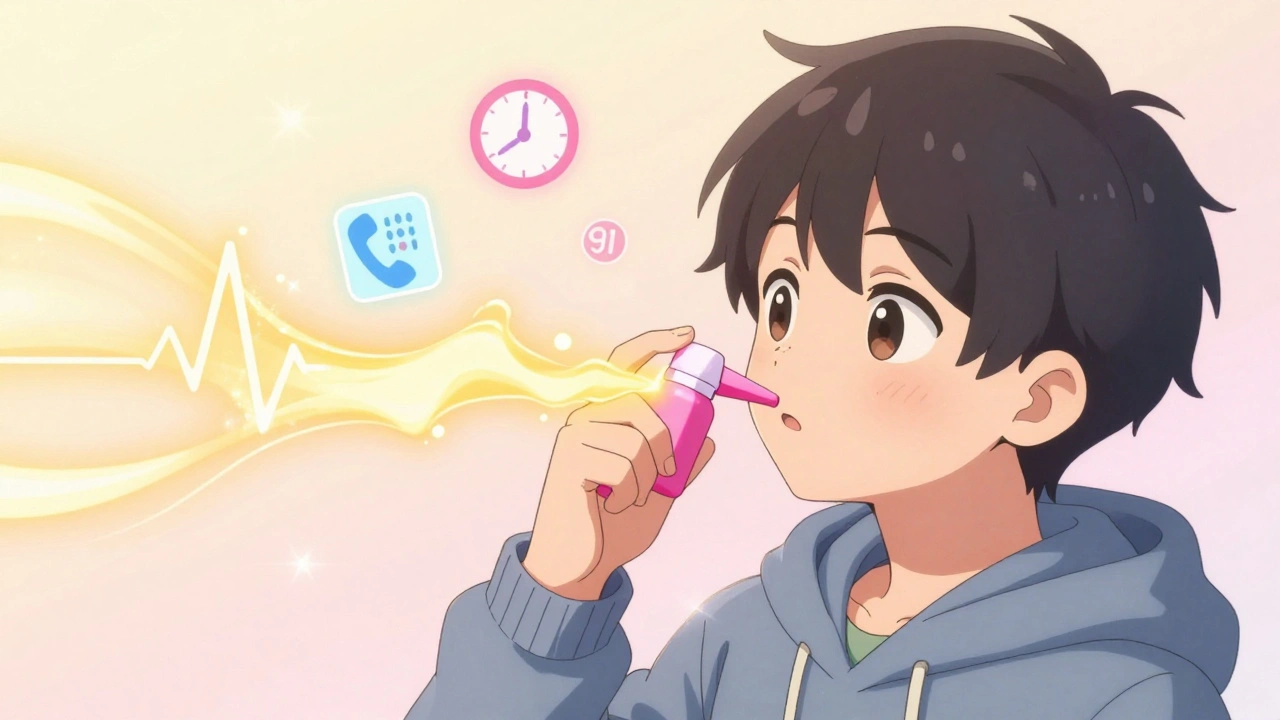
- Call 911 right away. Don’t wait. Even if you give naloxone, they still need medical care.
- Position the person: Lay them on their back. Tilt their head back slightly to open the airway.
- Insert the spray: Hold the device with your thumb on the bottom and fingers on the nozzle. Gently insert the nozzle into one nostril.
- Spray once: Press the plunger firmly until you hear a click. That’s one full dose.
- Wait and watch: If no breathing returns after 2 to 3 minutes, give a second spray in the other nostril.
- Start rescue breathing: If they’re not breathing, give one breath every 5 seconds. Watch for chest rise.
For Injectable Naloxone
- Call 911.
- Prepare the syringe: Remove the cap. Draw up 1 mL (1 mg) from the vial. Some auto-injectors (like Evzio) are pre-filled and speak instructions when activated.
- Inject into thigh: Place the needle at a 90-degree angle into the outer thigh, even through clothing.
- Press plunger: Inject all the liquid. Remove the needle.
- Wait and monitor: If no response after 2-3 minutes, give a second dose.
- Start rescue breathing if needed.
What NOT to Do
People try to help in ways that make things worse. Avoid these mistakes:
- Don’t put them in a cold shower or bath. It won’t sober them up. It can cause drowning or shock.
- Don’t give them coffee, salt, or ice. These don’t reverse opioids. They add risk.
- Don’t leave them alone after giving naloxone. They can relapse into overdose when the naloxone wears off.
- Don’t wait to call 911. Emergency responders can give advanced care, manage complications like pulmonary edema, and transport them to a hospital.
Why Calling 911 Is Non-Negotiable
Even if the person wakes up after naloxone, they’re not out of danger. Fentanyl and other long-acting opioids can re-occupy receptors once naloxone leaves the system. That’s called rebound overdose.
They might also develop fluid in the lungs (pulmonary edema) from the overdose itself. Or they could vomit and choke if not positioned correctly.
Emergency teams can monitor oxygen levels, give more naloxone if needed, and start treatment for withdrawal. They can also connect them to long-term care.
Good Samaritan laws protect you. In 47 U.S. states and all Canadian provinces, you can’t be arrested for drug possession if you’re calling for help during an overdose. That’s not a loophole-it’s a lifesaving policy.
Who Should Have Naloxone?
You don’t have to be a drug user to need naloxone. Here’s who should keep it handy:
- People prescribed opioids for pain, especially above 50 morphine milligram equivalents per day (8.9 times higher overdose risk)
- Family members or friends of someone with opioid use disorder
- Anyone who lives with or works around people who use drugs
- First responders, teachers, librarians, and community workers
- People who use stimulants like cocaine or meth-because many are mixed with fentanyl
Naloxone is now available without a prescription in all 50 states. You can buy it at pharmacies for $25 to $130. Generic versions cost less. Some community groups give it away free.
Storage and Shelf Life
Naloxone doesn’t last forever. Keep it:
- At room temperature (below 40°C / 104°F)
- Away from direct sunlight
- Not in your car or bathroom
Check the expiration date. Most sprays last 2 to 3 years. If it’s expired, use it anyway. Better than nothing.
Real Stories, Real Impact
A user on Reddit named OverdoseResponderMA saved three people in 2022 using Narcan. The first took four minutes to respond. The second needed two doses because the heroin was laced with fentanyl.
In Texas, SarahK_TX used Narcan on her brother after he stopped breathing. "He woke up coughing 90 seconds after the spray," she wrote. "The EMTs said another two minutes and he’d have been gone."
Since 2019, naloxone distribution has prevented an estimated 27,000 deaths a year in the U.S., according to Johns Hopkins. That’s 27,000 people who are still here because someone acted.
The Bigger Picture
Naloxone is a miracle tool-but it’s not a fix. It’s a pause button. The real solution is access to treatment: medication-assisted therapy (MAT) with buprenorphine or methadone, counseling, housing, and jobs.
As Dr. Nora Volkow of the National Institute on Drug Abuse says, "Naloxone alone cannot address the opioid crisis."
That’s why we need more than just sprays. We need policies that reduce stigma, expand treatment, and make harm reduction tools like fentanyl test strips and safe consumption spaces widely available.
But right now? Right here? If you see someone who’s not breathing, you don’t need to wait for a policy change. You don’t need a degree. You just need to act.
What to Do After Saving a Life
Once help arrives and the person is stable:
- Stay with them until they’re in medical care
- Offer to help them connect with a treatment program
- Keep your naloxone kit stocked-replace used doses immediately
- Practice with a trainer device so you’re ready next time
One spray can save a life. Two sprays can save two. Keeping a kit on hand means you’re never powerless.
Marvin Gordon
December 5, 2025 AT 15:01Naloxone saved my cousin last year. He was out cold, lips blue, not breathing. I sprayed it in one nostril, waited 90 seconds, and he sat up coughing like he’d been slapped. EMTs said if I’d waited five more minutes, he wouldn’t have made it. Keep a kit in your car, your purse, your damn glove compartment. It’s not magic, it’s just physics.
Michael Dioso
December 6, 2025 AT 15:06Yeah right, like we need another PSA. Everyone knows naloxone works. The real problem is people who keep using after getting revived. You give them a second chance and they just go right back to the same dealer. It’s not a crisis-it’s a choice. And now we’re spending millions on free sprays while schools can’t afford textbooks. Priorities, people.
Rupa DasGupta
December 8, 2025 AT 14:08I cried reading this. My brother died in 2020. I wish I’d known about the blue lips thing sooner. 😭 I kept thinking he was just passed out. Please, if you’re reading this-learn this. Keep naloxone. Don’t wait till it’s too late. 💔
ashlie perry
December 9, 2025 AT 02:32They say fentanyl is everywhere but what if it’s a government plot to control the poor? I heard they’re putting it in streetlights and public water to make people dependent so they’ll take the vaccine next. And why is Narcan so cheap? Too convenient. Something’s off.
Ali Bradshaw
December 10, 2025 AT 09:24This is the kind of info that actually saves lives. I’ve got a kit in my backpack now. I work at a library and we’ve had two near-overdoses this year. One guy woke up after the spray, looked at me like I was an alien, then whispered ‘thank you’ before the ambulance came. We’re not heroes. We’re just people who didn’t look away.
an mo
December 12, 2025 AT 03:02Let’s be clear: opioid use disorder is a behavioral pathology rooted in moral failure and weak willpower. Naloxone enables the cycle. We need more incarceration, fewer harm reduction programs. The CDC is part of the problem. They’ve turned addiction into a public health buzzword to justify funding. It’s not a disease-it’s a choice wrapped in victimhood.
aditya dixit
December 12, 2025 AT 07:21The science here is sound, but we must not mistake reversal for resolution. Naloxone is a bridge, not a destination. The real tragedy isn’t the overdose-it’s the absence of dignified alternatives. People don’t use opioids because they’re weak. They use them because the world gave them nothing else to hold onto. Compassion without structure is noise. Structure without compassion is cruelty.
William Chin
December 14, 2025 AT 00:59While I appreciate the intent of this informational piece, I must respectfully submit that the casual tone and colloquial language employed herein may inadvertently undermine the gravitas of the medical imperative being conveyed. One must consider the potential for misinterpretation by laypersons lacking formal training in clinical pharmacology. A more rigorous, peer-reviewed dissemination protocol is warranted.
Ada Maklagina
December 14, 2025 AT 20:11My mom’s on oxycodone for back pain. She’s 72. I got her a Narcan kit. She rolled her eyes but kept it in her nightstand. Last week she almost passed out after mixing it with sleep meds. I sprayed it. She woke up mad as hell and yelled at me for ‘ruining her nap.’ But she’s alive. So I’m keeping the kit.
Deborah Jacobs
December 16, 2025 AT 10:32I used to work ER. Saw a kid, 19, come in with a needle still in his arm, lips purple, no pulse. We gave him three doses of naloxone. He opened his eyes and asked if we had any fries. I cried in the supply closet after. That’s the thing nobody talks about-this isn’t just about drugs. It’s about kids who felt invisible. And sometimes, all it takes to pull them back is someone who doesn’t look away. Keep the spray. Keep the hope.
Krishan Patel
December 17, 2025 AT 23:30Why do we keep enabling this behavior? Why not just let nature take its course? These people chose this path. They knew the risks. Now we’re rewarding failure with free medicine and pity parties. If you can’t control your impulses, maybe you shouldn’t be allowed to walk around unsupervised. Society is collapsing because we refuse to hold people accountable.
Carole Nkosi
December 18, 2025 AT 22:52You think this is about saving lives? It’s about control. Who funds these programs? Who profits from the fear? The pharmaceutical companies made billions off the pills. Now they’re selling the antidote. It’s a cycle. They want you dependent on their solutions. Wake up. This isn’t charity. It’s corporate theater.
Stephanie Bodde
December 20, 2025 AT 00:09I teach high school. I keep two Narcan kits in my desk. One for emergencies. One for the kid who cried in my office last week and said ‘I don’t know how to stop.’ I didn’t give him a lecture. I just handed him the spray and said ‘Here. Just in case.’ He hugged me. I haven’t stopped thinking about it since. 💙
Philip Kristy Wijaya
December 20, 2025 AT 11:59