
 Jan, 17 2026

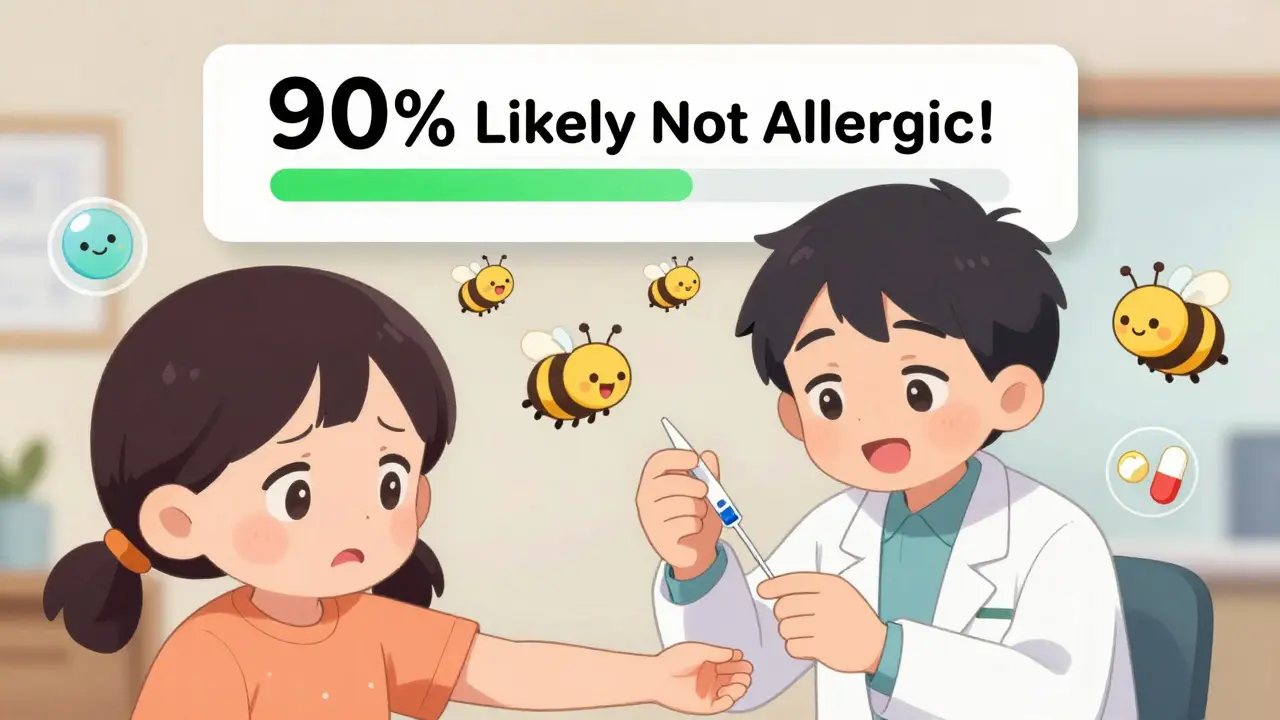
More than 10% of Americans say they’re allergic to penicillin. But here’s the truth: 9 out of 10 of those people aren’t actually allergic. They were misdiagnosed years ago, had a rash as a kid, or just felt sick after taking the medicine-and now they’re stuck with a label that could be putting their health at risk.
Why Most Penicillin Allergies Aren’t Real
Penicillin was discovered in 1928, and since the 1940s, it’s saved millions of lives. But over time, people started reporting reactions-rashes, nausea, itching-and doctors began labeling them as “allergic.” The problem? Many of those reactions weren’t allergies at all.The CDC says only about 1% of the U.S. population has a true penicillin allergy. Yet 10% of people claim they have one. That’s a huge gap. Why? Because most people never get tested. They just assume the reaction they had as a child was an allergy. Or they were told by a doctor decades ago, “Don’t take penicillin,” and never questioned it again.
Here’s what really happens: 80% of people who had an IgE-mediated penicillin allergy (the dangerous kind) lose their sensitivity after 10 years without exposure. If you haven’t taken penicillin since you were 8, chances are you’re no longer allergic. But if you never get tested, you’ll keep avoiding it-and that’s where the real danger lies.
What a Real Penicillin Allergy Looks Like
Not all reactions are the same. There are two main types: immediate and delayed.Immediate reactions happen within an hour. These are the scary ones. Symptoms include swelling of the lips, tongue, or throat; trouble breathing; hives; dizziness; or a sudden drop in blood pressure. This is anaphylaxis-the kind that can kill you in minutes. If you’ve ever had this, you need to be treated as high-risk. No guessing. No shortcuts.
Delayed reactions show up hours or days later. The most common is a flat, red rash that spreads across your body. It’s itchy, but not life-threatening. Other delayed reactions include Stevens-Johnson Syndrome (SJS), Toxic Epidermal Necrolysis (TEN), or DRESS syndrome-these are rare but serious. They affect organs like the liver or kidneys and require hospital care.
Here’s the key: if your reaction was just a rash, stomach upset, headache, or mild itching that went away on its own, you likely don’t have a true allergy. These are side effects or intolerances-not immune responses. And they don’t mean you can’t safely take penicillin again.
How to Know for Sure: Testing Is the Only Way
There’s no blood test that reliably detects penicillin allergy. The gold standard is a two-step process:- Penicillin skin test-a tiny amount of penicillin and its breakdown products (major and minor determinants) is injected under the skin. If you’re allergic, you’ll develop a red, raised bump within 15-20 minutes.
- Oral challenge-if the skin test is negative, you’re given a small dose of amoxicillin (250 mg) and watched for an hour. No reaction? You’re cleared.
This isn’t just theory. Studies show that after a negative skin test and oral challenge, the risk of anaphylaxis drops to near zero-same as someone who’s never claimed an allergy.
And here’s the kicker: if you’ve never had a severe reaction, you might not even need the skin test. Many clinics now skip straight to the oral challenge for low-risk patients. It’s safe, quick, and costs less than a doctor’s visit.
Who’s at Risk? The Three Categories
Not everyone needs the same level of caution. Doctors now use risk categories to decide what to do:- Low-risk: You had a rash more than 5 years ago, mild itching, stomach upset, or you’re not sure what happened. You’re likely fine with penicillin or related antibiotics like cefazolin. No testing needed.
- Moderate-risk: You had hives, swelling, or trouble breathing within the last 5 years. You need testing before taking any penicillin or cephalosporin.
- High-risk: You had anaphylaxis, SJS, TEN, or organ damage from penicillin. You should avoid all beta-lactam antibiotics unless tested by an allergist in a controlled setting.
If you’re unsure which category you fall into, don’t guess. Talk to your doctor. Bring your medical records. If you don’t have them, write down what happened-when, what symptoms, how long it lasted.
Why This Matters More Than You Think
Avoiding penicillin isn’t harmless. When you’re labeled allergic, doctors reach for stronger, broader-spectrum antibiotics like vancomycin or clindamycin. These drugs aren’t just more expensive-they’re more likely to cause side effects and lead to dangerous infections like C. difficile or MRSA.Studies show people with a penicillin allergy label have a 50% higher chance of getting MRSA and a 35% higher chance of C. difficile. Why? Because those alternative antibiotics kill off good bacteria in your gut, letting bad ones take over.
And it’s not just you. Mislabeling affects the whole system. The CDC estimates that fixing penicillin allergy misdiagnoses could save the U.S. healthcare system $1.2 billion a year. In hospitals, it means fewer surgical infections, shorter stays, and better outcomes.
One study found that in joint replacement surgeries, you’d need to test 112-124 patients with a penicillin label to prevent just one infection. That sounds small. But multiply that by millions of surgeries every year-and suddenly, it’s life-saving.

What You Should Do Now
If you’ve ever been told you’re allergic to penicillin, here’s what to do:- Check your records. Do you know what reaction you had? Was it a rash? Nausea? Trouble breathing? Write it down.
- Ask your doctor. Say: “I was told I’m allergic to penicillin. Could I be tested to confirm?”
- Get tested. Skin test + oral challenge is the only way to know for sure. Most insurance covers it.
- Update your records. If you test negative, make sure your doctor removes the allergy label. Tell your pharmacist. Update your medical alert bracelet if you have one.
And if you’ve never been tested but think you might be allergic? Don’t assume. Don’t avoid penicillin out of fear. Get it checked. It’s safer than you think.
What to Do in an Emergency
If you’re ever given penicillin and start having swelling, trouble breathing, or feel like you’re going to pass out-call 911 immediately. Don’t wait. Don’t take antihistamines and hope it goes away. Anaphylaxis can kill in minutes.Always carry an epinephrine auto-injector if you’ve had a severe reaction in the past. And wear a medical alert bracelet that says “Penicillin Allergy” only if you’ve been confirmed allergic through testing. If you’re not sure, don’t wear one. Misleading alerts can lead to worse care.
What’s Changing in 2026
Hospitals are waking up. By 2025, half of U.S. hospitals are expected to have formal penicillin allergy assessment programs. Electronic health records are being updated to flag patients who might be eligible for testing. Pharmacists are now trained to ask, “Have you ever been tested for your penicillin allergy?”More clinics are offering same-day oral challenges. No more months-long waits. No more unnecessary antibiotics. Just a simple test-and a chance to reclaim the safest, most effective antibiotic we’ve ever had.
Penicillin isn’t going away. It’s still the best choice for strep throat, syphilis, pneumonia, and many surgical infections. If you’ve been avoiding it because of an old label-you might be missing out on the safest, cheapest, and most effective treatment available.
Don’t let a mistake from 20 years ago limit your care today. Get tested. Get cleared. Save yourself-and the healthcare system-some serious trouble.
Can I outgrow a penicillin allergy?
Yes, most people do. About 80% of those with a true IgE-mediated penicillin allergy lose their sensitivity after 10 years without exposure. If you had a reaction as a child and haven’t taken penicillin since, you’re likely no longer allergic. Testing is the only way to confirm.
Is a rash always a sign of penicillin allergy?
No. Many rashes after taking penicillin are not allergic reactions. Viral infections like mononucleosis or measles can cause rashes that coincide with antibiotic use. Only about 10% of reported penicillin rashes are true allergies. A rash that appears more than 72 hours after taking the drug is usually a delayed reaction and rarely persists long-term.
Can I take cephalosporins if I’m allergic to penicillin?
Most people can. First-generation cephalosporins like cefazolin are safe for low-risk patients. Even third- and fourth-generation cephalosporins and carbapenems are considered safe if you’ve never had an IgE-mediated reaction like anaphylaxis or hives. Cross-reactivity is much lower than most people think-only about 1-2% for newer drugs.
What if I need penicillin but can’t get tested right away?
If you’re in an urgent situation and can’t wait for testing, your doctor may use alternative antibiotics like clindamycin or vancomycin. But these are less effective and carry higher risks of side effects and resistance. Never avoid penicillin without knowing your true risk. Testing should always be the next step once the emergency passes.
Can I be tested for penicillin allergy if I’m pregnant?
Yes. Penicillin is the first-line treatment for syphilis during pregnancy, and avoiding it puts both mother and baby at risk. Skin testing and oral challenges are safe during pregnancy when done under medical supervision. If you’re pregnant and think you’re allergic, talk to your OB-GYN or an allergist about testing.
Will my insurance cover penicillin allergy testing?
Most insurance plans in the U.S. cover penicillin allergy testing, especially if it’s ordered by a doctor for clinical reasons. Skin testing and oral challenges are often less expensive than the long-term costs of using alternative antibiotics. Ask your doctor’s office to check your coverage before scheduling.
Jodi Harding
January 18, 2026 AT 11:46So I took penicillin at 7, got a rash, and spent 20 years avoiding it-turns out I was never allergic. Just a dumb kid with a virus and a doctor who didn’t know better. Now I’m on amoxicillin for a sinus infection like a normal human. Why did it take this long to figure out we were all just scared of a label?
Naomi Keyes
January 20, 2026 AT 01:04Oh, so now we’re supposed to trust doctors who misdiagnosed us decades ago? That’s rich. I had hives, swelling, and nearly ended up in the ICU-I’m not just ‘a rash’ to be dismissed by some CDC spreadsheet. And now you want me to trust an oral challenge? Like I’m a lab rat? My body remembers. Your data doesn’t.
rachel bellet
January 20, 2026 AT 07:58Let’s not conflate immunological mechanisms with anecdotal misattribution. The IgE-mediated pathway is quantifiably distinct from non-immunologic adverse drug reactions-yet, in clinical practice, the conflation persists due to cognitive biases in patient recall and provider over-reliance on historical documentation. The systemic cost-benefit analysis is compelling, but individual risk stratification remains under-optimized in primary care settings where algorithmic triage is absent.
Nishant Sonuley
January 20, 2026 AT 15:34Look, I get it-you’re trying to save the system money, fine. But let’s not pretend this is just about economics. I had a cousin who went into anaphylaxis on penicillin at 12. She’s 42 now and still carries an EpiPen. You think she’s gonna roll the dice on some ‘oral challenge’ because a study says 80% of people outgrow it? Nah. That’s not science, that’s gambling with lives. And don’t tell me it’s ‘safe’-if it was safe, why do they still test it in hospitals with resuscitation gear on standby? People aren’t data points. They’re moms, dads, siblings. And if you’ve never had your throat close up, don’t tell me what I should risk.
Robert Cassidy
January 20, 2026 AT 23:10America’s healthcare system is a joke. We’re so obsessed with cutting costs we forget people are dying because of lazy diagnoses. And now you want to turn penicillin into a free pass? What’s next? ‘Oh, you thought you had a heart attack? Probably just indigestion-go get a second opinion after your 3-week wait.’ We don’t need more ‘trust the system’ nonsense. We need accountability. Someone labeled my aunt allergic in 1987. She died in 2015 from a staph infection because they gave her vancomycin instead. That’s not a statistic. That’s murder by bureaucracy.
Pat Dean
January 22, 2026 AT 14:19So let me get this straight: you’re telling me I can just ‘get tested’ and suddenly my body’s memory is erased? Like a software update? I’ve been avoiding penicillin since I was 5 because I broke out in hives. That’s not a ‘side effect.’ That’s my immune system screaming. And now you want me to swallow a pill and hope I don’t die? That’s not bravery. That’s stupidity. And if you think I’m gonna risk my life because some ‘study’ says it’s ‘probably fine,’ you’re not just wrong-you’re dangerous.
Selina Warren
January 23, 2026 AT 16:49I tested negative. Got the skin prick, then the amoxicillin. No reaction. I cried. Not because I was scared-because I realized I’d been living in fear for 22 years over a mistake. Penicillin didn’t hurt me. The label did. And now I’m telling everyone: if you think you’re allergic, get tested. It’s not about being brave. It’s about being free.
Robert Davis
January 25, 2026 AT 08:12Interesting how we’re all suddenly so eager to reclassify decades of medical history as ‘misinformation.’ But what if the system got it right the first time? What if the rash wasn’t just a rash? What if the nausea wasn’t ‘just a side effect’? We’re not talking about a missed parking ticket here-we’re talking about your body’s warning system. And now you want to silence it with a checklist? I’m not convinced. Maybe some people outgrow it. But maybe others just get lucky. And luck isn’t a medical protocol.
Danny Gray
January 25, 2026 AT 08:25Wait-so if you had a rash as a kid, you’re basically innocent until proven guilty? But if you had a rash as an adult, suddenly you’re a liability? That’s not logic. That’s arbitrary. And why is it always the patient’s job to prove they’re not allergic? Why isn’t the system required to prove they are? You want to save billions? Start by fixing the damn charting system that lets a 1989 note override 30 years of health history. Stop putting the burden on the patient to unlearn trauma. That’s not healthcare. That’s gaslighting with a stethoscope.