
 Feb, 2 2026

What Is Proteinuria and Why It Matters
Proteinuria means too much protein is leaking into your urine. Healthy kidneys act like fine filters-they keep proteins like albumin in your blood where they belong, helping with tissue repair, fluid balance, and muscle function. But when those filters get damaged, protein slips through and shows up in your pee. That’s proteinuria. It’s not a disease itself, but a red flag that something’s wrong with your kidneys.
Most people don’t feel anything at first. In fact, 70% of early cases show no symptoms. That’s why it’s often called a silent warning. By the time you notice foamy urine or swollen ankles, the damage may already be advanced. The good news? Catching it early gives you a real shot at stopping or slowing kidney damage.
How Much Protein Is Too Much?
Your kidneys normally let through less than 150 milligrams of protein a day. Anything above that starts to raise concerns. Doctors use two main tests to measure it: the urine albumin-to-creatinine ratio (UACR) and the urine protein-to-creatinine ratio (UPCR).
Here’s what the numbers mean:
- Normal: UACR under 30 mg/g
- Mild to moderate proteinuria: UACR between 30 and 300 mg/g
- Severe proteinuria: UACR over 300 mg/g
These aren’t just numbers-they predict risk. People with over 1 gram of protein per day have a 50% chance of reaching kidney failure within 10 years if nothing changes. That’s why even small increases matter.
Why Protein Shows Up in Your Urine
Not all proteinuria is the same. There are three main types:
- Transient proteinuria: Comes and goes. Triggered by things like intense exercise, fever, dehydration, or extreme stress. It’s harmless and usually clears up on its own.
- Orthostatic proteinuria: Happens only when you’re upright. Common in teens and young adults. Your urine is normal in the morning but shows protein later in the day. It’s almost always benign.
- Persistent proteinuria: This is the dangerous kind. It doesn’t go away. It’s tied to underlying disease.
The top causes of persistent proteinuria:
- Diabetes: Causes 40% of cases. High blood sugar slowly damages the kidney filters.
- High blood pressure: Accounts for 25%. Pressure on the tiny blood vessels in the kidneys wears them down.
- Glomerulonephritis: 15% of cases. Inflammation of the kidney’s filtering units.
- Lupus and other autoimmune diseases: Around 7%. Your immune system attacks your own kidneys.
- Preeclampsia: Happens in about 5% of pregnant women with high blood pressure.
Less common causes include multiple myeloma, amyloidosis, and severe heart failure. The key is figuring out which one is behind your proteinuria-because treatment depends on the cause.
How Is It Diagnosed?
Most doctors start with a simple dipstick test during a routine checkup. It’s fast and cheap, but it’s not perfect. It can miss low levels of protein or give false positives. That’s why a follow-up test is always needed.
The two gold-standard tests:
- Spot UPCR: A single urine sample tested for protein and creatinine. It’s accurate, easy, and doesn’t require collecting urine for 24 hours. Most clinics use this now.
- 24-hour urine collection: You collect all your urine over a full day. It’s more precise but messy and inconvenient. About 1 in 3 people don’t finish it properly.
If proteinuria is confirmed, your doctor will likely order blood tests to check your kidney function (eGFR), blood sugar, and cholesterol. Imaging like an ultrasound might be used to look at kidney structure. In rare cases, a kidney biopsy is needed to see exactly what’s damaged.

What Symptoms Should You Watch For?
Early proteinuria? Usually none. That’s the problem.
As protein loss grows past 1,000 mg/day, you might notice:
- Foamy or bubbly urine (85% of symptomatic people report this)
- Swelling in ankles, feet, hands, or face (75%)
- Feeling unusually tired (60%)
- More frequent urination, especially at night (45%)
- Muscle cramps, nausea, or loss of appetite
If you’re losing more than 3,500 mg of protein a day, you could be developing nephrotic syndrome. That means severe swelling, very low blood albumin, and high cholesterol. It’s serious and needs immediate treatment.
How to Reduce Proteinuria and Protect Your Kidneys
Reducing protein in your urine isn’t just about fixing a lab result-it’s about saving your kidneys long-term. Every 50% drop in protein excretion cuts your risk of kidney failure by 30%.
Here’s what actually works:
1. Medications That Protect Your Kidneys
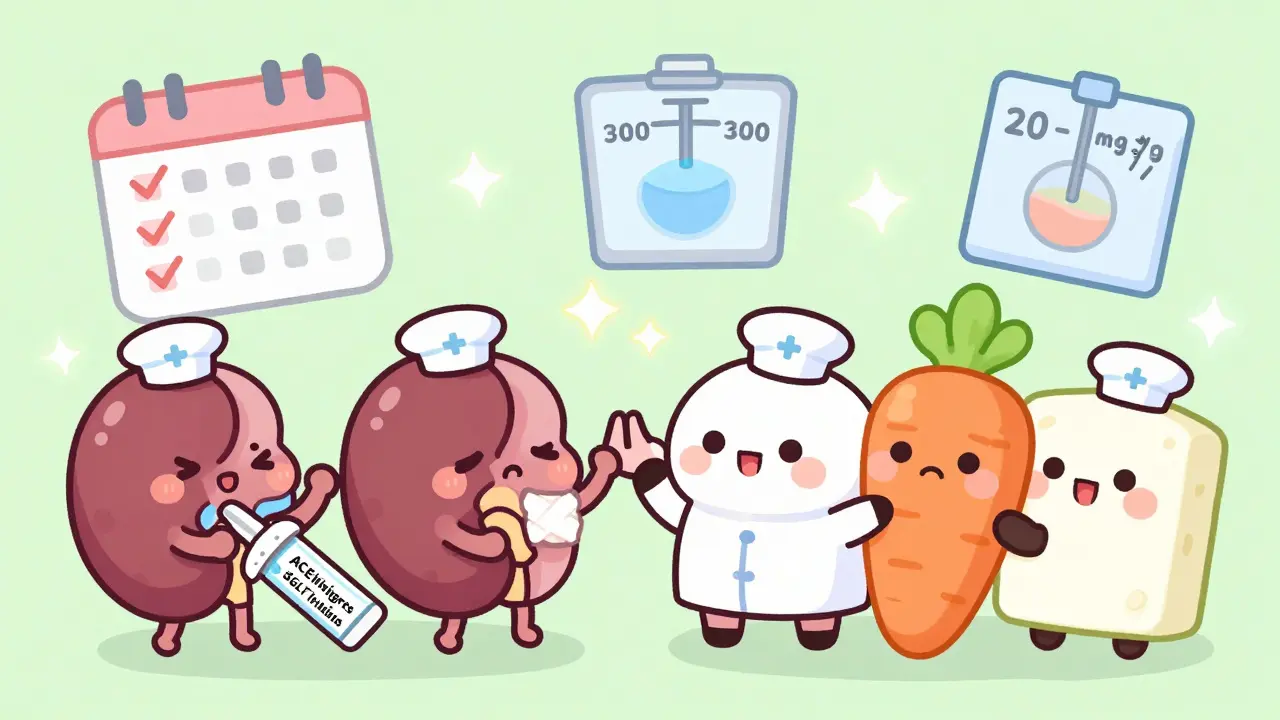
ACE inhibitors (like lisinopril) and ARBs (like losartan) are the first-line drugs. They don’t just lower blood pressure-they directly reduce pressure inside the kidney filters. Studies show they cut proteinuria by 30-50% and slow kidney decline by 20-30%.
SGLT2 inhibitors (like canagliflozin and dapagliflozin), originally for diabetes, are now used even in non-diabetic patients. They reduce proteinuria by 30-40% and protect kidney function.
Finerenone, a newer drug, blocks a hormone that worsens kidney scarring. In trials, it cut proteinuria by 32% and slowed kidney decline in diabetic patients.
2. Diet Changes That Make a Difference
Too much protein can stress damaged kidneys. But too little can make you weak. The sweet spot? 0.6 to 0.8 grams of protein per kilogram of body weight per day.
For a 70 kg (154 lb) person, that’s about 42-56 grams of protein daily. That’s less than two chicken breasts. Focus on high-quality sources: eggs, fish, lean meat, tofu. Avoid processed meats and excessive dairy.
Also cut back on salt. More than 2,300 mg a day makes swelling worse and raises blood pressure. Aim for under 1,500 mg if you have proteinuria.
3. Control Blood Pressure and Blood Sugar
Keep your blood pressure below 130/80 mmHg. If you have diabetes, aim for an A1C under 7%. These aren’t optional goals-they’re the most powerful tools you have to stop kidney damage.
4. Avoid Kidney Stressors
Don’t smoke. Avoid NSAIDs like ibuprofen or naproxen-they can worsen kidney function. Stay hydrated. Limit alcohol. And if you’re overweight, losing even 5-10% of your weight can cut proteinuria significantly.
How Often Should You Get Tested?
Screening depends on your risk:
- If you have diabetes or high blood pressure: Test every 6 to 12 months.
- If you have mild proteinuria: Check every 3 to 6 months until levels stabilize.
- If you’re starting a new treatment: Test monthly for the first 3 months to see if it’s working.
Don’t wait for symptoms. If you’re in a high-risk group, ask your doctor to include a UPCR test in your annual checkup. It’s simple, cheap, and life-saving.
What’s New in Proteinuria Research?
Science is moving fast. Smartphone apps that analyze urine foam with a camera are now 85% accurate compared to lab tests-useful for home monitoring.
Researchers are also finding new biomarkers. Urinary levels of TNF receptor-1 now predict who’s at highest risk of rapid kidney decline, even before eGFR drops.
Gene therapies and anti-fibrotic drugs are in early trials. For rare conditions like Alport syndrome, one drug reduced proteinuria by 35% in phase 3 trials.
The global market for proteinuria tests is expected to grow over 11% yearly through 2027. That’s because more people are being screened-and we’re learning how to treat it better than ever.
What Happens If You Ignore It?
Left untreated, persistent proteinuria doesn’t just stay the same-it gets worse. The kidneys keep leaking protein, which triggers inflammation and scarring. Over time, the filters die off. Your eGFR drops. You move from stage 3 to stage 4 kidney disease. Eventually, you may need dialysis or a transplant.
But here’s the flip side: if you catch it early and act, you can often stop the damage cold. Many people with diabetes and proteinuria live for decades without kidney failure-if they manage their numbers.
Bottom Line: Take Action Before It’s Too Late
Proteinuria isn’t something to ignore. It’s your body’s way of saying, "Something’s wrong with my kidneys." The earlier you catch it, the more you can do about it.
Get tested if you have diabetes, high blood pressure, or a family history of kidney disease. Follow your treatment plan. Watch for swelling or foamy urine. Stick to your diet and meds. Small changes add up to big results.
Your kidneys don’t regenerate. But they can hold on-if you give them a chance.
Can proteinuria go away on its own?
Yes, but only if it’s transient or orthostatic. These types are caused by temporary triggers like exercise, fever, or standing too long, and they usually resolve once the trigger is gone. But if proteinuria is persistent-meaning it shows up in multiple tests over weeks or months-it’s a sign of kidney damage and won’t fix itself without medical treatment.
Does drinking more water reduce protein in urine?
Drinking more water won’t reduce true kidney-related proteinuria. It might dilute your urine and make protein levels appear lower on a dipstick test, but it doesn’t fix the underlying filter damage. In fact, forcing extra fluids can sometimes worsen swelling in people with nephrotic syndrome. Focus on treating the cause, not just diluting the urine.
Can a vegetarian diet help with proteinuria?
Yes, plant-based diets can help. Studies show that replacing animal protein with plant protein (like beans, lentils, tofu) reduces protein leakage by 15-20% in people with kidney disease. Plant proteins create less acid load and inflammation in the kidneys. But you still need to control total protein intake-aim for 0.6-0.8g per kg of body weight, regardless of source.
Are there any side effects to the medications used for proteinuria?
ACE inhibitors and ARBs can cause a dry cough, dizziness, or elevated potassium. SGLT2 inhibitors may increase the risk of yeast infections or dehydration. Finerenone can raise potassium levels too. Always get regular blood tests when taking these drugs. Never stop them on your own-even if you feel fine. The benefits of reducing proteinuria far outweigh the risks when monitored properly.
If I have proteinuria, will I definitely need dialysis?
No, not at all. Many people with proteinuria never reach kidney failure. The key is early detection and consistent management. If you control your blood pressure, blood sugar, and protein intake, and take your prescribed medications, you can often stabilize or even improve your kidney function. Dialysis is only needed if damage progresses to end-stage kidney disease-which is preventable in most cases with timely action.
Justin Fauth
February 3, 2026 AT 13:05And don’t get me started on how insurance won’t cover the real solutions-diet, sleep, movement. They want you hooked on pills, not healed.
Meenal Khurana
February 5, 2026 AT 01:09Jesse Naidoo
February 5, 2026 AT 07:10Sherman Lee
February 7, 2026 AT 04:03And what about the glyphosate in our water? It’s destroying kidney filters. The EPA knows. They just don’t care.
Also, why are all these tests so expensive? Because they want you to pay out of pocket. #BigPharmaLies 🧪💔
Lorena Druetta
February 8, 2026 AT 17:41Getting your UACR tested is not optional. It’s a gift to your future self.
If you’re diabetic, hypertensive, or overweight-this is your moment. Not tomorrow. Not next month. Today. You owe it to your family. You owe it to yourself.
Zachary French
February 9, 2026 AT 00:49It’s not the kidneys failing-it’s the lifestyle. I went from 300mg/day to 25mg/day by quitting soda, sleeping 8 hours, and walking 10k steps. No meds. No drama. Just discipline.
Also, plant proteins? Yeah, but don’t eat tofu like it’s candy. Too much soy = estrogen chaos. Balance, people. Balance.
Kunal Kaushik
February 10, 2026 AT 22:14Science is cool, but wisdom is older.
Nathan King
February 12, 2026 AT 05:01Further, the omission of socioeconomic determinants-access to fresh produce, healthcare literacy, and medication affordability-renders the interventionist model incomplete. A truly holistic approach requires structural reform, not merely individual compliance.
Susheel Sharma
February 12, 2026 AT 14:41Let’s be real-90% of people with proteinuria are just obese, sedentary, and on a 12-pack-a-day soda diet. You don’t need a $500 test. You need to stop eating pizza and start walking.
Also, 'plant-based diets help'? Sure, if you’re not replacing meat with fried samosas and sugar-laden lassi. 😒
And don’t even get me started on finerenone-$12,000 a year? For what? To make your potassium levels go nuts? Classic pharma scam.