
 Jan, 15 2026
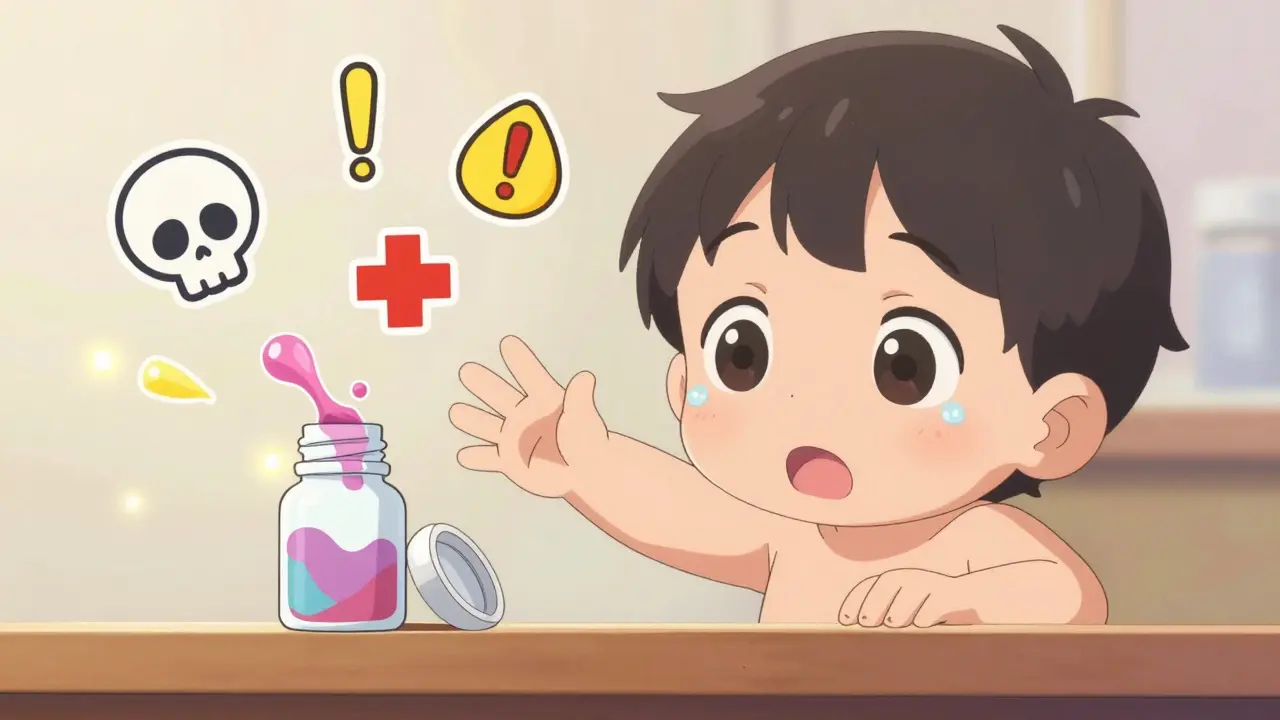
When a child swallows too much medicine-whether it’s a cough syrup, ADHD pill, or pain reliever-their body doesn’t handle it the same way an adult’s does. Their organs are smaller, their metabolism is faster, and their ability to process toxins is still developing. That’s why even a small extra dose can turn dangerous in minutes. You might think, ‘It’s just one extra teaspoon’-but with acetaminophen, that one extra teaspoon can quietly destroy the liver before any symptoms show up. And with opioids, a child might stop breathing before you even realize they’re in trouble.
What Does a Medication Overdose Look Like in a Child?
- For opioids (like oxycodone, hydrocodone, or fentanyl): The body shuts down. Look for pinpoint pupils, skin that’s cold and clammy, lips or fingernails turning blue or gray, and breathing that’s shallow, slow, or stops entirely. A child may go from awake to unresponsive in seconds. You might hear gurgling or choking sounds-not from crying, but from fluid building up in the airway. This isn’t sleep. This is a medical emergency.
- For acetaminophen (Tylenol): The danger is silent. In the first 24 hours, your child might seem fine-no vomiting, no pain, no fever. But inside, their liver is being damaged. After a day or two, nausea, vomiting, belly pain, and yellowing of the skin or eyes may appear. By then, it could be too late. The Cleveland Clinic says N-acetylcysteine (NAC), the antidote, is 100% effective if given within 8 hours of ingestion. After 16 hours, its effectiveness drops to 40%.
- For stimulants (like Adderall or Ritalin): The body goes into overdrive. Rapid heartbeat, high blood pressure, extreme agitation, tremors, seizures, hallucinations, or even stroke can happen. A child might be hyperactive one minute and unconscious the next. Fever can spike dangerously high. They may complain of chest pain or feel like their heart is racing out of their chest.
- For cough and cold medicines: These often contain antihistamines or decongestants that can cause drowsiness, confusion, dry mouth, flushed skin, or seizures. In toddlers, even a few sips of a liquid cold remedy can cause coma.
- For other common drugs: Ibuprofen can cause stomach bleeding and kidney failure. Iron pills can lead to vomiting blood, black stools, and shock. Antidepressants can cause serotonin syndrome-high fever, muscle rigidity, rapid heart rate, and delirium.
Don’t wait for symptoms. If you suspect any overdose, act immediately-even if your child seems fine.
When to Call Poison Control (and When to Call 911)
You don’t need to be sure. You don’t need to wait. If you think your child took too much of anything, call Poison Control at 800-222-1222. It’s free, confidential, and staffed by nurses and pharmacists trained in toxicology. They’ll ask you what was taken, how much, when, and your child’s weight and age. Then they’ll tell you exactly what to do next.
But here’s the critical part: call 911 immediately if your child is:
- Unresponsive, even when you shake them or shout
- Not breathing or breathing very slowly
- Having seizures or uncontrollable shaking
- Turning blue or gray, especially around the lips
- Having trouble swallowing or drooling excessively
- Swelling in the face, lips, or tongue
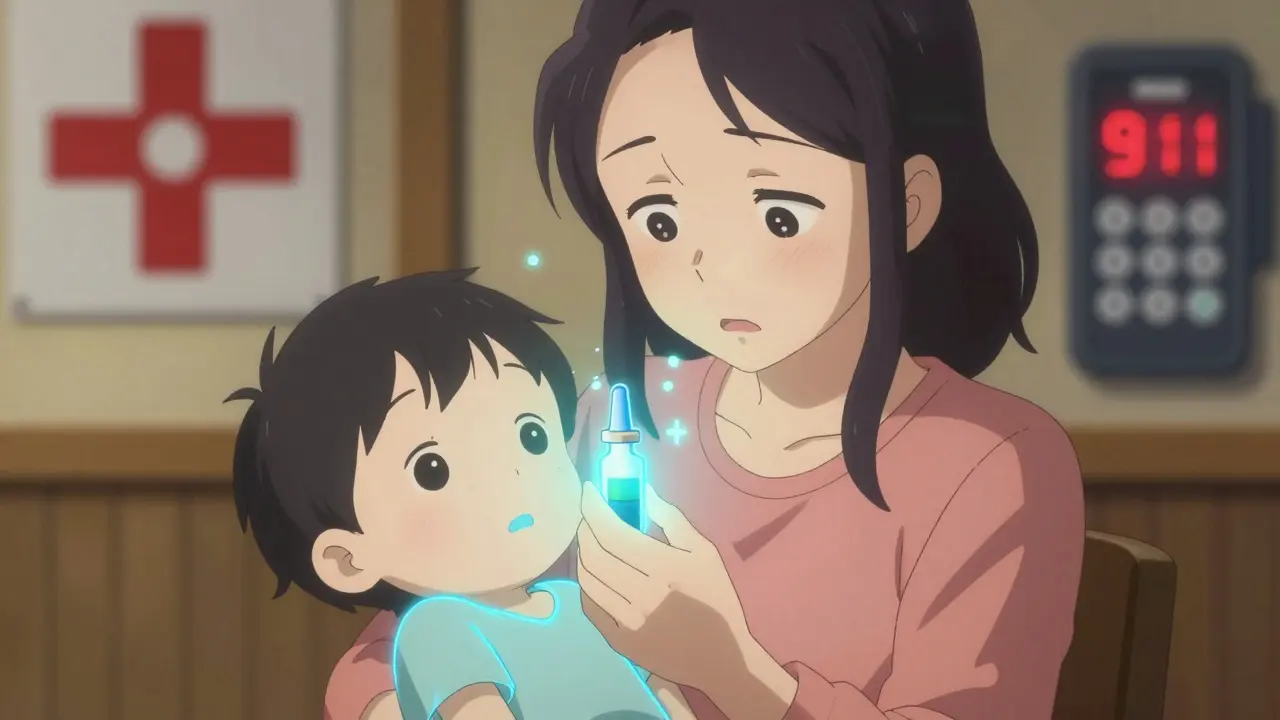
These are signs of life-threatening collapse. Don’t waste time calling Poison Control first. Dial 911. Then, if you have naloxone (Narcan) and the child shows signs of opioid overdose, give one dose in the nose or muscle. Wait 2-3 minutes. If there’s no response, give a second dose. Keep giving doses every few minutes until help arrives.
For acetaminophen, even if your child seems fine, call Poison Control. They’ll likely tell you to go to the ER for blood tests. Don’t skip it. Liver damage doesn’t hurt until it’s too late.
Why You Can’t Rely on Symptoms Alone
Many parents think, ‘My child is sleeping, but they’re breathing-so it’s probably okay.’ That’s how tragedies happen.
Acetaminophen overdose is the most common cause of pediatric poisoning in the U.S. And here’s the scary part: 70% of cases happen because parents accidentally give two medicines that both contain acetaminophen. One for fever, one for cold symptoms. They don’t check the labels. They think, ‘It’s just Tylenol-it’s safe.’ But 1500 mg of acetaminophen in a 3-year-old can be toxic. The maximum safe daily dose for a child that age is around 1200 mg.
And it’s not just Tylenol. Cold medicines, allergy meds, sleep aids-many contain hidden acetaminophen. Always read the Active Ingredients line on the label. If it says ‘acetaminophen’ or ‘APAP,’ don’t give another product with it.
With opioids, especially with the rise of fentanyl in counterfeit pills, a child might not even know they’re taking something dangerous. A pill that looks like a regular pain reliever could contain a lethal dose of fentanyl. One drop can kill. That’s why even if your child says they only took ‘one pill,’ you should treat it like a full overdose.
What to Do Right Now (Before Help Arrives)
If your child is unresponsive:
- Check if they’re breathing. Tilt their head back slightly and look, listen, and feel for air.
- If they’re not breathing, start rescue breaths. Pinch their nose, cover their mouth with yours, and give one breath every 3 seconds. Don’t stop until help arrives or they start breathing on their own.
- If you have naloxone and suspect opioids, use it immediately. It’s safe to use even if you’re not sure-it won’t hurt if they didn’t take opioids.
- Keep them on their side if they’re breathing. This keeps the airway open and prevents choking.
- Don’t give them anything to eat, drink, or induce vomiting. That can make things worse.
Keep the medicine container or bottle with you. Emergency responders need to know exactly what was taken.
How to Prevent This From Happening
Most pediatric overdoses happen at home-and they’re preventable.
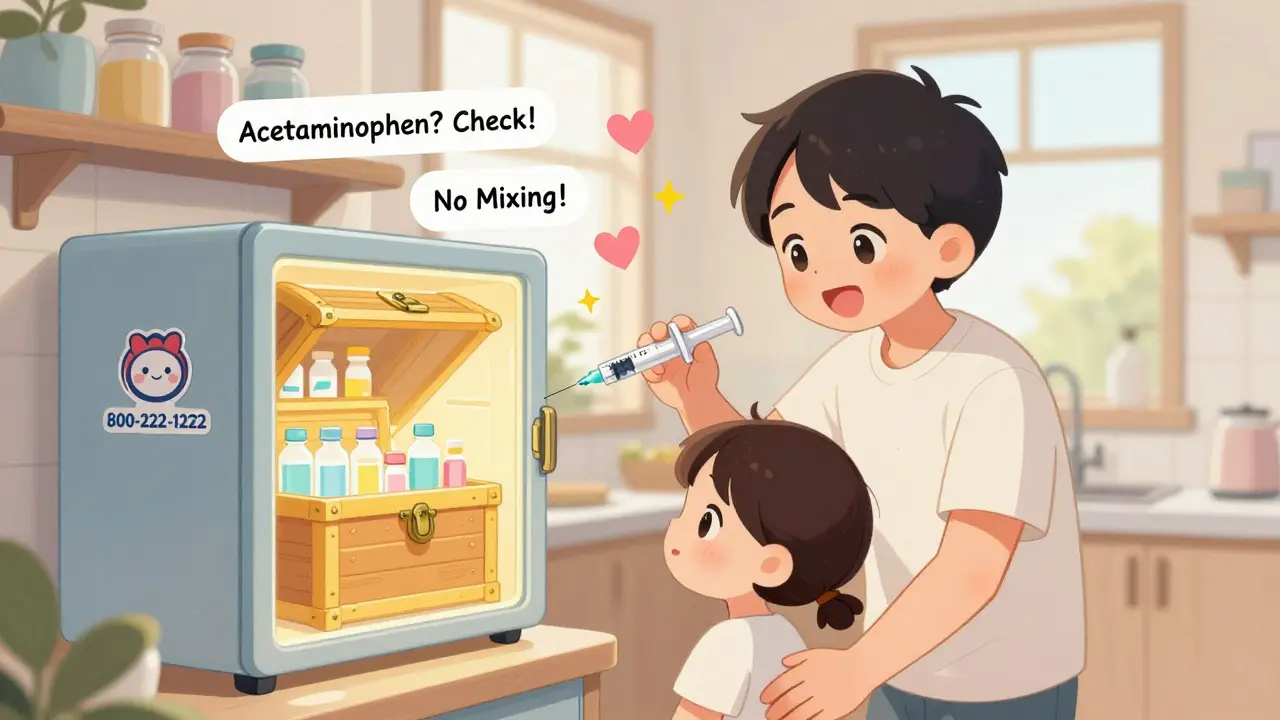
- Lock up all medications. Even if you think your child can’t open the bottle, 20% of poisonings happen with child-resistant packaging. Use a locked cabinet, not just a high shelf.
- Never call medicine ‘candy.’ That teaches kids to associate pills with treats.
- Use the measuring tool that comes with the medicine. Kitchen spoons are not accurate. A teaspoon is 5 mL, but many kids’ doses are 2.5 mL. Use the syringe or cup that came with the bottle.
- Check labels before giving anything. Look for active ingredients. If two medicines have the same one, don’t mix them.
- Dispose of expired or unused meds. Take them to a pharmacy drop box. Don’t flush them or throw them in the trash where a child or pet can find them.
- Know where your poison control number is. Save 800-222-1222 in your phone. Post it on the fridge. Keep it next to your emergency contacts.
Since 2020, the FDA required liquid acetaminophen to be sold in unit-dose packaging. That cut accidental overdoses by 19%. But it’s not enough. We still have 1 million pediatric exposures every year.
What Happens After You Call for Help?
Emergency teams will assess your child’s vital signs, run blood tests, and give treatments based on what was taken. For acetaminophen, they’ll give NAC through an IV. For opioids, they’ll give naloxone and monitor breathing. For stimulants, they’ll control seizures and lower body temperature.
Most children recover fully if treated quickly. But delays can lead to liver failure, brain damage, or death. The window for saving a life is often just a few hours.
And yes, you’ll feel guilty. You’ll wonder, ‘How did I miss this?’ But you’re not alone. Over 60% of pediatric poisonings happen in the child’s own home. Even careful parents make mistakes. What matters now is that you acted.
What’s New in 2026
In 2025, the FDA proposed new rules requiring all liquid medications to have standardized concentrations and built-in measuring devices. That should cut dosing errors by another 45,000 cases a year.
Also, webPOISONCONTROL®-the online tool launched in 2023-now handles over 120,000 cases annually. It’s a great resource for non-emergency questions, but never use it if your child is showing symptoms. Always call 800-222-1222 or 911 in real-time emergencies.
And while fentanyl test strips are still mostly used by adults, some pediatric clinics now recommend them if you suspect a child was exposed to a pill that didn’t come from a pharmacy. It’s not foolproof, but it can save a life.
Final Thought: Trust Your Instincts
If something feels wrong, it probably is. You know your child better than anyone. If they’re acting strange, sleepy, or not themselves-don’t wait. Don’t hope it’ll pass. Don’t assume it’s just a bad reaction. Call Poison Control. Call 911. Do it now.
Because in pediatric overdose, seconds matter. Hours matter. And sometimes, the difference between life and death is whether you picked up the phone-or hesitated for just one more minute.
What should I do if my child swallowed a pill I didn’t know was there?
Call Poison Control at 800-222-1222 immediately. Even if your child seems fine, some drugs cause delayed damage. Have the pill container ready so they can identify the substance. Don’t wait for symptoms. Don’t try to make them vomit. Just call.
Can I use home remedies like milk or charcoal to treat an overdose?
No. Home remedies like milk, syrup of ipecac, or activated charcoal are not recommended and can be dangerous. Milk doesn’t neutralize most drugs. Charcoal can interfere with later medical treatments. Only use treatments directed by Poison Control or emergency staff.
Is it safe to give naloxone to a child who might have overdosed on opioids?
Yes. Naloxone is safe for children and can reverse opioid overdoses. If your child is unresponsive and you suspect opioids, give one dose in the nose or muscle. Wait 2-3 minutes. If there’s no improvement, give a second dose. It won’t harm them if they didn’t take opioids-only if they did will it reverse the overdose.
How do I know if a medicine contains acetaminophen?
Look at the ‘Active Ingredients’ section on the label. It will say ‘acetaminophen’ or ‘APAP.’ Many cold, flu, allergy, and sleep medicines include it. Never combine more than one product with acetaminophen. Even if the labels say ‘children’s’ or ‘non-drowsy,’ check the ingredients.
Should I keep naloxone at home if I have kids?
If you have opioids in your home-even prescriptions for adults-yes. Fentanyl is often mixed into other pills without warning. Having naloxone on hand could save a child’s life if they accidentally ingest a contaminated pill. It’s available over the counter in most states and can be kept in a locked cabinet with the meds.
What if I’m not sure whether it was an overdose?
Call Poison Control anyway. They handle thousands of cases where parents are unsure. They’ll ask questions to help you decide if it’s an emergency. It’s better to call and find out it’s nothing than to wait and risk a life.
Are child-resistant caps really effective?
They help, but they’re not foolproof. About 20% of poisonings happen even with child-resistant packaging. Toddlers are clever. The best protection is storing all medications in a locked cabinet, out of sight and reach.
Can a child overdose from skin contact with medicine?
Yes, especially with strong patches like fentanyl or topical creams containing opioids or stimulants. If a child licks or touches a patch and then puts their hands in their mouth, they can absorb enough to overdose. Always dispose of used patches by folding them in half with the sticky sides together and flushing them or taking them to a drug disposal site.
waneta rozwan
January 15, 2026 AT 13:49My cousin’s kid swallowed half a bottle of Children’s Tylenol last year because the bottle was on the counter. She was fine-until she wasn’t. Liver transplant. Six months in the hospital. Don’t wait for symptoms. Don’t assume it’s ‘just a mistake.’ It’s not. It’s a countdown.
I keep all meds locked in a safe now. Even my Advil. Even my husband’s blood pressure pills. No exceptions. If you’re not doing this, you’re playing Russian roulette with your child’s life.
Nicholas Gabriel
January 16, 2026 AT 01:57Let me just say this: if you're not using the dosing syringe that comes with the medicine-stop. Immediately. Kitchen spoons? No. Measuring cups? No. Even the little plastic cup that comes with the bottle? Often inaccurate. The syringe? Yes. Always. And if you're giving two different meds? Check the active ingredients. Acetaminophen? APAP? Same thing. Double-dosing is silent, deadly, and 100% preventable.
Also-save 800-222-1222 in your phone right now. Not later. Right now. I have it under ‘EMERGENCY’ in my contacts. So should you.
Cheryl Griffith
January 17, 2026 AT 01:47I used to think my kid was safe because we kept meds on the top shelf. Then my 2-year-old figured out how to pull a chair over, climb up, and open the child-resistant cap. It took me 20 minutes to find him with half a pill in his mouth. I’ve never screamed so hard in my life.
Lock them up. Even if you think they can’t reach. Even if you think the cap is enough. Even if you’re ‘careful.’ You’re not. None of us are. We’re all just one distracted moment away from disaster.
swarnima singh
January 17, 2026 AT 02:04why do americans always act like they’re the only ones who have kids?? i live in india and my aunt’s kid once ate 3 paracetamol tablets and just slept it off. no hospital. no drama. no panic. you people overthink everything. it’s just medicine. not a bomb.
also why is everyone so scared of fentanyl? it’s not magic. it’s just a drug. if you don’t give your kids random pills, they won’t eat them. simple.
Isabella Reid
January 18, 2026 AT 08:13My mom used to say, ‘Don’t call Poison Control unless you’re sure.’ I didn’t listen. When my daughter swallowed a whole bottle of melatonin gummies, I called immediately. They told me to watch for drowsiness and dehydration-no ER needed. Saved me a $2,000 bill and a night of terror.
Don’t wait for the worst-case scenario. Call them. They’re not there to judge you. They’re there to help. And if you’re worried about privacy? They don’t report you to CPS. Not ever.
Jody Fahrenkrug
January 19, 2026 AT 19:38My kid once ate a fentanyl patch off the floor. We didn’t know it was a patch. We thought it was a sticker. He was drooling and weirdly calm. We called 911. They gave him naloxone on the spot. He’s fine. But I still have nightmares.
Now I fold used patches in half, sticky side in, and flush them. No exceptions. I keep naloxone in the bathroom cabinet. Not locked. Just… there. Like a first aid kit. Because you never know.
Kasey Summerer
January 20, 2026 AT 09:37So let me get this straight… you’re telling me I need to lock up my ibuprofen like it’s a gun… and my kid might OD on cough syrup… and I need naloxone in the house… because fentanyl is everywhere??
Wow. So basically, parenting now is just surviving a minefield while wearing blindfolds. 🤡
At least in my day, the worst we got was a sugar rush and a nap. Now? We need a toxicology degree just to give a child a fever reducer.
kanchan tiwari
January 21, 2026 AT 03:04THEY’RE HIDING DRUGS IN CANDY NOW. I SWEAR TO GOD. I SAW A VIDEO. A KID TOOK A ‘CANDY’ THAT LOOKED LIKE A SKITTLES AND DIED IN 5 MINUTES. THE GOVERNMENT ISN’T TELLING YOU. THEY WANT YOU TO BE AFRAID. THEY WANT YOU TO BE DEPENDENT ON NALOXONE. THEY WANT YOU TO TRUST THE PHARMACEUTICALS. BUT WHAT IF THEY’RE THE ONES WHO PUT FENTANYL IN THE PILLS??
THEY’RE LYING TO YOU. DON’T TRUST THE LABELS. DON’T TRUST THE DOCTORS. DON’T TRUST POISON CONTROL. THEY’RE ALL PART OF THE SCHEME.
Bobbi-Marie Nova
January 22, 2026 AT 08:44Okay but real talk-how many of us have accidentally given two meds with acetaminophen? Raise your hand. 🙋♀️
I did it. Twice. One time I thought ‘children’s cold’ was just a decongestant. Nope. It had Tylenol. My kid was fine, but I cried for an hour after calling Poison Control. They were so calm. Like, ‘Oh, this happens every Tuesday.’
So yeah. Lock your meds. Use the syringe. Read the label. And if you mess up? Call them. They won’t judge. They’ve seen worse.
Allen Davidson
January 23, 2026 AT 19:19I’m a paramedic. I’ve responded to 14 pediatric overdoses in the last year. Nine were acetaminophen. Four were opioids. One was a fentanyl patch stuck to a toddler’s hand. Every single one was preventable.
Parents don’t need more fear. They need clarity. And systems. Like mandatory unit-dose packaging. Like standardized concentrations. Like naloxone in every school and daycare. We know what works. We just don’t fund it.
So yes-call Poison Control. But also-demand better from your legislators. This isn’t just about parenting. It’s about public health policy failing children.
john Mccoskey
January 23, 2026 AT 22:37Let’s be brutally honest here: the real problem isn’t accidental overdose-it’s parental negligence wrapped in a blanket of misplaced trust. You leave your meds out? You don’t read labels? You think ‘child-resistant’ means ‘child-proof’? That’s not ignorance-that’s laziness. And it’s costing children their lives.
And don’t even get me started on the ‘I didn’t know’ crowd. You didn’t know your child could open a bottle? You didn’t know Tylenol was in five different products? You didn’t know fentanyl is in counterfeit pills? Then you weren’t paying attention. And now your kid is in the ICU because you were too distracted by your phone to lock the cabinet.
There’s no excuse. No ‘mistake’ that deserves a pass when it’s a child’s liver, brain, or lungs on the line. This isn’t a tragedy. It’s a failure of basic responsibility. And until we stop treating it like an accident and start treating it like negligence, this will keep happening.
Ryan Hutchison
January 25, 2026 AT 08:34Why are we letting big pharma and the government scare us into thinking every pill is a death trap? In Russia, kids take medicine like candy and they’re fine. In Japan, they don’t lock up meds. In Germany, they don’t even have Poison Control hotlines. We’re the only ones acting like our kids are fragile glass figurines.
Maybe the real issue isn’t the medicine-it’s the culture of fear. We’ve turned parenting into a survival game. It’s exhausting. And it’s making us paranoid.
Let kids be kids. Let them learn. Let them make mistakes. Not every pill is poison. Not every mistake is a tragedy. Stop buying into the hype.
Samyak Shertok
January 26, 2026 AT 01:41Interesting how everyone’s terrified of fentanyl but no one talks about how the FDA approved liquid acetaminophen with the same concentration as adult doses until 2020. That’s not an accident. That’s corporate greed. They wanted to cut costs on packaging. Kids died. They changed it. But only after lawsuits.
And now we’re supposed to trust them again? With standardized concentrations? With built-in syringes? Please. They’ll roll back every safety measure the moment public attention fades.
Don’t trust the system. Trust your gut. And lock your meds like your kid’s life depends on it-because it does. And no, I’m not being dramatic. I’ve seen the coroner’s reports.
Riya Katyal
January 26, 2026 AT 14:38wait so you’re telling me if my kid eats one of my anxiety pills they’ll die?? but i’ve been taking them for 10 years and i’m fine?? so why is my kid suddenly so fragile??
also why are you all so obsessed with locking things up?? i don’t lock my toothpaste. why is medicine different??
maybe your kid just needs better discipline. not a safe.