
 Dec, 10 2025
Women take statins just like men-to lower cholesterol and protect their hearts. But the side effects? They’re not the same. If you’re a woman on statins and you’ve felt more muscle soreness, more fatigue, or been told your symptoms are "just in your head," you’re not imagining it. Decades of research show that women experience statin side effects differently-and often more severely-than men. Yet, many doctors still treat statin therapy the same for everyone. That’s changing. Here’s what actually happens in women’s bodies when they take statins, why side effects show up differently, and what you can do about it.
Why Women Get More Muscle Pain on Statins
Muscle pain is the #1 reason women stop taking statins. And it’s not just coincidence. Studies show 31% of women report new or worsening muscle symptoms on statins, compared to 26% of men. That difference isn’t small-it’s statistically significant. And it gets worse with age. Women over 65 are 1.5 to 2 times more likely than men their age to develop statin-induced myopathy. Why? Three big reasons:- Women have lower kidney function-about 15-20% less than men, even after adjusting for body size. That means statins stick around longer in the bloodstream.
- Women naturally carry more body fat. Statins are fat-soluble, so they get stored in fat tissue and released slowly, increasing exposure.
- Women are more likely to be on multiple medications. Drugs like calcium channel blockers or blood thinners can interact with statins and spike toxicity.
The Hidden Diabetes Risk
Statins increase your risk of developing type 2 diabetes. That’s not a rumor-it’s on the FDA label. But here’s what most women don’t know: this risk is higher for women than men. A 2015 meta-analysis of over 95,000 people found a 9% increased diabetes risk after four years of statin use. For women, especially post-menopausal women, that number climbs. Research in the Journal of the American College of Cardiology showed that any statin, at any dose, can raise diabetes risk after three years of use. And it’s not just about weight or diet-it’s biological. Why? Estrogen helps regulate insulin sensitivity. After menopause, estrogen drops. Statins add another layer of metabolic stress. The result? Higher fasting glucose levels. That’s why doctors should check your blood sugar every 3 to 6 months if you’re a woman on long-term statin therapy. Catching prediabetes early means you can adjust your diet, activity, or even switch meds before full-blown diabetes sets in.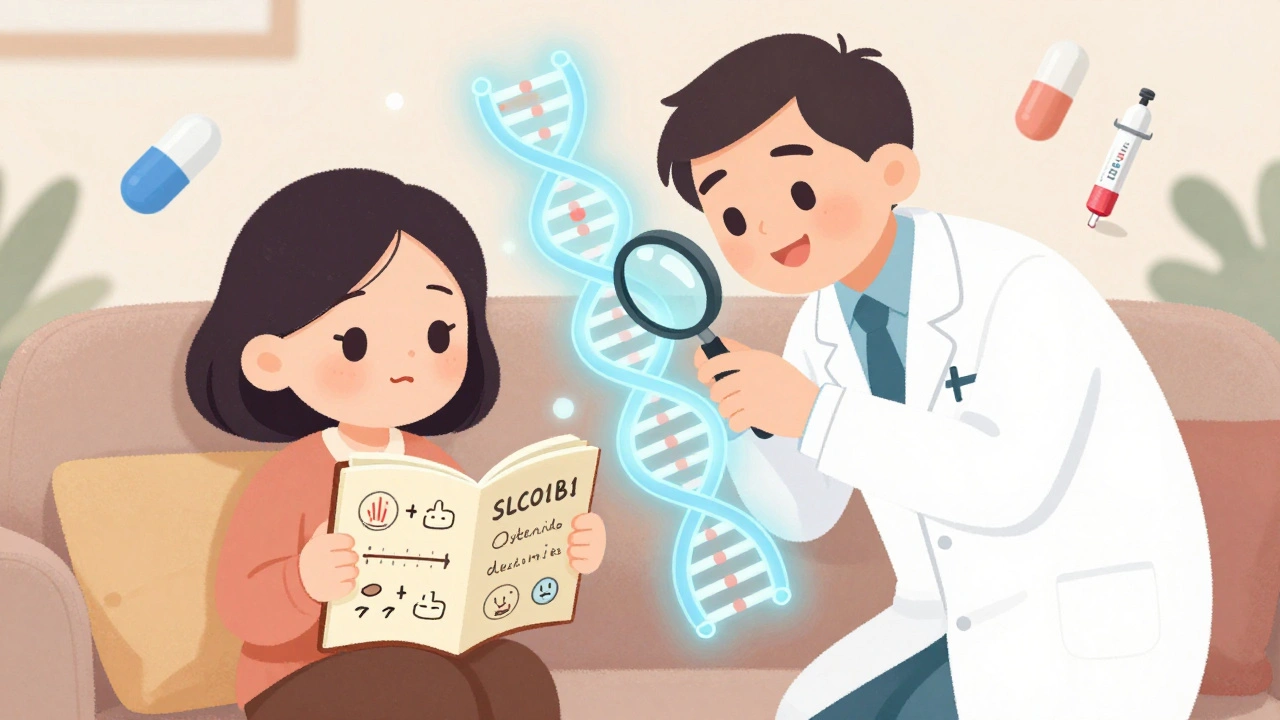
Why Women Are Less Likely to Stay on Statins
Here’s the harsh truth: women are 18.7% less likely than men to still be taking their statin after one year. That’s not because they’re noncompliant. It’s because they’re not being heard. A 2019 study found that 42% of women said their doctor never explained how high cholesterol leads to heart disease. Compare that to 31% of men. When you don’t understand why you’re taking a drug, you’re more likely to quit when side effects hit. And when women report muscle pain, fatigue, or brain fog, they’re often told it’s "stress," "aging," or "just a side effect you have to live with." But the data says otherwise. Women are 2.3 times more likely than men to try three or more statins before finding one they can tolerate. And yet, they’re 37% less likely to be offered alternatives like ezetimibe or PCSK9 inhibitors when statins don’t work. This isn’t about laziness. It’s about bias. Studies show doctors are quicker to dismiss women’s symptoms as non-cardiac-even when the science says they’re real.Special Cases: Pregnancy, Menopause, and Older Age
If you’re a woman of childbearing age, statins are not safe during pregnancy. The FDA classifies them as Category X-meaning they can cause birth defects. That’s why any woman prescribed a statin between ages 18 and 45 should get clear contraception counseling. Yet, studies show 15% of prescriptions to this group lack that conversation. For women going through menopause, things get tricky. Your heart disease risk shoots up as estrogen falls. But at the same time, your chance of muscle pain from statins increases too. One study found 41% of post-menopausal women reported muscle symptoms, compared to 33% of pre-menopausal women. And if you’re over 75? The risk of hospitalization from statin side effects is more than double that of men your age. Why? Polypharmacy. Older women are often on five or more medications. A common blood pressure pill like diltiazem can triple the toxicity of simvastatin. Your doctor needs to know every pill you take-prescription, over-the-counter, or supplement.
What You Can Do: A Real-World Plan
You don’t have to choose between a heart attack and unbearable muscle pain. There are smarter ways to take statins as a woman. Start low, go slow. Instead of jumping to 20mg of atorvastatin, start at 10mg. The Dutch STATINWISE trial showed this approach improved adherence in women by 32% in just one year. Ask for a genetic test. A gene called SLCO1B1 affects how your body handles statins. About 23% of women carry a variant that increases muscle damage risk. A simple blood test before starting can help your doctor pick a safer statin-like pravastatin or fluvastatin-instead of simvastatin or rosuvastatin. Track your symptoms. Keep a simple log: muscle pain (1-10 scale), fatigue, sleep quality, and blood sugar if you’re over 50. Bring it to your next appointment. Concrete data beats vague complaints. Ask about alternatives. If you can’t tolerate statins, you’re not out of options. Ezetimibe lowers LDL by 15-20%. PCSK9 inhibitors (injections) can drop it by 60%. These aren’t experimental-they’re FDA-approved and covered by most insurance. Get a second opinion. If your doctor dismisses your side effects, find one who specializes in women’s heart health. Preventive cardiology clinics at major hospitals have trained teams who understand these sex-specific differences.Bottom Line: Your Heart Matters-Your Experience Matters Too
Statins save lives. But they’re not one-size-fits-all. For women, the risks and side effects are different-and often more complex. You deserve care that sees you as a woman, not just a patient. If you’re on a statin and you’re not feeling right, speak up. Demand answers. Ask for testing. Push for alternatives. Your heart isn’t just a number on a lab report. It’s your life. And you have the right to take care of it without unnecessary pain.Do statins cause more muscle pain in women than in men?
Yes. Studies show 31% of women report muscle pain or weakness on statins, compared to 26% of men. This difference is linked to biological factors like lower kidney function, higher body fat, and more frequent use of interacting medications. Women over 65 are 1.5 to 2 times more likely to develop serious muscle side effects.
Can statins cause diabetes in women?
Yes. Statins increase the risk of developing type 2 diabetes by 9-27%, depending on the type and duration of use. This risk is slightly higher in women, especially after menopause, due to hormonal changes that affect insulin sensitivity. Blood sugar should be checked every 3 to 6 months in women on long-term statin therapy.
Why are women less likely to stay on statins?
Women are 18.7% less likely than men to stay on statins after one year. This is due to higher rates of side effects, poor communication from providers, and lack of alternative options. Many women report their symptoms are dismissed, and they’re rarely offered non-statin options like ezetimibe or PCSK9 inhibitors when statins don’t work.
Are statins safe during pregnancy?
No. All statins are classified as FDA Pregnancy Category X, meaning they can cause serious birth defects. Women of childbearing age must receive clear contraception counseling before starting statins. About 15% of prescriptions to women aged 18-45 lack this critical discussion.
What’s the best way to start a statin if you’re a woman?
Start with the lowest effective dose-like atorvastatin 10mg instead of 20mg-and increase slowly if needed. Ask about genetic testing for the SLCO1B1 gene variant, which increases muscle risk in 23% of women. Consider safer statins like pravastatin or fluvastatin. Track your symptoms and discuss alternatives early if side effects occur.
What if I can’t tolerate statins at all?
You still have options. Ezetimibe lowers LDL cholesterol by 15-20% and has minimal side effects. PCSK9 inhibitors (injected monthly or every two weeks) can reduce LDL by up to 60%. These are proven, FDA-approved, and often covered by insurance. Talk to a preventive cardiologist about switching strategies.
Jean Claude de La Ronde
December 11, 2025 AT 06:17Courtney Blake
December 12, 2025 AT 10:10Kristi Pope
December 12, 2025 AT 12:31Doris Lee
December 13, 2025 AT 09:39Frank Nouwens
December 13, 2025 AT 21:54Kaitlynn nail
December 15, 2025 AT 13:21Aileen Ferris
December 17, 2025 AT 04:28Michelle Edwards
December 17, 2025 AT 18:20john damon
December 17, 2025 AT 20:48matthew dendle
December 19, 2025 AT 02:58Taylor Dressler
December 20, 2025 AT 11:00Aidan Stacey
December 20, 2025 AT 14:12