
 Feb, 19 2026
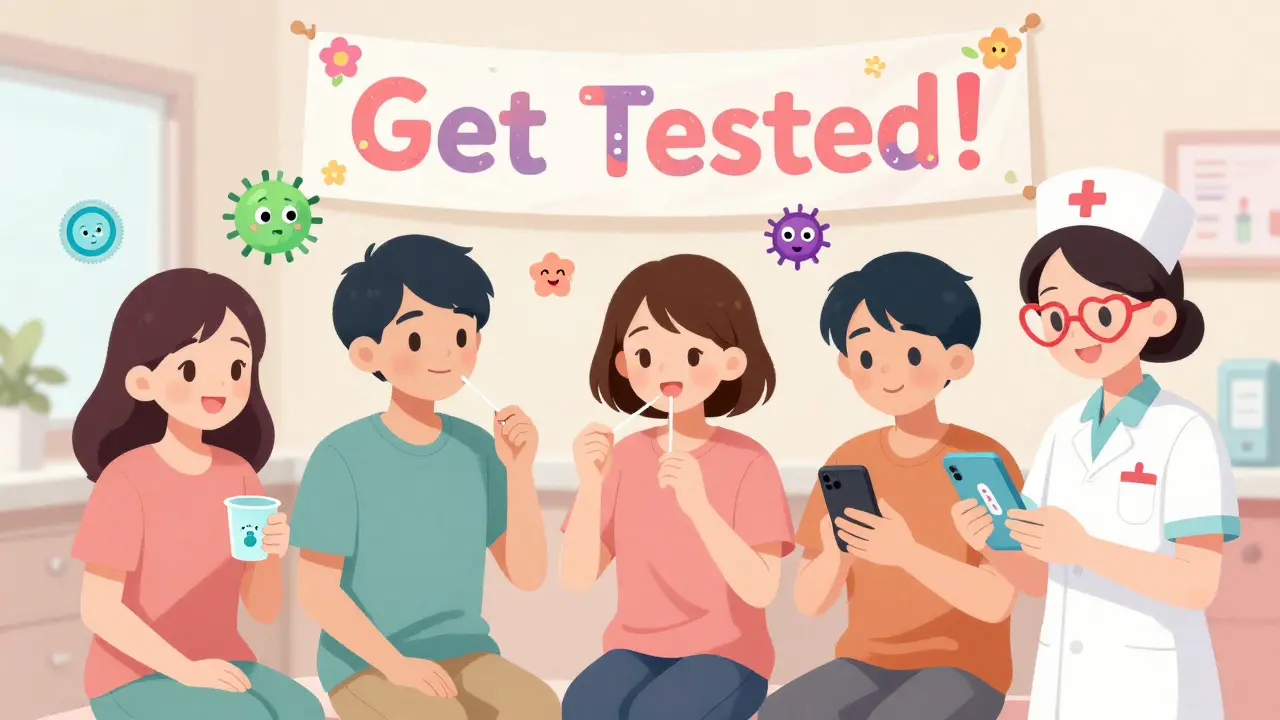
Every year, millions of people get infected with chlamydia, gonorrhea, or syphilis. These aren’t rare or distant threats-they’re common, treatable, and often silent. In 2021, the U.S. reported over 2.5 million cases of just these three bacterial STIs. Half of them were in people between 15 and 24. And here’s the real problem: most of those infected don’t even know it.
Why These Three STIs Matter
Chlamydia, gonorrhea, and syphilis are caused by different bacteria, but they share one dangerous trait: they can spread without symptoms. You can have chlamydia for months without noticing anything-no pain, no discharge, no burning. The same goes for gonorrhea. And syphilis? It can hide in plain sight, mimicking allergies, rashes, or even the flu.
That’s why these infections are called silent epidemics. The World Health Organization estimates 129 million new chlamydia cases, 82 million gonorrhea cases, and 7.1 million syphilis cases globally each year. In the U.S., Black Americans face rates 5 to 7 times higher than White Americans. This isn’t just about biology-it’s about access to care, stigma, and systemic gaps in testing.
Untreated, these infections don’t just disappear. They cause damage. Chlamydia can lead to pelvic inflammatory disease (PID), which scars the fallopian tubes and causes infertility in up to 20% of women. Gonorrhea can spread to the bloodstream, triggering life-threatening joint infections. Syphilis, if ignored for years, can attack the heart, brain, and nerves.
How They Spread-and How to Stop It
These STIs spread through unprotected vaginal, anal, or oral sex. They can also pass from mother to baby during childbirth. That’s why prenatal screening is now mandatory in most U.S. states. A pregnant woman with untreated syphilis has a 40% chance of passing it to her baby-leading to stillbirth, premature birth, or severe birth defects.
Condoms reduce transmission significantly: 60-90% for chlamydia and gonorrhea, and 50-70% for syphilis. But they aren’t foolproof. Skin-to-skin contact during oral sex can still spread syphilis sores or gonorrhea in the throat. That’s why testing isn’t just about genitals-it’s about the mouth, rectum, and throat too.
Diagnosis: What Tests Actually Tell You
Testing is simple, fast, and often free at clinics. But the method changes depending on the infection.
- Chlamydia and gonorrhea: A urine sample or swab from the cervix, urethra, rectum, or throat. These tests detect bacterial DNA. They’re accurate, non-invasive, and results come back in 1-3 days.
- Syphilis: Requires a blood test. It looks for antibodies your body makes in response to the bacteria. There are two types: non-treponemal (like RPR) for screening, and treponemal (like TP-PA) to confirm. A positive blood test doesn’t mean you’re still infected-it could mean you had it years ago and were treated.
Important: If you’ve had unprotected sex with someone who tested positive, get tested-even if you feel fine. And if you’re under 25 and sexually active, get tested at least once a year. If you have multiple partners or use PrEP, test every 3-6 months.

Treatment: What Works, What Doesn’t
Here’s the good news: all three are curable with antibiotics. The bad news? The rules keep changing.
Chlamydia
The first-line treatment is doxycycline: 100 mg twice a day for 7 days. It’s cheap, effective, and kills the infection in over 95% of cases. Azithromycin (a single 1-gram pill) is an alternative, especially if someone can’t take doxycycline.
But here’s the catch: if you take the medicine but your partner doesn’t, you’ll get reinfected. Studies show 14-20% of young women get chlamydia again within a year-not because the treatment failed, but because their partner was still infected.
Gonorrhea
This one’s trickier. Gonorrhea used to be easy to treat with oral pills. Now? It’s resistant to almost everything.
The CDC’s current guideline: one shot of ceftriaxone (500 mg) into the muscle, plus one pill of azithromycin (1 g). But even this combo is failing in some places. In parts of Europe and Australia, up to half of gonorrhea strains are now resistant to azithromycin. That’s why doctors now test throat infections separately-treatment failure rates there are higher.
There’s hope on the horizon. A new drug called zoliflodacin showed 96% cure rates in late-stage trials and could be approved by 2025. Until then, we’re stuck with this last-line defense.
Syphilis
Syphilis treatment depends on how long you’ve had it.
- Early syphilis (less than 1 year): One shot of benzathine penicillin G (2.4 million units). That’s it.
- Late syphilis (more than 1 year, or unknown): Three shots, one per week.
- Neurosyphilis (infection in the brain): Daily IV penicillin for 10-14 days.
If you’re allergic to penicillin, alternatives exist-but they’re less reliable. That’s why doctors still recommend penicillin as the gold standard.
What Happens After Treatment?
Getting treated doesn’t mean you’re done. You need to follow up.
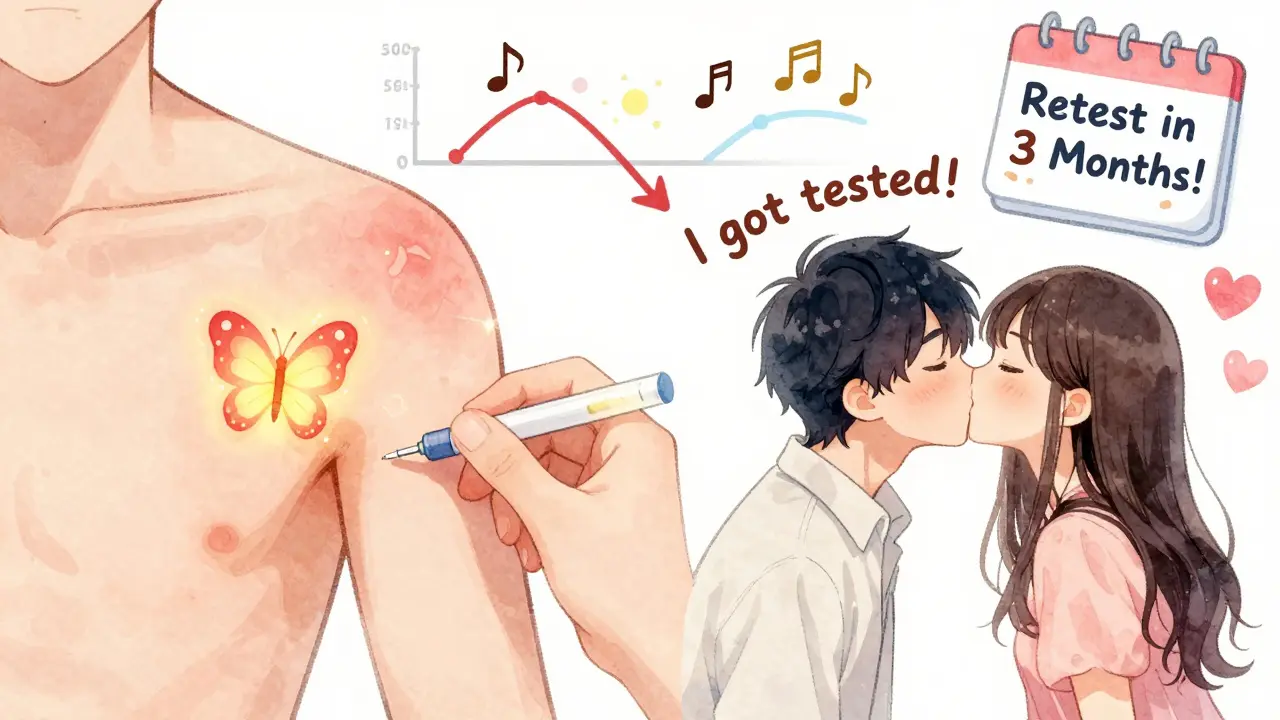
- Retest in 3 months for chlamydia and gonorrhea. Reinfection is common, especially in young people.
- For syphilis, your doctor will order blood tests at 6, 12, and 24 months to make sure the antibodies are dropping. If they’re not, you might need another round of treatment.
- Test-of-cure is required for pharyngeal gonorrhea. A simple swab 2 weeks after treatment confirms it’s gone.
And don’t forget: tell your partners. The CDC recommends treating anyone you had sex with in the past 60 days for chlamydia or gonorrhea, and up to 90 days for syphilis. Health departments can help do this anonymously if you’re uncomfortable.
The New Tool: DoxyPEP
There’s a game-changer that’s flying under the radar: doxycycline after sex, or DoxyPEP.
Three clinical trials showed that taking a single 200-mg pill of doxycycline within 72 hours after condomless sex cut chlamydia, gonorrhea, and syphilis rates by 47-73% in men who have sex with men and transgender women on PrEP. It’s not a magic bullet-it doesn’t work for cisgender women, and it doesn’t prevent HIV. But for high-risk groups, it’s a powerful shield.
The CDC only recommends it for MSM and transgender women right now. Why? Because we don’t have enough data for other groups. And there’s concern about antibiotic resistance. But for those who qualify, it’s one of the most effective prevention tools we have.
Why This Isn’t Just a Medical Problem
STIs don’t spread because people are careless. They spread because testing is hard to access, condoms aren’t always available, and stigma keeps people silent.
Black Americans are 5-7 times more likely to get chlamydia or gonorrhea-not because of behavior, but because of systemic issues: fewer clinics in their neighborhoods, longer wait times, fear of judgment, and lack of culturally competent care.
The cost of untreated STIs? Over $16 billion a year in the U.S. alone. That’s billions spent on fertility treatments, hospitalizations, and emergency care that could’ve been avoided with simple testing and early treatment.
What You Can Do
- Get tested regularly-even if you feel fine.
- Use condoms consistently, but don’t assume they’re 100%.
- Tell your partners if you test positive. They need to get treated too.
- If you’re on PrEP, ask your provider about DoxyPEP.
- Know the signs: unusual discharge, burning when you pee, rashes, sores, or swollen glands.
STIs are not a moral failure. They’re a public health issue. And we have the tools to stop them. But only if we use them.
Can you get chlamydia from a toilet seat?
No. Chlamydia bacteria can’t survive outside the human body for long. You can’t catch it from toilet seats, towels, or swimming pools. It only spreads through direct sexual contact-vaginal, anal, or oral sex. Even kissing or sharing drinks won’t transmit it.
If I take antibiotics, am I protected forever?
No. Antibiotics cure the current infection, but they don’t protect you from future ones. You can get chlamydia, gonorrhea, or syphilis again-even right after treatment-if you have unprotected sex with someone who has it. That’s why retesting and partner treatment are so important.
Can syphilis come back after treatment?
Yes, if you’re reinfected. Treatment kills the bacteria in your body, but it doesn’t make you immune. If you have unprotected sex with someone who has syphilis, you can get it again. That’s why follow-up blood tests are critical-they show whether the infection is truly gone or if you’ve been exposed again.
Do I need to tell my employer if I have an STI?
No. Your STI status is private medical information. Your employer has no legal right to know unless your job involves direct patient care and you have an active, contagious infection (which is extremely rare for these three STIs). You’re not required to disclose it to anyone except sexual partners.
Is DoxyPEP safe for everyone?
DoxyPEP is only recommended for men who have sex with men and transgender women on PrEP. Studies haven’t shown benefit for cisgender women, and there’s concern about promoting antibiotic resistance in populations where it’s not proven to work. It’s not a replacement for condoms or regular testing. Always talk to your doctor before using it.
John Cena
February 19, 2026 AT 17:35Really appreciate how clear this breakdown is. I’ve been getting tested every 3 months since I started dating again, and honestly? It’s become as normal as brushing my teeth. No shame, no drama, just responsibility.
aine power
February 21, 2026 AT 13:11DoxyPEP is a joke. Antibiotics as prophylaxis? That’s how superbugs win.
Irish Council
February 22, 2026 AT 02:08They’re hiding the truth. The real reason syphilis is rising? Government labs stopped testing for it in ’18 to save money. You think that’s a coincidence?
Greg Scott
February 23, 2026 AT 01:43I got chlamydia last year. Didn’t know until my partner told me. Got treated, told my exes, got retested. It’s not a big deal if you handle it right.
Ashley Paashuis
February 23, 2026 AT 14:50Thank you for including the data on racial disparities. This isn't about behavior-it's about access. We need more mobile clinics and community outreach, not just individual responsibility.
Oana Iordachescu
February 25, 2026 AT 13:24DoxyPEP is dangerous. They're normalizing antibiotic use like it's candy. Next thing you know, we'll be giving out azithromycin at raves. 😔
Davis teo
February 26, 2026 AT 13:16OMG I just got diagnosed with gonorrhea and I’m crying right now. My ex is a monster. I told him and he blocked me. Now I’m scared I’ll never date again. 😭
Michaela Jorstad
February 27, 2026 AT 13:11Just wanted to say: if you’re under 25 and sexually active, get tested once a year. Seriously. It’s free at Planned Parenthood. You don’t need a reason. Just do it. 💪
madison winter
February 28, 2026 AT 22:20Why are we treating STIs like a personal failure? It’s a biological inevitability in a sexually active society. We need systemic change, not moralizing.
Marie Crick
March 2, 2026 AT 16:25People who get STIs are just lazy. Use a condom. Stop being selfish.
Maddi Barnes
March 2, 2026 AT 18:17As someone who’s traveled to 37 countries, I can tell you: STI rates are way higher in places with no sex ed. In Japan, teens think condoms are optional. In Brazil, clinics are overloaded. We’re not special here-we’re just louder.
Also, DoxyPEP? I’ve been doing it for 18 months. No reinfections. No side effects. It’s not magic. It’s medicine. And if you’re on PrEP, you’re already taking daily pills. One more doesn’t hurt.
Also also: the CDC’s hesitation? Totally political. They’re scared of backlash. But real people are getting hurt. Let’s stop waiting for permission to save lives.
Benjamin Fox
March 3, 2026 AT 15:07USA is the only country that cares about this. In Europe they just let nature take its course. Why are we spending billions on tests when we could be building more roads?
Laura B
March 5, 2026 AT 12:42I’m a nurse at a community clinic. We test over 500 people a month. Half are asymptomatic. Most are between 18 and 24. They’re not careless-they’re just never taught how to talk about this. We need better education, not judgment.
Amrit N
March 6, 2026 AT 13:40i live in india and we dont have much access to testing. i got tested once and it cost me 2000 rupees. its crazy. why cant this be free? i just want to be safe
John Cena
March 7, 2026 AT 07:05@7757: I get your concern about resistance, but the data on DoxyPEP shows it’s cutting infections without increasing resistance in the groups it’s used in. We’re not giving it to everyone-just those at highest risk. It’s targeted, not reckless.
Michaela Jorstad
March 9, 2026 AT 01:18@7785: I’m sorry you feel that way. But STIs aren’t a character flaw. They’re like the flu-except we treat them like a sin. That stigma costs lives.
Greg Scott
March 10, 2026 AT 08:45@7775: You’re not alone. I went through the same thing. It’s rough, but you’re not broken. Get treated. Tell your partners. You’re still worthy of love.
Ashley Paashuis
March 11, 2026 AT 22:55@7767: You’re right. Access should be a right, not a privilege. I work with NGOs trying to bring mobile testing to rural India. If you’re open to it, I can send you resources.
Maddi Barnes
March 13, 2026 AT 05:14@7770: Thank you for saying that. I wish more people knew how common this is. I’ve had three partners since my diagnosis. All tested. All treated. No drama. Just health.
Benjamin Fox
March 14, 2026 AT 13:14@7761: So you’re saying we should just give out antibiotics like candy? That’s not public health, that’s anarchy.
Laura B
March 15, 2026 AT 08:02@7753: No. We give out tests. We give out condoms. We give out education. DoxyPEP is one extra tool for one high-risk group. It’s not candy. It’s a shield.
Maddi Barnes
March 16, 2026 AT 23:04@7753: You’re right to be wary. But here’s the thing: we’ve had antibiotic resistance for decades. We’re not making it worse-we’re preventing infections before they start. That’s prevention. Not chaos.