 Dec, 8 2025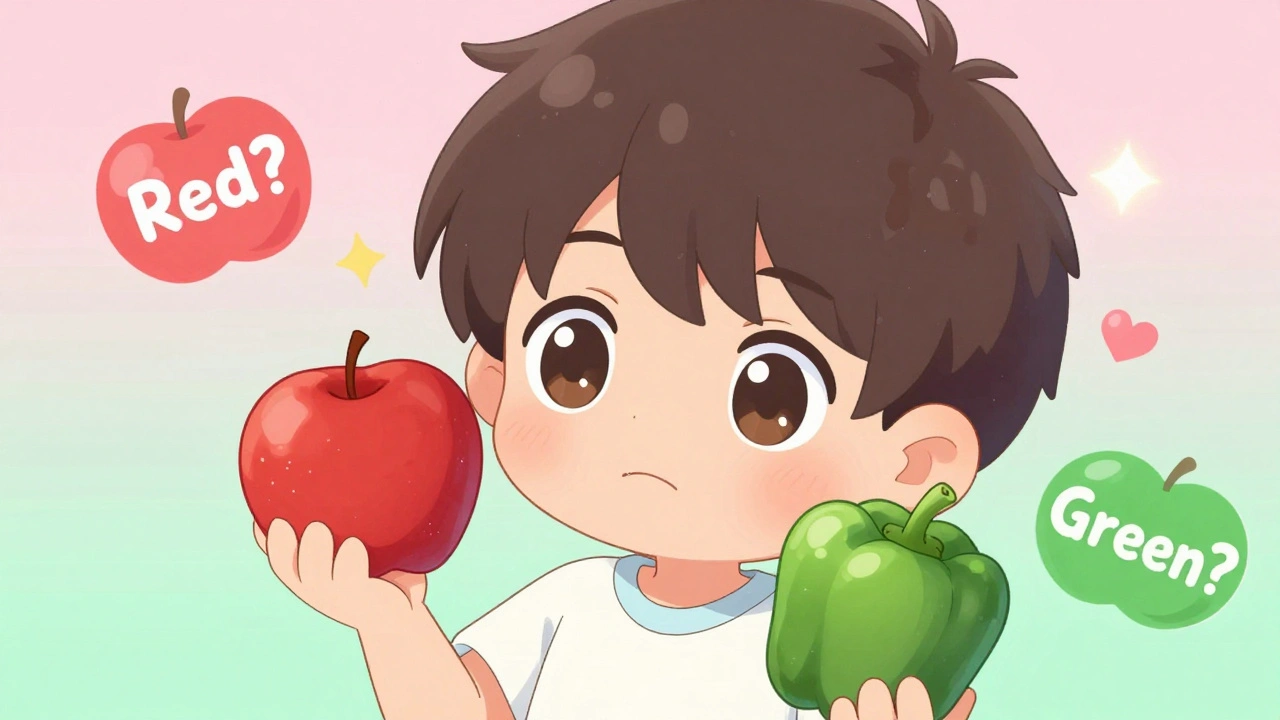
Red-green color blindness is a common genetic condition affecting 8% of men and 0.5% of women. Learn how it's inherited, how it impacts daily life, and what tools can help.

When someone has protanopia, a form of red-green color blindness caused by missing or nonfunctional long-wavelength (L) cone cells in the retina. Also known as red-blindness, it means the brain doesn’t get the full signal from red light, making reds look darker, duller, or even confused with black or green. This isn’t just about not seeing reds clearly—it changes how you see the whole color spectrum, especially when reds and greens overlap, like in traffic lights, maps, or even ripe fruit.
Protanopia is part of a larger group called color vision deficiency, a condition where the eye’s cone cells don’t respond normally to certain wavelengths of light. It’s not rare—about 1 in 100 men have it, and it’s far less common in women. Unlike temporary vision issues, this is genetic and lifelong. You’re born with it, and it doesn’t get worse over time. But it does affect daily choices: picking matching clothes, reading color-coded charts, or even spotting spoiled food. It’s not a disease, but it’s a real difference in how you experience the world. Many people with protanopia don’t even know they have it until they take a color test or notice someone else seeing colors differently. It’s often mistaken for poor attention or being "colorblind" in a vague way, but the science is specific: it’s about missing L-cones, not just seeing fewer colors.
The way your brain processes color relies on three types of cone cells—red, green, and blue. In protanopia, the red cone cells either don’t work or are completely absent. That means the brain gets confused when red and green are close together. A red stop light might look dark gray or brown. Green grass might look more like yellow. Even something as simple as distinguishing between a red and green apple becomes tricky. This isn’t a problem you can fix with glasses or surgery, but awareness helps. Apps that enhance color contrast, adjusting screen settings, or using labels instead of colors can make life easier.
Protanopia also connects to other conditions you might see in these posts—like how photosensitivity affects people with skin conditions, or how medication side effects can sometimes mimic or worsen sensory issues. While protanopia itself isn’t caused by drugs or illness, understanding how the body processes signals—whether light, chemicals, or nerve impulses—helps explain why some people notice things others don’t. That’s why knowing your own perception matters, especially when you’re managing health, reading labels, or taking medications that come in colored pills.
Below, you’ll find real stories and practical advice from people who live with this condition every day—how they adapt, what tools help, and why it’s not just about seeing reds and greens, but about navigating a world built for people who see differently.