
 Dec, 26 2025
When you pick up a prescription at the pharmacy, you might see a different name on the bottle than what your doctor wrote. That’s not a mistake. It’s likely a generic version of your brand-name drug. And if it’s listed in the FDA’s Orange Book with an AB rating, you can be confident it will work the same way - and be just as safe.
What therapeutic equivalence really means
Therapeutic equivalence isn’t just about having the same active ingredient. It’s a strict scientific standard that says two drugs - one brand-name, one generic - will deliver the same clinical results and safety profile when taken under the same conditions. The U.S. Food and Drug Administration (FDA) sets this bar. It’s not guesswork. It’s data. It’s testing. It’s proof.For a generic drug to be rated therapeutically equivalent, it must pass three tests:
- Pharmaceutical equivalence: Same active ingredient, same strength, same dosage form (tablet, capsule, injection, etc.), and same route of administration.
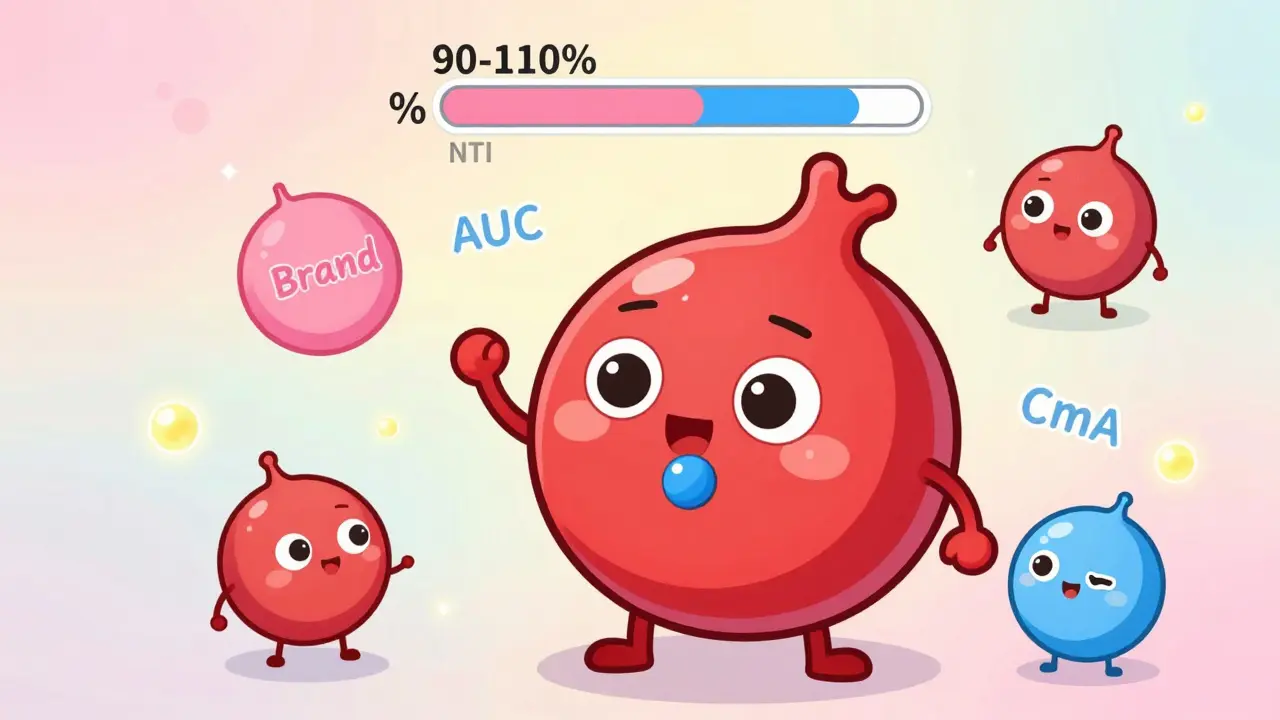
- Bioequivalence: The generic drug must be absorbed into your bloodstream at the same rate and to the same extent as the brand-name drug. The FDA requires the 90% confidence interval for key measurements - AUC (total exposure) and Cmax (peak concentration) - to fall between 80% and 125% of the brand drug’s values.
- Identical clinical effect: No meaningful difference in how the drug works in patients. This isn’t just lab data; it’s real-world outcomes.
This isn’t just theory. The FDA’s Orange Book, updated every month, lists over 13,000 drug products with their therapeutic equivalence ratings. Only those with an “A” rating - like AB, AO, AP - are considered interchangeable without risking your health.
Why this matters for your safety
Imagine you’re taking warfarin, a blood thinner used to prevent strokes. A tiny change in how much of the drug gets into your system - even 5% - could mean the difference between a dangerous clot and a life-threatening bleed. That’s why drugs with a narrow therapeutic index (NTI) like warfarin, levothyroxine, or phenytoin get special scrutiny.The FDA doesn’t use the standard 80-125% bioequivalence range for these. For NTI drugs, they require a tighter 90-110% range. That’s because even small differences can matter. And yet, studies show that when generics with an AB rating are used, patient outcomes match the brand-name drug almost exactly.
A 2022 survey of 12,500 patients by UnitedHealthcare found that 87% reported no change in how their medication worked after switching to a therapeutically equivalent generic. Only 3.2% blamed the switch for any side effects. When investigators looked deeper, most of those cases involved drugs not actually rated AB - or were due to anxiety, not pharmacology.
The Institute for Safe Medication Practices reviewed 127 adverse event reports tied to generic substitution between 2018 and 2022. Only 17 involved drugs with confirmed therapeutic equivalence. The rest? Misidentifications, non-equivalent substitutions, or unrelated causes.
The difference between equivalence and interchange
Many people confuse therapeutic equivalence with therapeutic interchange. They’re not the same.Therapeutic equivalence means swapping one specific drug for its exact generic twin - same molecule, same dose, same delivery. Therapeutic interchange means switching to a different drug in the same class - say, swapping one statin for another, or one antidepressant for a different one. That’s a bigger leap.
A 2019 study in JAMA Internal Medicine found that therapeutic interchange led to 32% more reported adverse events than switching to a therapeutically equivalent generic. Why? Because different drugs, even in the same class, work differently in the body. One might affect liver enzymes. Another might cause more drowsiness. You can’t assume they’re the same.
Therapeutic equivalence eliminates that guesswork. It tells you the replacement is a direct stand-in. No assumptions. No trial and error.
How the FDA codes therapeutic equivalence
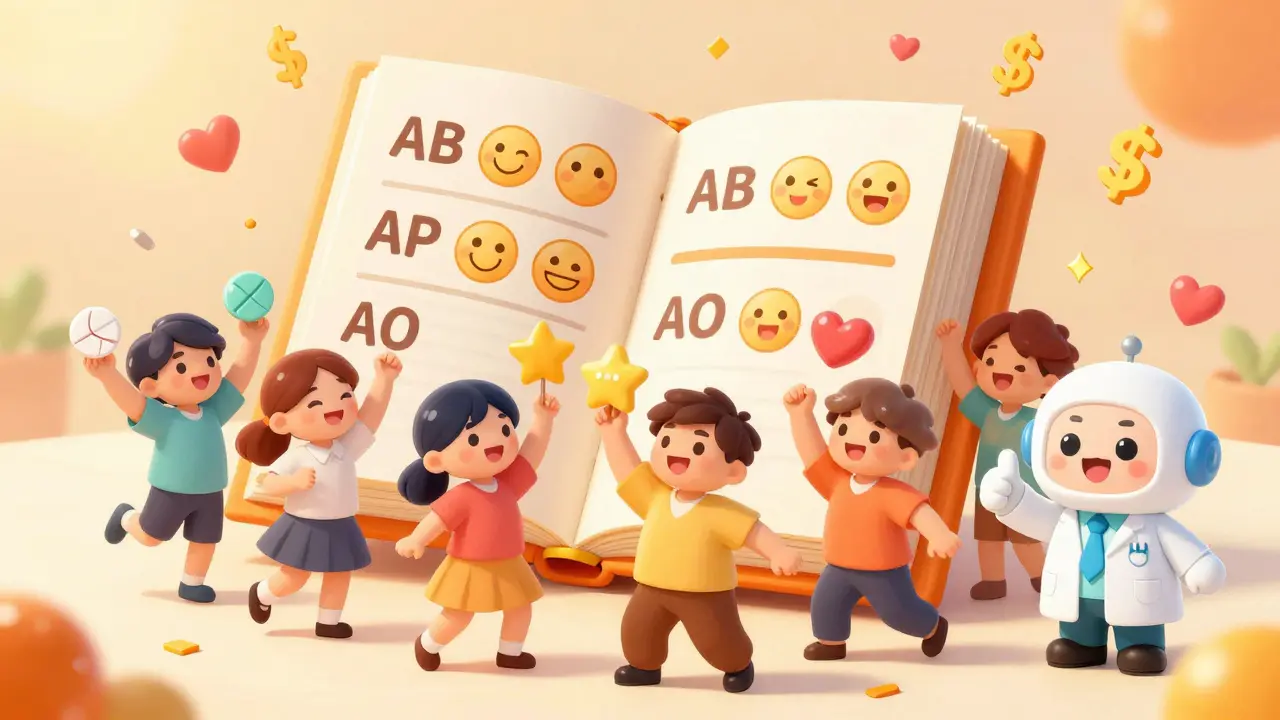
The Orange Book uses two-letter codes to make this simple for pharmacists and prescribers:- A = Therapeutically equivalent. Safe to substitute.
- B = Not considered equivalent. Don’t substitute without checking.
The second letter adds detail:
- AB = Bioequivalence proven with standard methods (most common).
- AP = Pharmaceutical equivalent, but bioequivalence proven via alternative methods (e.g., for topical products).
- AO = Bioequivalence shown for oral solutions or suspensions.
- BN = Brand-name only - no generic available.
Pharmacists are trained to check these codes before swapping. In 49 states, they can automatically substitute an AB-rated generic unless the prescriber writes “dispense as written” or “no substitution.”
Challenges and exceptions
Not all drugs are easy to evaluate. Inhalers, topical creams, eye drops, and injectables can behave differently in the body based on how they’re delivered - not just what’s in them. The FDA admits this is harder to measure with traditional blood tests.That’s why in 2023, the FDA released new draft guidance for complex products like topical corticosteroids. They’re now requiring additional testing: skin absorption studies, particle size analysis, and even patient-reported outcomes. This isn’t just about chemistry anymore - it’s about how the drug behaves in real tissue.
Biosimilars - generic versions of biologic drugs like Humira or Enbrel - are a whole different category. They’re not called “therapeutically equivalent.” Instead, the FDA uses “interchangeable biosimilar,” which requires even more proof: switching back and forth between brand and generic must not increase risk. That’s a higher bar.
What patients should know
If you’ve ever felt different after switching to a generic, you’re not alone. But the data shows it’s rarely the drug’s fault.Most concerns come from:
- Changing pill shape, color, or size - which can trigger anxiety or confusion.
- Confusing therapeutic equivalence with therapeutic interchange.
- Switching during a brand-name shortage, which adds stress.
Here’s what you can do:
- Ask your pharmacist: “Is this an AB-rated generic?”
- Check the FDA’s Orange Book online - it’s free and public.
- Don’t assume a cheaper drug is less effective. If it’s AB-rated, it’s not a compromise - it’s a scientifically validated alternative.
- If you notice real changes in how you feel after switching, report it. But don’t assume it’s the generic. Talk to your doctor. Keep a log of symptoms, timing, and dosage.
The American Medical Association and the FDA both agree: when a generic has an AB rating, it’s safe to use. The savings are huge - over $158 billion a year in the U.S. alone - without sacrificing safety.
The future of therapeutic equivalence
The FDA is investing in new tools to keep this system strong. A $2.3 million partnership with MIT is using artificial intelligence to predict which formulation changes might affect drug performance - before they even hit the market. Machine learning models are being trained on thousands of past generic approvals to spot patterns humans might miss.With over 90% of U.S. prescriptions filled with generics in 2022, therapeutic equivalence isn’t a side note - it’s the backbone of modern pharmacy. It lets patients save money without risking their health. It lets the system work efficiently. And it gives doctors and pharmacists confidence when making substitutions.
Therapeutic equivalence isn’t perfect. But it’s the best system we have. And for millions of people, it’s the reason they can afford to stay healthy.
Are generic drugs as safe as brand-name drugs?
Yes - if they’re rated therapeutically equivalent (AB) by the FDA. Generic drugs must meet the same strict standards for active ingredients, dosage, and absorption as brand-name drugs. The FDA requires bioequivalence testing to prove they work the same way in the body. Studies show no meaningful difference in safety or effectiveness between AB-rated generics and their brand-name counterparts.
What does an AB rating mean on the FDA Orange Book?
An AB rating means the generic drug is considered therapeutically equivalent to the brand-name drug. The “A” means it’s approved as interchangeable, and the “B” indicates bioequivalence has been demonstrated through standard testing. This is the gold standard for substitution - pharmacists can safely switch you to this generic without needing your doctor’s approval.
Can I trust generic drugs for narrow therapeutic index medications like warfarin or levothyroxine?
Yes - but with extra caution. The FDA applies stricter bioequivalence standards (90-110% instead of 80-125%) for narrow therapeutic index drugs. These drugs have little room for error, so the FDA reviews them more closely. As long as the generic has an AB rating, it’s safe to use. Many patients switch successfully, but if you notice changes in symptoms or lab results, talk to your doctor.
Why do some people say they feel different after switching to a generic?
Often, it’s not the drug - it’s the change. Generics can look different (color, shape, size), which can trigger anxiety or placebo effects. Some patients confuse therapeutic equivalence with therapeutic interchange - switching to a different drug in the same class, which isn’t the same thing. In rare cases, the generic may have a different inactive ingredient that causes a reaction, but this is uncommon. If you feel different, track your symptoms and talk to your pharmacist or doctor.
How do I check if my generic drug is therapeutically equivalent?
Visit the FDA’s Orange Book website and search by drug name. Look for the “Therapeutic Equivalence Code.” If it starts with “A” (like AB, AP, AO), it’s rated equivalent. If it starts with “B,” it’s not recommended for substitution. Your pharmacist can also tell you the rating - they’re required to check it before substituting.
Liz Tanner
December 27, 2025 AT 04:10I switched my mom to a generic for her thyroid med last year, and she was terrified at first. But after a few months, her labs were even better than before. Turns out, the color change freaked her out more than the drug itself. It’s wild how much psychology plays a role in this stuff.
Babe Addict
December 27, 2025 AT 22:20Let’s be real - bioequivalence is a statistical fiction. 80-125%? That’s a 45% swing. You’re telling me a pill that delivers 80% of the active ingredient is ‘the same’? That’s not equivalence, that’s a gamble. And don’t get me started on the FDA’s ‘standard methods’ - half of them were developed by people who used to work for Big Pharma.
Satyakki Bhattacharjee
December 28, 2025 AT 09:24People forget that medicine is not science. It is belief. The rich sell brand names. The poor get generics. But God sees the heart. If you take your medicine with faith, it will work. If you doubt, even the best drug will fail. This is not about chemistry - it is about spirit.
Kishor Raibole
December 29, 2025 AT 19:56It is with profound intellectual gravity that I must register my dissent against the prevailing orthodoxy regarding therapeutic equivalence. The very notion that pharmacokinetic parameters - AUC and Cmax - can serve as proxies for clinical outcomes is, in my estimation, an epistemological fallacy rooted in reductionist scientism. The human organism is not a beaker. It is a living, breathing, emotionally resonant system - and to reduce its response to a confidence interval is to commit a metaphysical error of the highest order.
John Barron
December 30, 2025 AT 07:18Okay but have y’all seen the FDA’s 2023 draft guidance on topical corticosteroids? 🤯 They’re now using AI to model skin penetration. Like… AI is predicting how cream absorbs into your epidermis. This is next-level sci-fi. Also, I’m 100% sure my cousin’s rash was caused by a generic. He cried. I cried. 🥺
Liz MENDOZA
January 1, 2026 AT 06:48My dad’s on warfarin and switched generics last year. He was nervous, so I sat with him and we looked up the Orange Book together. He saw ‘AB’ and just nodded. No drama. No panic. Just quiet trust in the system. That’s what this is really about - giving people peace of mind, not just pills.
Anna Weitz
January 2, 2026 AT 16:54Everyone’s so obsessed with AB ratings but no one talks about how generics are made in factories with 12-hour shifts and no quality control. I read a report once about a pill that had twice the dose because the machine wasn’t calibrated. You think the FDA catches that? Nah. They’re understaffed and overworked. Trust the system? Nah. Trust your gut.
Jane Lucas
January 2, 2026 AT 19:21my pharmacist gave me a generic for my anxiety med and i thought i was gonna die for a week. turned out it was just the new shape. i swear i felt different but the doc said my blood levels were perfect. weird.
Caitlin Foster
January 2, 2026 AT 22:25SO. MANY. PEOPLE. are scared of generics because they look different?!?!? Like… you’re scared of a blue pill instead of a white one?!?!? That’s not medicine, that’s a branding issue. The FDA doesn’t care what color your pill is - they care if it works. Get over it. 💅
Raushan Richardson
January 3, 2026 AT 13:25My sister’s on levothyroxine and she switched generics three times last year. Each time, she was convinced something was wrong - but her TSH stayed perfect. We finally realized she just hated the new logo on the bottle. She’s fine now. The system works. You just have to give it a chance.
Robyn Hays
January 5, 2026 AT 08:30It’s funny how we treat medicine like a magic trick - brand name = premium, generic = cheap knockoff. But if you peel back the label, it’s the same molecule, the same science, the same life-saving potential. Maybe we’re not afraid of the pill… maybe we’re afraid of losing the illusion that paying more makes us safer.
Chris Garcia
January 7, 2026 AT 04:25In Nigeria, we do not have the luxury of Orange Books or FDA oversight. We take what is available, often from unregulated sources. But I have seen people thrive on generics - because they had no choice. If a pill saves a life, does it matter if it was made in India or Ohio? The body does not know borders. It only knows relief.
Olivia Goolsby
January 7, 2026 AT 08:22Did you know the FDA’s Orange Book is secretly controlled by a consortium of pharmaceutical lobbyists? The AB rating isn’t about safety - it’s about profit. They want you to think generics are safe so you’ll stop demanding brand-name drugs. And the real danger? The fillers. The dyes. The preservatives - they’re not tested for long-term toxicity. That’s why you’re getting autism, depression, and chronic fatigue - it’s not the active ingredient, it’s the junk they put in the cheap pills to make them look like the real thing. Wake up.