
 Dec, 24 2025
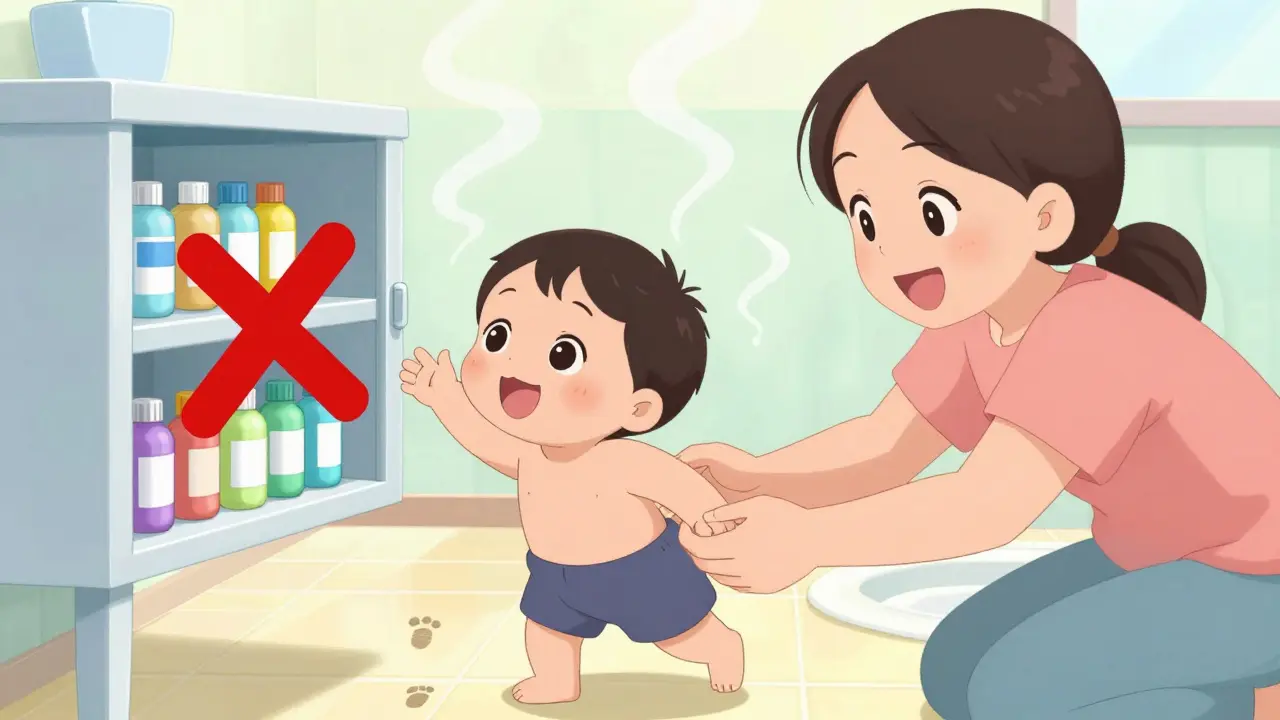
Every year, 60,000 children under five end up in emergency rooms because they got into medications at home. Most of these cases aren’t accidents caused by curious toddlers alone-they’re the result of simple, avoidable mistakes in how medicines are stored. You might think keeping pills on a high shelf or in the bathroom cabinet is fine. It’s not. And the risks go far beyond kids: teens, visitors, even elderly family members with memory issues can be harmed when medications aren’t secured properly.
Where NOT to Store Your Medications
The bathroom is the most common mistake. It’s convenient, right? You brush your teeth there, you take your pills after. But bathrooms are humid. Showers push humidity levels above 80%, and that moisture breaks down pills and liquids. According to MedlinePlus, 67% of common medications lose effectiveness within 30 days when stored in a bathroom cabinet. Insulin, thyroid pills, and even antibiotics can become useless-or worse, unsafe.
Leaving medications in purses, coat pockets, or on nightstands is another big risk. Washington State Department of Health found that 73% of pediatric poisoning cases happened because medicines were left out in plain sight-on counters, in bags, or in unlocked drawers. Grandparents’ homes are especially risky: 45% of these incidents occur there, often because storage habits differ between households.
And no, a high shelf isn’t enough. Kids as young as 24 months can climb onto chairs, pull down boxes, and open containers. A 48-inch shelf sounds safe until you see a toddler standing on a step stool with a pill bottle in hand. The same goes for storing meds in the car. The AAA Foundation found that 32% of households keep medications in vehicles, exposing them to extreme heat or cold-both of which ruin drug potency.
Where You SHOULD Store Your Medications
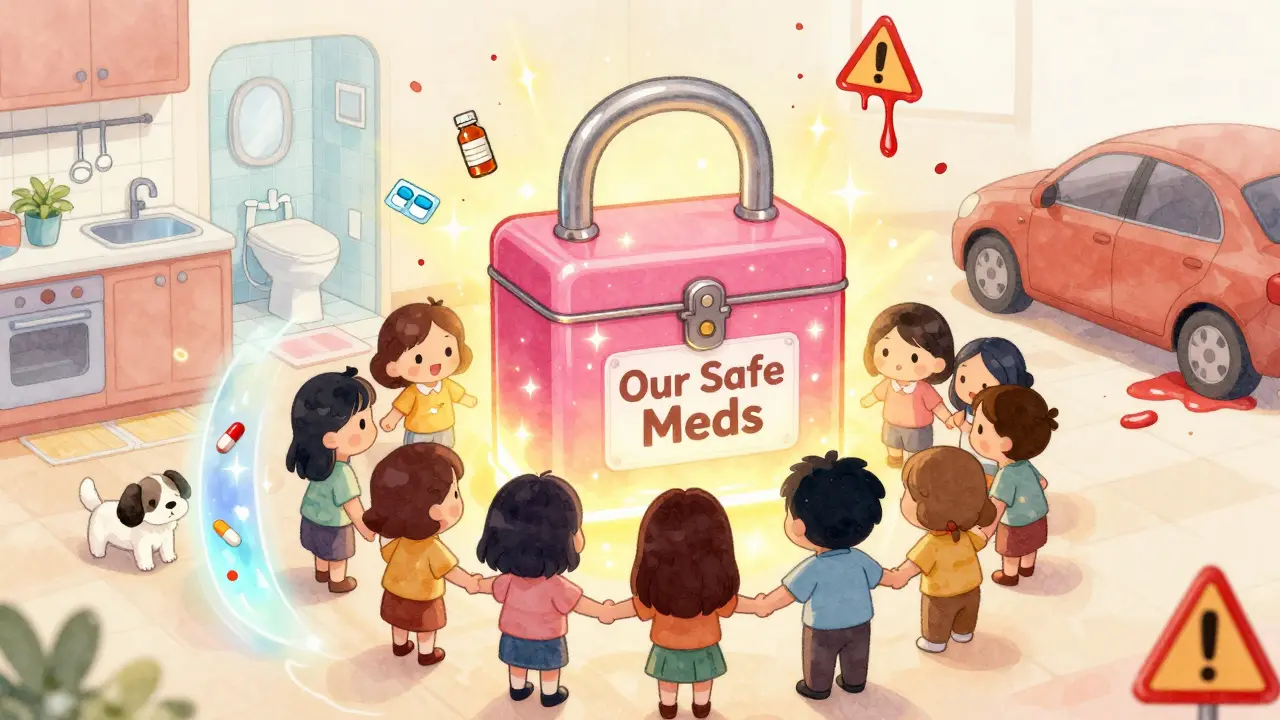
The gold standard? Locked storage. Not just any lock-something that resists tampering. The EPA and FDA both recommend locked cabinets, closets, or safes that can withstand at least 50 pounds of force, per Underwriters Laboratories standards. You don’t need a fancy safe. A basic lockbox costs between $20 and $50. Many families use existing locked spaces: gun safes (used by 18% of rural households), fireproof document boxes, or even locked drawers in a bedroom dresser.
Temperature matters too. Most medications work best between 68°F and 77°F (20-25°C) with humidity below 60%. A bedroom closet or a low cabinet in the kitchen away from the stove are ideal. If you use insulin, refrigerate it-but keep it in a separate, locked container away from food. Seattle Children’s Hospital recommends labeling it clearly to avoid confusion.
Always keep medications in their original bottles. Those labels have the National Drug Code, dosage instructions, and expiration dates. Removing them and tossing pills into pill organizers? That’s dangerous. You can’t tell what’s what without the label-and kids might mistake them for candy.
Special Cases: Kids, Elders, and Multiple Generations
If you have young children, treat every pill like a loaded gun. Put it away immediately after use. NACoA’s 2025 guide found that 42% of poisonings happen in the 5-10 minutes after someone takes their dose and leaves the bottle out. Make it a habit: take your pill, then lock the container. Do it every time-even if you’re in a hurry.
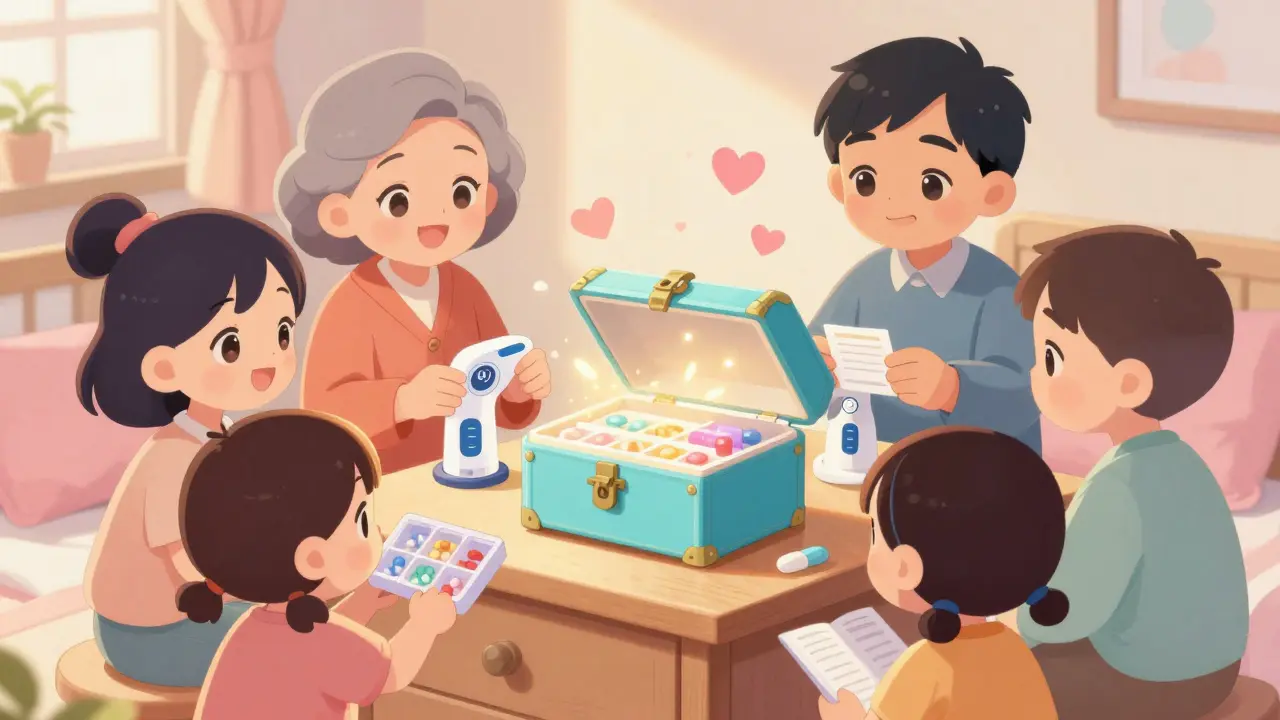
For older adults with dementia or memory issues, locking everything up isn’t always the answer. Seattle Children’s Hospital notes that some patients need easier access-but it must be supervised. Consider a digital dispenser with a biometric lock. These devices, used by 78% of families in a University of Michigan study, only open for authorized users and track when pills are taken. They’re not cheap-$80 to $150-but they’re worth it if someone’s at risk of taking too much or forgetting they already did.
Multi-generational homes are the trickiest. Grandma keeps her pills in the kitchen cabinet. Mom stores hers in the bathroom. Dad leaves his painkillers on the nightstand. That’s a recipe for disaster. Have a family meeting. Agree on one locked location for all medications. Label containers clearly. Make sure everyone knows where the keys or combination are.
What About Opioids and Controlled Substances?
If you’re prescribed opioids, stimulants, or other controlled substances, the stakes are even higher. The NIH reports that 92% of adolescent opioid misuse starts with pills taken from home medicine cabinets. That’s why the EPA partnered with over 7,200 pharmacies nationwide to offer free lockable containers with opioid prescriptions. If your pharmacy doesn’t offer one, ask. You can also buy a small, tamper-proof lockbox designed specifically for controlled substances.
Never share prescriptions-even with family. What works for you might be dangerous for someone else. And never leave extra pills lying around. If you have unused medications, dispose of them safely. Many pharmacies and police stations have drop-off boxes. The FDA has a list of approved disposal sites. Don’t flush them unless the label says to-most shouldn’t go down the drain.
What Tools Can Help?
You don’t need to spend a fortune. Here’s what works:
- Basic lockbox ($20-$50): Plastic or metal with a key or combination. Good for most households.
- Biometric dispenser ($80-$150): Fingerprint or PIN access. Tracks usage. Best for seniors or complex regimens.
- Locked cabinet with childproof latch: Install one in a bedroom or closet. Look for ones that meet UL 50-pound resistance standards.
- Medication organizer with lock: Some pill boxes come with locks built in. Useful for travel or daily use, but never as the only storage.
Consumer Reports tested 12 models in 2023. The cheapest ones worked just as well as the expensive ones for basic security. What matters most isn’t the price-it’s whether you use it consistently.
Common Mistakes (And How to Fix Them)
- Mistake: Storing meds in the bathroom. Fix: Move them to a dry, cool, locked space like a bedroom dresser.
- Mistake: Leaving pills in purses or coat pockets. Fix: Keep a small lockbox in your car or at home. Never carry meds unless you’re going to take them right away.
- Mistake: Using unlabeled containers. Fix: Always keep original bottles. If you use a pill organizer, refill it from the original bottle each week.
- Mistake: Assuming child-resistant caps are enough. Fix: They’re not. Half of kids can open them by age 5. Lock them anyway.
- Mistake: Not checking expiration dates. Fix: Do a quick check every 6 months. Toss expired meds at a drop-off site.
Why This Matters More Than You Think
This isn’t just about keeping kids safe. It’s about preventing addiction, avoiding overdoses, and protecting your family’s health. The National Safety Council estimates that consistent use of locked storage could prevent 85% of accidental pediatric poisonings-and save $427 million in healthcare costs each year.
It’s also about responsibility. Medications are powerful tools. Left unsecured, they become hazards. Locked storage isn’t paranoid-it’s practical. And it’s not hard. You don’t need to overhaul your home. Just pick one spot. Lock it. Make it a habit.
Start today. Look around your house. Where are your pills? Where are your kids’ grandparents’ pills? Are they locked? If not, take five minutes now. Find a box. Put the meds in. Lock it. That’s one less emergency visit. One less scared parent. One less life changed.
Can I store medications in the kitchen cabinet?
Yes, but only if it’s away from the stove, sink, or window. Heat and moisture ruin most medications. A kitchen cabinet that’s cool, dry, and locked is better than a bathroom or a bedside table. Avoid cabinets above the sink or near the dishwasher.
What if I don’t have a lockbox?
Use what you have. A locked drawer in a dresser, a locked filing cabinet, or even a locked tool box can work. The goal is to make it hard for kids or visitors to get to the meds. A simple combination lock or key lock on any container is better than leaving them out in the open.
Are child-resistant caps enough to keep kids safe?
No. While child-resistant caps require 17.5 pounds of force to open (as required by law), half of children can figure them out by age 5. They slow kids down-but they don’t stop them. Locked storage is the only reliable way to prevent access.
How do I dispose of old or expired medications?
Never flush them unless the label says to. Most should go to a drug take-back program. Many pharmacies, hospitals, and police stations have drop-off boxes. The FDA has a searchable list of authorized disposal sites. If no take-back option is available, mix pills with coffee grounds or cat litter, seal them in a container, and throw them in the trash.
Should I store all medications in one place?
Yes. Having one locked location reduces confusion and risk. If different family members keep meds in different places, it increases the chance of someone taking the wrong pill-or a child finding them. Designate one secure spot for all prescriptions, OTC drugs, and supplements.
What about pets? Can they get into medications too?
Yes. Dogs and cats can be poisoned by human medications-even small amounts. A single ibuprofen tablet can cause kidney failure in dogs. Keep all meds locked away, even if you don’t have kids. Pets are just as vulnerable.
Ben Harris
December 24, 2025 AT 22:00Wow so you're telling me I need to turn my whole house into a fortress just because some kid got into a Advil bottle? I mean I get it but this is ridiculous. My 3 year old can't even open a yogurt cup let alone a locked box. This whole thing feels like overparenting on steroids. Also why are we acting like every pill is a grenade? I keep my meds on the nightstand. It's fine. I'm not a monster.
Jason Jasper
December 25, 2025 AT 13:27I appreciate the data here. The bathroom humidity stat really stuck with me-I had no idea 67% of meds degrade that fast. I moved my thyroid pills to a locked drawer in my bedroom last week after reading this. Simple change. No drama. Just safer. Also, I never thought about pets until the last paragraph. My dog would totally eat a whole bottle if it was left out. Good reminder.
Zabihullah Saleh
December 27, 2025 AT 12:31There’s something deeply American about turning safety into a moral crusade. We lock up pills like they’re nuclear codes, but we leave guns in the same house. Funny how that works. The real issue isn’t storage-it’s access. If you’re giving someone opioids and not monitoring use, you’ve already lost. Lockboxes help, sure. But real prevention? That’s about trust, communication, and not treating your family like potential criminals. Still, props for the practical tips. The biometric dispenser thing? That’s the future. And yes, pets are a thing too. My cat once ate a clonazepam. Took her 3 days to stop staring at walls. Don’t ask.
Winni Victor
December 27, 2025 AT 19:49Oh my god I’m so mad. Like I literally just threw out my grandma’s old painkillers last week because I was tired of seeing them on the counter. And now I feel like a villain? Who even wrote this? Some overworked nurse with a clipboard and zero chill? I’m not storing my anxiety meds in a safe like I’m running a pharmacy. Also I keep them in my purse because I take them on the go. That’s not a crime. It’s life. You people need to chill.
Lindsay Hensel
December 29, 2025 AT 18:35This is an essential public health guide. The statistics are not merely alarming-they are imperative. The notion that child-resistant caps provide adequate protection is a dangerous misconception. The recommendation for a single, locked, climate-appropriate storage location is both logical and evidence-based. I have implemented this in my household and urge all families to do the same. The cost of inaction is measured in lives.
sagar patel
December 31, 2025 AT 01:20Good article. But you missed one thing. In India, many families keep medicines in kitchen shelves because they don’t have lockboxes. Also, many don’t know about expiration dates. Education matters more than locks. But still, your advice is correct. I will buy a lockbox now.
Christopher King
December 31, 2025 AT 08:28Let me guess-this was written by Big Pharma. Lockboxes? Biometric dispensers? $150 gadgets? Who profits from this? The FDA, the EPA, the pharmacies-they all get a cut. And you think we’re stupid? Why not just ban all prescription meds? Or better yet, why not fix the healthcare system so people don’t need 12 different pills just to survive? This is control. It’s not safety. It’s control. And the real danger? The system that makes you feel like your own home is a threat.
Sophie Stallkind
January 1, 2026 AT 12:48I commend the author for presenting a clear, well-researched, and actionable framework. The emphasis on original packaging, temperature control, and multi-generational coordination addresses critical gaps in public awareness. I have shared this with my extended family, and we have now designated a central locked storage cabinet. The data on pediatric poisonings is sobering. Thank you for the clarity.
Katherine Blumhardt
January 2, 2026 AT 13:07okay so i just read this and i realized my meds are in my sock drawer?? like the one next to my bed?? and my 4 year old climbs on the bed every morning?? i think i just had a panic attack. also why does everyone say "lock it" like its so easy?? i dont even have a lockbox. and i dont wanna spend 50 bucks. but also i dont want my kid to die. help. anyone have a hack??
Carlos Narvaez
January 4, 2026 AT 12:25Lockboxes are for people who don’t understand risk. If you’re worried about your kid getting into pills, maybe don’t leave them around. Basic logic. Also, the $150 biometric dispenser? That’s not innovation-that’s luxury. Most families don’t need that. Just put them in a high cabinet. Done. Stop selling fear.